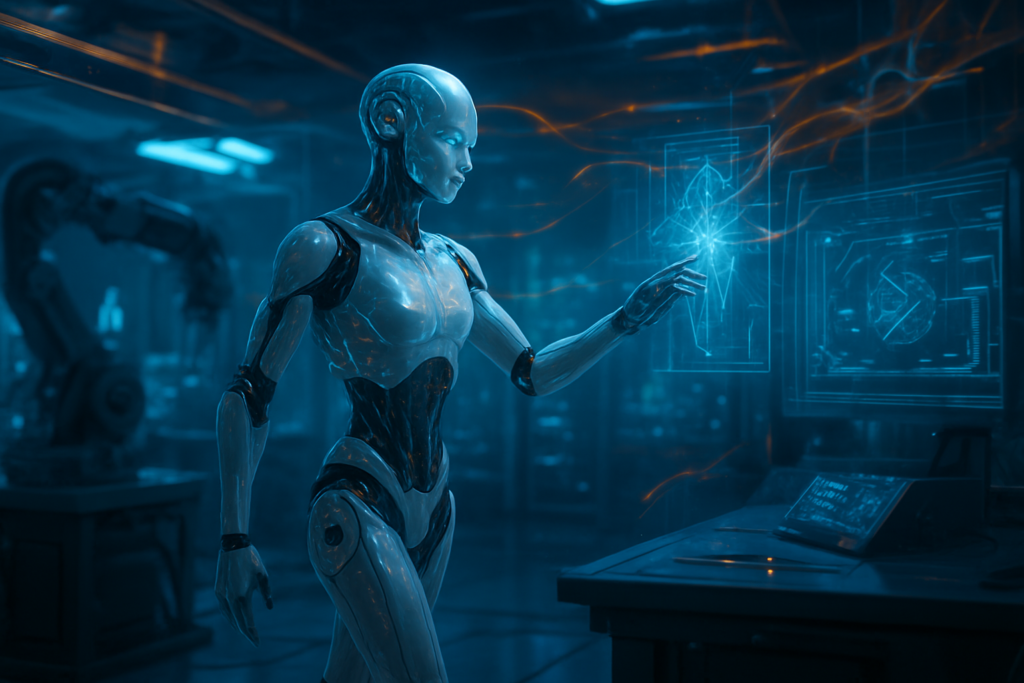
In a move that many are calling the "ChatGPT moment" for physical artificial intelligence, NVIDIA Corp (NASDAQ: NVDA) officially announced its Isaac GR00T N1.6 foundation model at CES 2026. As the latest iteration of its Generalist Robot 00 Prime platform, N1.6 represents a paradigm shift in how humanoid robots perceive, reason, and interact with the physical world. By offering a standardized "brain" and "nervous system" through the updated Jetson Thor computing modules, NVIDIA is positioning itself as the indispensable infrastructure provider for a market that is rapidly transitioning from experimental prototypes to industrial-scale deployment.
The significance of this announcement cannot be overstated. For the first time, a cross-embodiment foundation model has demonstrated the ability to generalize across disparate robotic frames—ranging from the high-torque limbs of Boston Dynamics’ Electric Atlas to the dexterous hands of Figure 03—using a unified Vision-Language-Action (VLA) framework. With this release, the barrier to entry for humanoid robotics has dropped precipitously, allowing hardware manufacturers to focus on mechanical engineering while leveraging NVIDIA’s massive simulation-to-reality (Sim2Real) pipeline for cognitive and motor intelligence.
Technical Architecture: A Dual-System Core for Physical Reasoning
At the heart of GR00T N1.6 is a radical architectural departure from previous versions. The model utilizes a 32-layer Diffusion Transformer (DiT), which is nearly double the size of the N1.5 version released just a year ago. This expansion allows for significantly more sophisticated "action denoising," resulting in fluid, human-like movements that lack the jittery, robotic aesthetic of earlier generations. Unlike traditional approaches that predicted absolute joint angles—often leading to rigid movements—N1.6 predicts state-relative action chunks. This enables robots to maintain balance and precision even when navigating uneven terrain or reacting to unexpected physical disturbances in real-time.
N1.6 also introduces a "dual-system" cognitive framework. System 1 handles reflexive, high-frequency motor control at 30Hz, while System 2 leverages the new Cosmos Reason 2 vision-language model (VLM) for high-level planning. This allows a robot to process ambiguous natural language commands like "tidy up the spilled coffee" by identifying the mess, locating the appropriate cleaning supplies, and executing a multi-step cleanup plan without pre-programmed scripts. This "common sense" reasoning is fueled by NVIDIA’s Cosmos World Foundation Models, which can generate thousands of photorealistic, physics-accurate training environments in a matter of hours.
To support this massive computational load, NVIDIA has refreshed its hardware stack with the Jetson AGX Thor. Based on the Blackwell architecture, the high-end AGX Thor module delivers over 2,000 FP4 TFLOPS of AI performance, enabling complex generative reasoning locally on the robot. A more cost-effective variant, the Jetson T4000, provides 1,200 TFLOPS for just $1,999, effectively bringing the "brains" for industrial humanoids into a price range suitable for mass-market adoption.
The Competitive Landscape: Verticals vs. Ecosystems
The release of N1.6 has sent ripples through the tech industry, forcing a strategic recalibration among major AI labs and robotics firms. Companies like Figure AI and Boston Dynamics (owned by Hyundai) have already integrated the N1.6 blueprint into their latest models. Figure 03, in particular, has utilized NVIDIA’s stack to slash the training time for new warehouse tasks from months to mere days, leading to the first commercial deployment of hundreds of humanoid units at BMW and Amazon logistics centers.
However, the industry remains divided between "open ecosystem" players on the NVIDIA stack and vertically integrated giants. Tesla Inc (NASDAQ: TSLA) continues to double down on its proprietary FSD-v15 neural architecture for its Optimus Gen 3 robots. While Tesla benefits from its internal "AI Factories," the broad availability of GR00T N1.6 allows smaller competitors to rapidly close the gap in cognitive capabilities. Meanwhile, Alphabet Inc (NASDAQ: GOOGL) and its DeepMind division have emerged as the primary software rivals, with their RT-H (Robot Transformer with Action Hierarchies) model showing superior performance in real-time human correction through voice commands.
This development creates a new market dynamic where hardware is increasingly commoditized. As the "Android of Robotics," NVIDIA’s GR00T platform enables a diverse array of manufacturers—including Chinese firms like Unitree and AgiBot—to compete globally. AgiBot currently leads in total shipments with a 39% market share, largely by leveraging the low-cost Jetson modules to undercut Western hardware prices while maintaining high-tier AI performance.
Wider Significance: Labor, Ethics, and the Accountability Gap
The arrival of general-purpose humanoid robots brings profound societal implications that the world is only beginning to grapple with. Unlike specialized industrial arms, a GR00T-powered humanoid can theoretically learn any task a human can perform. This has shifted the labor market conversation from "if" automation will happen to "how fast." Recent reports suggest that routine roles in logistics and manufacturing face an automation risk of 30% to 70% by 2030, though experts argue this will lead to a new era of "Human-AI Power Couples" where robots handle physically taxing tasks while humans manage context and edge-case decision-making.
Ethical and legal concerns are also mounting. As these robots become truly general-purpose, the accountability gap becomes a pressing issue. If a robot powered by an NVIDIA model, built by a third-party hardware OEM, and owned by a logistics firm causes an accident, the liability remains legally murky. Furthermore, the constant-on multimodal sensors required for GR00T to function have triggered strict auditing requirements under the EU AI Act, which classifies general-purpose humanoids as "High-Risk AI."
Comparatively, the leap to GR00T N1.6 is being viewed as more significant than the transition from GPT-3 to GPT-4. While LLMs conquered digital intelligence, N1.6 represents the first truly scalable solution for physical intelligence. The ability for a machine to understand "reason" within 3D space marks the end of the "narrow AI" era and the beginning of robots as a ubiquitous part of the human social fabric.
Looking Ahead: The Battery Barrier and Mass Adoption
Despite the breakneck speed of AI development, physical bottlenecks remain. The most significant challenge for 2026 is power density. Current humanoid models typically operate for only 2 to 4 hours on a single charge. While GR00T N1.6 optimizes power consumption through efficient Blackwell-based compute, the industry is eagerly awaiting the mass production of solid-state batteries (SSBs). Companies like ProLogium are currently testing 400 Wh/kg cells that could extend a robot’s shift to a full 8 hours, though wide availability isn't expected until 2028.
In the near term, we can expect to see "specialized-generalist" deployments. Robots will first saturate structured environments like automotive assembly lines and semiconductor cleanrooms before moving into the more chaotic worlds of retail and healthcare. Analysts predict that by late 2027, the first consumer-grade household assistant robots—capable of doing laundry and basic meal prep—will enter the market for under $30,000.
Summary: A New Chapter in Human History
The launch of NVIDIA Isaac GR00T N1.6 is a watershed moment in the history of technology. By providing a unified, high-performance foundation for physical AI, NVIDIA has solved the "brain problem" that has stymied the robotics industry for decades. The focus now shifts to hardware durability and the integration of these machines into a human-centric world.
In the coming weeks, all eyes will be on the first field reports from BMW and Tesla as they ramp up their 2026 production lines. The success of these deployments will determine the pace of the coming robotic revolution. For now, the message from CES 2026 is clear: the robots are no longer coming—they are already here, and they are learning faster than ever before.
This content is intended for informational purposes only and represents analysis of current AI developments.
TokenRing AI delivers enterprise-grade solutions for multi-agent AI workflow orchestration, AI-powered development tools, and seamless remote collaboration platforms.
For more information, visit https://www.tokenring.ai/.