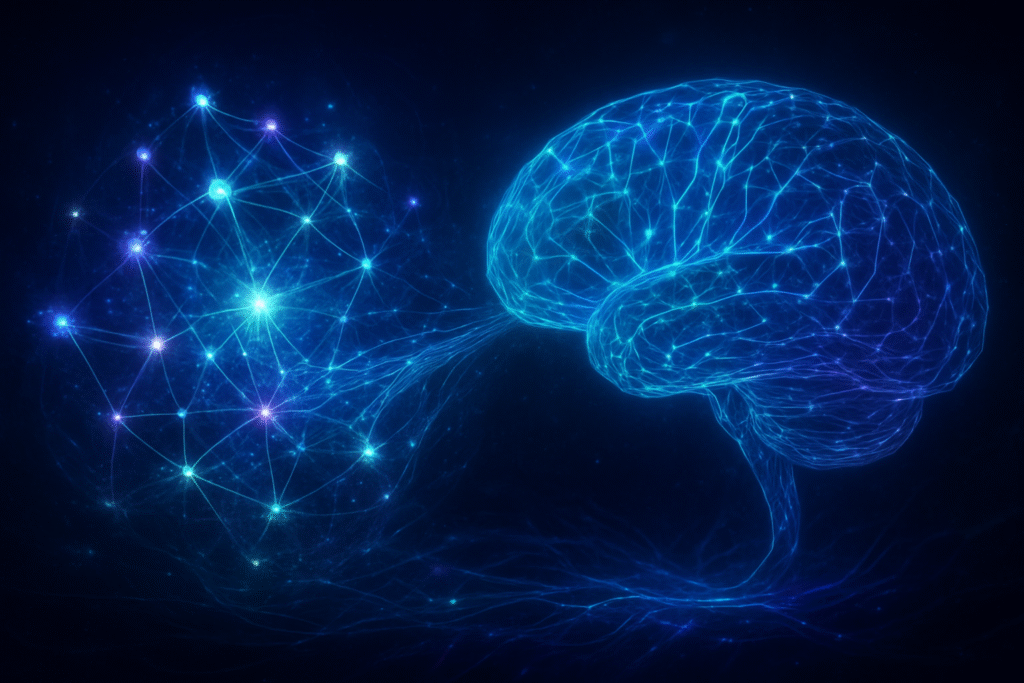
The convergence of quantum computing and artificial intelligence (AI), often termed "Quantum AI," is rapidly emerging as the pivotal advancement poised to unlock unprecedented potentials for AI. This synergy is increasingly viewed as the "missing key" for AI's future, promising to overcome fundamental computational limitations currently faced by classical computing paradigms. While classical AI has achieved remarkable feats, particularly in deep learning and large language models, it is approaching computational ceilings that hinder further progress in speed, scalability, and the ability to tackle inherently complex problems with vast solution spaces.
Quantum computing offers a fundamentally different approach, leveraging principles of quantum mechanics such as superposition, entanglement, and quantum parallelism. Unlike classical bits, which can only be 0 or 1, quantum bits (qubits) can exist in multiple states simultaneously due to superposition. Entanglement allows qubits to be interconnected, meaning the state of one instantly influences another. These properties enable quantum computers to process a vast number of possibilities concurrently, leading to exponential speed-ups for certain types of calculations that are intractable for classical computers. This ability to explore a "huge landscape of possibilities all at once" is what makes quantum computing an essential breakthrough, allowing AI to "think in ways we can't even simulate yet" and pushing the boundaries of what's computationally possible.
Technical Deep Dive: The Quantum Leap in AI Capabilities
Quantum AI aims to harness quantum mechanics to solve machine learning problems more efficiently or address challenges beyond classical reach. The core difference lies in the computational unit: classical AI relies on binary bits processed sequentially, while quantum AI uses qubits, which can exist in a superposition of states and be entangled. This enables quantum parallelism, allowing for the simultaneous exploration of multiple solutions and processing of vast amounts of information, potentially offering exponential speedups for certain tasks.
Several key areas and algorithms are at the forefront of quantum AI advancements:
1. Quantum Machine Learning (QML) Algorithms: These algorithms leverage quantum properties to enhance machine learning.
- Variational Quantum Algorithms (VQAs): Hybrid quantum-classical algorithms where a parameterized quantum circuit runs on a quantum computer, and results are fed into a classical optimizer. VQAs are crucial for optimization problems, quantum chemistry simulations (Variational Quantum Eigensolver – VQE), and classification tasks.
- Quantum Support Vector Machines (QSVMs): These enhance classical SVMs by mapping data into exponentially larger, high-dimensional quantum state spaces (Hilbert spaces) using quantum feature maps, potentially making non-linearly separable data separable.
- Quantum Kernel Methods: Utilize quantum circuits to compute kernel functions, which are then exploited by classical machine learning models.
- Quantum Feature Maps: Encode classical data into quantum states to leverage the high dimensionality of Hilbert space, enriching data representation.
- Quantum Convolutional Neural Networks (QCNNs): Inspired by classical CNNs, QCNNs use quantum circuits as convolution filters for multi-dimensional vectors, combining variational quantum circuits with deep neural networks for parallel processing on quantum states.
2. Quantum Annealing (QA): This method utilizes quantum tunneling to find the global minimum of a function, particularly useful for complex optimization problems.
- Optimization in Machine Learning: QA can optimize machine learning models by finding optimal weights in neural networks or the best parameters for models like Support Vector Machines.
- Combinatorial Optimization: QA can efficiently explore larger solution spaces for incredibly difficult combinatorial problems common in AI applications like logistics, supply chain management, and resource allocation.
- Feature Selection and Clustering: QA can select optimal subsets of features or instances and identify meaningful clusters in data.
3. Quantum Neural Networks (QNNs): These models integrate quantum computing principles with classical neural network structures, leveraging qubits and quantum gates, along with superposition, entanglement, and interference, to process information in ways that classical neural networks cannot. QNNs are being explored for algorithmic design, learning interactions from training sets, and high-dimensional data analysis and pattern recognition, particularly relevant in fields like medical imaging.
The AI research community and industry experts view quantum AI with immense optimism but also cautious realism. While many express significant excitement, comparing its current state to where AI stood just before its explosive growth, it's widely acknowledged that quantum AI is still in its early stages. Significant improvements are needed in quantum hardware regarding qubit stability, fidelity, coherence times, and scalability. Many experts believe that the near future will see AI running on hybrid quantum-classical computing architectures, maximizing the strengths of both paradigms. Intriguingly, AI is also being leveraged to advance quantum computing itself, helping to improve quantum processors, enhance error correction, and develop more efficient quantum algorithms.
Corporate Race: Who Stands to Benefit and Disrupt?
Quantum AI is set to profoundly impact the tech industry, creating significant competitive implications and potential disruptions for AI companies, tech giants, and startups alike. Early adopters of quantum technologies are uniquely positioned to gain significant competitive advantages.
Major tech giants are heavily investing in Quantum AI, positioning themselves as leaders in both hardware and software development, and establishing robust ecosystems:
- IBM (NYSE: IBM) views quantum computing as strategically as important as AI. They've launched a $500 million Enterprise AI Venture Fund to invest in quantum and AI startups, focusing on building a full ecosystem around both technologies. IBM is a pioneer in quantum computing with superconducting qubits and offers cloud access to its quantum systems. They are integrating AI into their Qiskit software to improve ease of use, circuit optimization, and error correction, and are actively addressing "quantum-safe" security.
- Google (NASDAQ: GOOGL)'s Quantum AI team aims to build a universal quantum computer. They achieved "quantum supremacy" with their Sycamore processor in 2019 and unveiled the Willow quantum processor in 2024, claiming it could complete a complex computing challenge in five minutes that would take traditional supercomputers an unimaginable time. Google is focused on developing error-corrected, large-scale quantum computers, with a roadmap towards 1 million qubits.
- Microsoft (NASDAQ: MSFT) is developing a topological quantum computer, designed for inherent error resistance, and recently unveiled the Majorana 1 processor. Microsoft's quantum program is anchored by Azure Quantum, a cloud-based, hardware-agnostic platform offering software tools and access to third-party quantum hardware. Azure Quantum Elements combines AI, high-performance computing, and quantum processors for molecular simulations.
- D-Wave (NYSE: QBTS) is a leader in quantum annealing technology, focusing on optimization applications across various industries. They have released an open-source quantum AI toolkit that integrates their quantum computers with PyTorch, a popular machine learning framework, to enhance pre-training optimization and model accuracy.
For startups, Quantum AI presents both immense opportunities and significant challenges. While funding has reached record levels, startups face hurdles in securing long-term capital due to uncertain returns and technological complexity. Many are focusing on developing hybrid quantum-classical solutions for optimization, materials science, and cybersecurity. Companies like Zapata Computing and QpiAI are examples of startups developing platforms and solutions in this space.
The competitive landscape is a race to develop fault-tolerant, utility-scale quantum computers. Companies that can effectively integrate quantum capabilities into their AI offerings will redefine market leadership. This disruption will be seen across various industries: drug discovery, financial services, logistics, and cybersecurity, where quantum-enhanced algorithms can refine models, optimize processes, and enable solutions currently intractable for classical computers.
Wider Significance: Reshaping the AI Landscape and Beyond
Quantum AI represents the next significant breakthrough in artificial intelligence, moving beyond the limitations of classical computing that current AI models face. It isn't expected to fully replace classical AI but rather to act as a powerful accelerator and complement. The immediate future will likely see the dominance of hybrid quantum-classical computing models, where quantum processors handle specialized, computationally intensive tasks, and classical systems manage the broader data processing and application layers.
The transformative potential of Quantum AI extends across virtually every industry, promising significant societal and economic impacts:
- Healthcare and Drug Discovery: Revolutionizing personalized medicine, accelerating drug discovery by simulating molecular interactions with unprecedented accuracy, and enhancing real-time analysis of complex medical data for improved diagnosis.
- Finance and Markets: Transforming risk assessment, portfolio optimization, and fraud detection by analyzing massive datasets, identifying subtle patterns, and predicting market fluctuations with superior accuracy and speed.
- Logistics and Transportation: Optimizing supply chains, production processes, and traffic management to an unimaginable degree, leading to more efficient delivery routes, warehouse management, and autonomous vehicle technology.
- Materials Science and Energy: Accelerating the discovery of new materials with enhanced properties, such as superconductors, and improving the development and efficiency of renewable energy technologies.
- Enhanced Performance and Efficiency: Offering a more sustainable and high-performance approach to AI by significantly reducing computational costs and energy consumption. Economic value unlocked by quantum computing and AI integration is projected to be substantial, with estimates ranging from $850 billion to $2 trillion by 2035.
However, Quantum AI also presents significant concerns. Ethical implications include data privacy, as quantum computers could break current encryption, necessitating quantum-resistant encryption. There's also the risk of amplifying biases in training data and questions about autonomy and control in high-stakes applications. Job displacement is another concern, as quantum AI could automate tasks, though historical precedent suggests new jobs will also be created. Most pressing is the threat of quantum security threats, where quantum computers could break widely used public-key encryption schemes, posing a retroactive risk to sensitive information collected today ("harvest now, decrypt later").
Quantum AI is often heralded as the "next chapter" or "next AI boom," akin to previous AI milestones like the advent of machine learning and deep learning. Just as improved classical computing hardware fueled the deep learning revolution, quantum computing promises to break through current computational bottlenecks, enabling new levels of capability and allowing AI to solve problems that demand a fundamentally different computational structure.
The Horizon: Future Developments and Expert Predictions
The future of Quantum AI is dynamic, with continuous advancements expected in both the near and long term, promising revolutionary changes across various industries.
In the near term (5-10 years), the focus will be on improving foundational quantum research and immediate use cases:
- Hardware Improvements: Expect more stable qubits with improved coherence times and a gradual increase in qubit counts. Google's Willow chip and Quantinuum's H2 trapped-ion system are examples of current advancements in error correction and quantum volume.
- Algorithmic Breakthroughs: Efforts will concentrate on developing scalable QML algorithms that offer real-world advantages, including improved QSVMs and QNNs for classification and optimization.
- Hybrid Quantum-Classical Systems: The immediate future heavily relies on these systems, combining the parallel processing power of quantum computers with classical AI's learning capabilities.
The long term envisions large-scale, fault-tolerant quantum computers with a million or more qubits, capable of complex, error-corrected computations. IBM is targeting 200 logical qubits by 2029 and 2,000 logical qubits by 2033, while IonQ projects millions of physical qubits supporting tens of thousands of logical qubits by 2030. With robust hardware, quantum algorithms are expected to tackle problems currently impossible for classical computers, including more sophisticated QML for true causal reasoning and processing exponentially larger datasets.
Potential applications on the horizon are vast:
- Healthcare and Drug Discovery: Personalized medicine, accelerated drug discovery, and molecular-level modeling.
- Chemicals and Materials Science: Faster discovery of new molecules and materials, leading to better catalysts and new energy solutions.
- Financial Modeling and Optimization: Improved risk assessment, trading strategies, asset pricing, and fraud detection.
- Logistics and Supply Chains: Real-time global routing, traffic flow optimization, and increased supply chain efficiency.
- Climate Change and Environment: Analyzing vast environmental data, optimizing power grids, and improving nuclear fusion reactor designs.
- Cybersecurity: Developing new, practically intractable cryptographic methods to offer enhanced data security.
- Enhanced Generative AI Models: Improving generative AI for tasks like molecule design or synthetic data generation by sampling complex probability distributions more effectively.
However, significant challenges remain, including error correction (qubits are fragile and susceptible to noise), scalability (maintaining qubit uniformity and managing interconnectivity), and software development (creating efficient quantum algorithms and robust programming environments). There's also a shortage of skilled professionals and ethical considerations regarding responsible development.
Experts have varied but largely optimistic predictions. Google Quantum AI's director Julian Kelly and Microsoft co-founder Bill Gates predict "practically useful" quantum computing within five years. A McKinsey report projects quantum computing revenue to grow from $4 billion in 2024 to as much as $72 billion by 2035, with AI driving 18% of quantum algorithm revenue by 2026. The overall consensus is that the next decade will see AI and quantum merge into an extremely powerful and transformative technological advancement, creating over $1 trillion in economic value by 2035.
The Next Chapter: A Comprehensive Wrap-Up
Quantum Artificial Intelligence stands as one of the most transformative technological frontiers of our era, poised to redefine problem-solving capabilities across numerous sectors. It leverages the unique properties of quantum mechanics to overcome the computational bottlenecks currently limiting classical AI, offering a path to exponentially faster processing and the ability to tackle previously intractable problems. This symbiotic relationship, where quantum systems empower AI and AI assists in refining quantum technologies, marks a new paradigm shift in AI history, akin to the impact of machine learning and deep learning.
The long-term impact is projected to be revolutionary, touching nearly every industry from healthcare and finance to logistics and materials science, unlocking new scientific discoveries and driving unprecedented economic growth. However, this power comes with significant responsibilities. Ethical considerations around data privacy, bias, and autonomy, coupled with the urgent threat of quantum computers breaking current encryption standards, necessitate careful planning and the development of robust quantum-resistant security measures. The potential for job displacement also requires proactive societal planning and investment in new skill sets.
In the coming weeks and months, watch for:
- Breakthroughs in Hardware and Algorithms: Expect continued announcements regarding more stable qubits, improved coherence times, and larger qubit counts from companies like IBM, IonQ, and Google. The achievement of "quantum advantage" on commercially viable tasks remains a critical milestone.
- Company Announcements: Keep an eye on strategic partnerships and collaborations between quantum computing companies and industry leaders to explore specific use cases, such as IonQ's partnership with CCRM for therapeutic development, or Quantinuum's work with NVIDIA in generative quantum AI. Product and platform launches, like D-Wave's Advantage2
 system, will also be significant.
 - Policy Changes and Governmental Initiatives: Governments worldwide are actively developing national quantum strategies and committing substantial funding to foster research and industrial transformation. Discussions around regulatory frameworks for AI and quantum technologies, especially regarding quantum-resistant security, will intensify.
The convergence of quantum computing and AI is not a distant future but an unfolding reality, promising profound advancements and necessitating careful consideration of its societal implications. The coming months will be critical in observing the practical applications, corporate strategies, and policy directions that will shape this transformative field.
This content is intended for informational purposes only and represents analysis of current AI developments.
TokenRing AI delivers enterprise-grade solutions for multi-agent AI workflow orchestration, AI-powered development tools, and seamless remote collaboration platforms.
For more information, visit https://www.tokenring.ai/.