
Pool equipment and automation systems manufacturer Hayward Holdings (NYSE: HAYW) reported Q1 CY2026 results exceeding the market’s revenue expectations, with sales up 11.5% year on year to $255.2 million. Its non-GAAP profit of $0.13 per share was 17.3% above analysts’ consensus estimates.
Is now the time to buy Hayward? Find out by accessing our full research report, it’s free.
Hayward (HAYW) Q1 CY2026 Highlights:
- Revenue: $255.2 million vs analyst estimates of $239.7 million (11.5% year-on-year growth, 6.5% beat)
- Adjusted EPS: $0.13 vs analyst estimates of $0.11 (17.3% beat)
- Adjusted EBITDA: $56.38 million vs analyst estimates of $51.06 million (22.1% margin, 10.4% beat)
- Management raised its full-year Adjusted EPS guidance to $0.86 at the midpoint, a 1.8% increase
- Operating Margin: 16.6%, up from 14.6% in the same quarter last year
- Free Cash Flow was -$7.28 million compared to -$11.37 million in the same quarter last year
- Market Capitalization: $3.44 billion
Company Overview
Credited with introducing the first variable-speed pool pump, Hayward (NYSE: HAYW) makes residential and commercial pool equipment and accessories.
Revenue Growth
Reviewing a company’s long-term sales performance reveals insights into its quality. Any business can experience short-term success, but top-performing ones enjoy sustained growth for years. Regrettably, Hayward’s sales grew at a sluggish 2% compounded annual growth rate over the last five years. This was below our standards and is a poor baseline for our analysis.
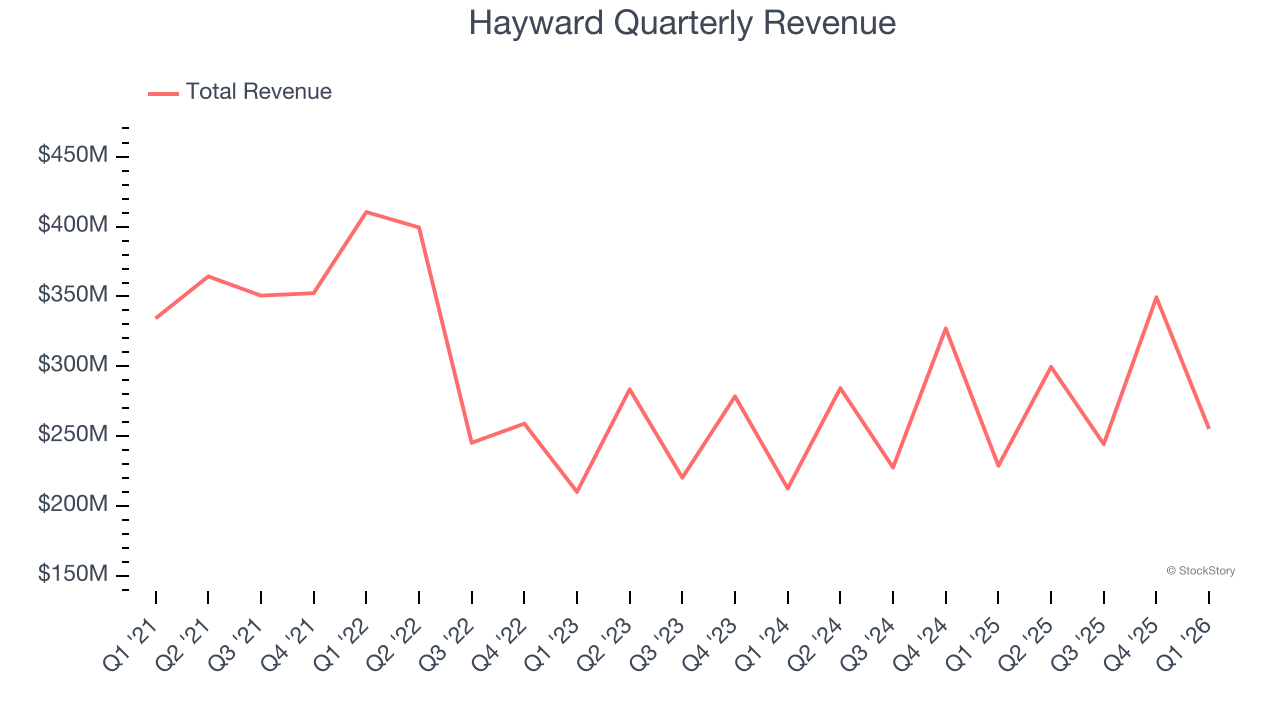
We at StockStory place the most emphasis on long-term growth, but within industrials, a half-decade historical view may miss cycles, industry trends, or a company capitalizing on catalysts such as a new contract win or a successful product line. Hayward’s annualized revenue growth of 7.4% over the last two years is above its five-year trend, which is encouraging. 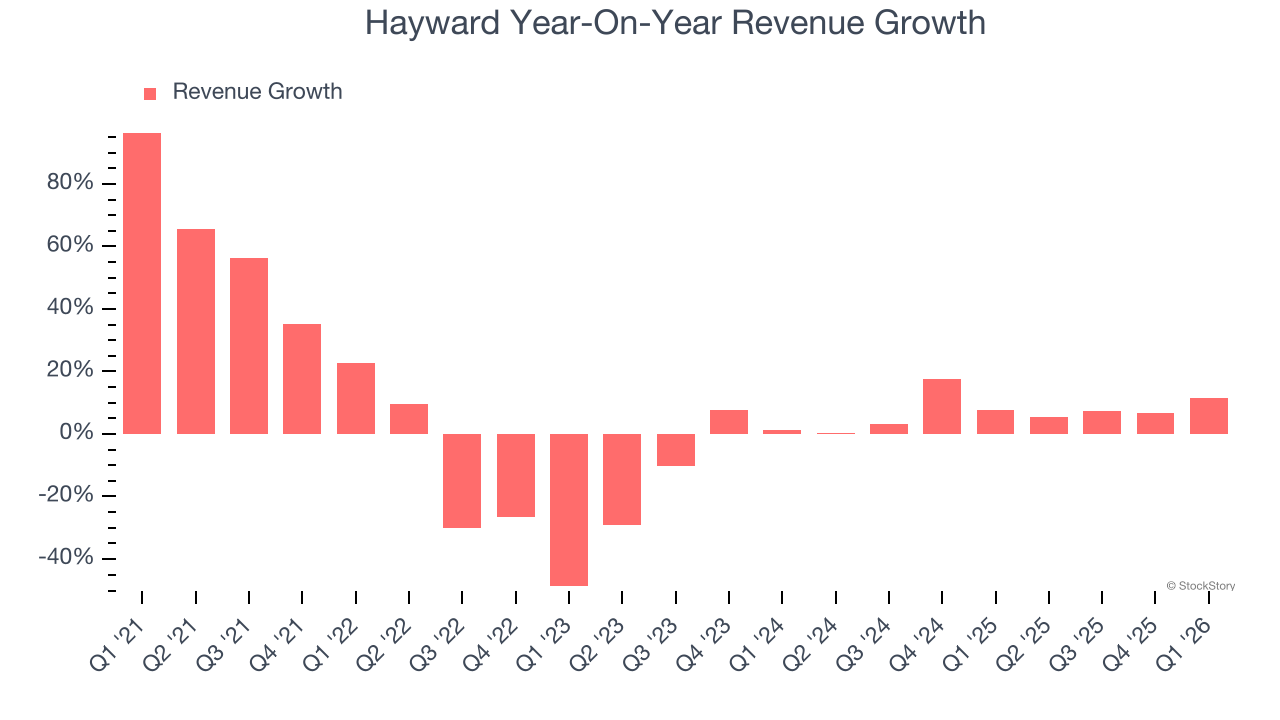
This quarter, Hayward reported year-on-year revenue growth of 11.5%, and its $255.2 million of revenue exceeded Wall Street’s estimates by 6.5%.
Looking ahead, sell-side analysts expect revenue to grow 2.9% over the next 12 months, a deceleration versus the last two years. This projection is underwhelming and implies its products and services will see some demand headwinds.
ONE MORE THING: 3 Hidden Platforms Growing 3X Faster than Amazon, Google, and PayPal. Amazon, Google, and Meta all followed the same playbook: Dominate an ignored market. Build an unbeatable moat. Scale until you’re unstoppable.
These three platforms are running that exact playbook right now. The early investors in Amazon made fortunes. The early investors in these could do the same. Get All 3 Stocks Here for FREE.
Operating Margin
Operating margin is one of the best measures of profitability because it tells us how much money a company takes home after procuring and manufacturing its products, marketing and selling those products, and most importantly, keeping them relevant through research and development.
Hayward has been a well-oiled machine over the last five years. It demonstrated elite profitability for an industrials business, boasting an average operating margin of 20.4%. This result isn’t surprising as its high gross margin gives it a favorable starting point.
Looking at the trend in its profitability, Hayward’s operating margin decreased by 2.2 percentage points over the last five years. This raises questions about the company’s expense base because its revenue growth should have given it leverage on its fixed costs, resulting in better economies of scale and profitability.
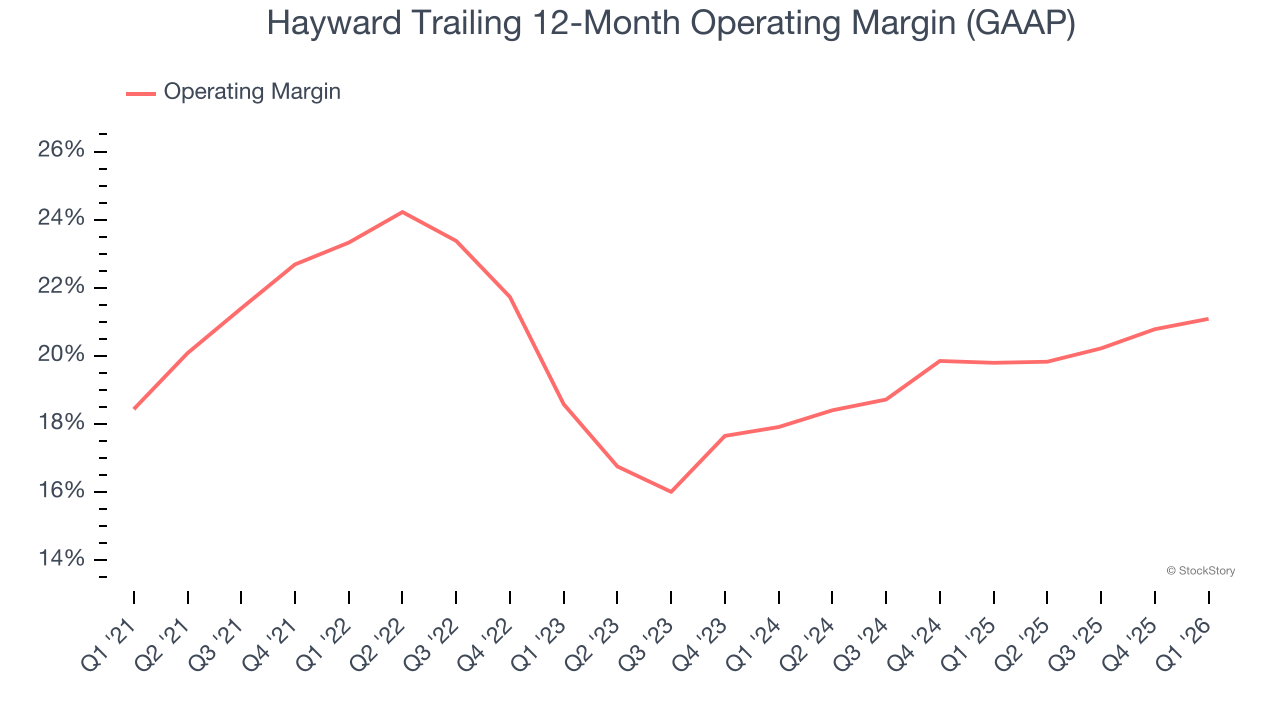
In Q1, Hayward generated an operating margin profit margin of 16.6%, up 2 percentage points year on year. The increase was encouraging, and because its gross margin actually decreased, we can assume it was more efficient because its operating expenses like marketing, R&D, and administrative overhead grew slower than its revenue.
Earnings Per Share
Revenue trends explain a company’s historical growth, but the long-term change in earnings per share (EPS) points to the profitability of that growth – for example, a company could inflate its sales through excessive spending on advertising and promotions.
Hayward’s full-year EPS dropped 44.5%, or 9.6% annually, over the last four years. We tend to steer our readers away from companies with falling revenue and EPS, where diminishing earnings could imply changing secular trends and preferences. If the tide turns unexpectedly, Hayward’s low margin of safety could leave its stock price susceptible to large downswings.
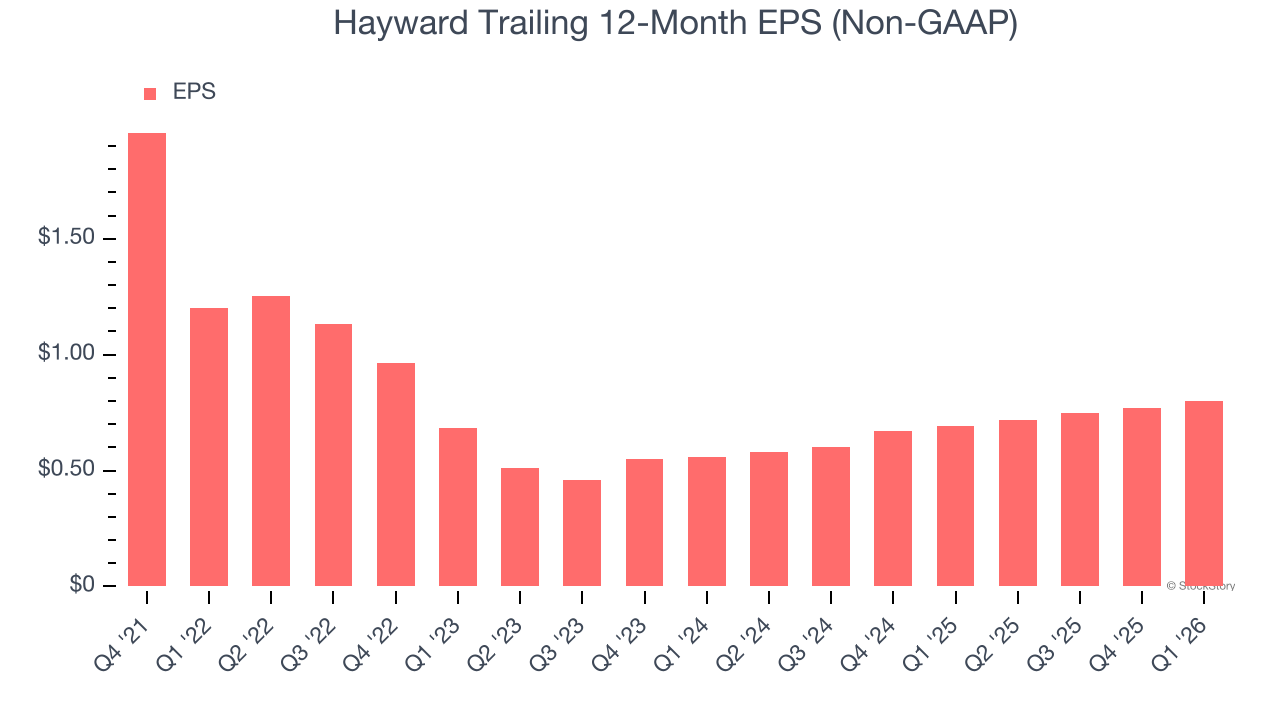
Like with revenue, we analyze EPS over a shorter period to see if we are missing a change in the business.
Hayward’s EPS grew at an astounding 19.5% compounded annual growth rate over the last two years, higher than its 7.4% annualized revenue growth. This tells us the company became more profitable on a per-share basis as it expanded.
We can take a deeper look into Hayward’s earnings to better understand the drivers of its performance. Hayward’s operating margin has expanded over the last two years. This was the most relevant factor (aside from the revenue impact) behind its higher earnings; interest expenses and taxes can also affect EPS but don’t tell us as much about a company’s fundamentals.
In Q1, Hayward reported adjusted EPS of $0.13, up from $0.10 in the same quarter last year. This print easily cleared analysts’ estimates, and shareholders should be content with the results. Over the next 12 months, Wall Street expects Hayward’s full-year EPS of $0.80 to grow 9%.
Key Takeaways from Hayward’s Q1 Results
We were impressed by how significantly Hayward blew past analysts’ EBITDA expectations this quarter. We were also excited its adjusted operating income outperformed Wall Street’s estimates by a wide margin. Zooming out, we think this was a solid print. The stock remained flat at $15.81 immediately following the results.
Hayward may have had a good quarter, but does that mean you should invest right now? If you’re making that decision, you should consider the bigger picture of valuation, business qualities, as well as the latest earnings. We cover that in our actionable full research report which you can read here (it’s free).