Electronic system and device provider Bel Fuse (NASDAQ: BELFA) reported Q1 CY2026 results exceeding the market’s revenue expectations, with sales up 17.2% year on year to $178.5 million. On top of that, next quarter’s revenue guidance ($205 million at the midpoint) was surprisingly good and 11.9% above what analysts were expecting. Its non-GAAP profit of $1.81 per share was 19.6% above analysts’ consensus estimates.
Is now the time to buy Bel Fuse? Find out by accessing our full research report, it’s free.
Bel Fuse (BELFA) Q1 CY2026 Highlights:
- Revenue: $178.5 million vs analyst estimates of $172.8 million (17.2% year-on-year growth, 3.3% beat)
- Adjusted EPS: $1.81 vs analyst estimates of $1.51 (19.6% beat)
- Adjusted EBITDA: $34.48 million vs analyst estimates of $34.39 million (19.3% margin, in line)
- Revenue Guidance for Q2 CY2026 is $205 million at the midpoint, above analyst estimates of $183.3 million
- Operating Margin: 13.3%, down from 16.4% in the same quarter last year
- Free Cash Flow Margin: 6.3%, up from 3.5% in the same quarter last year
- Market Capitalization: $3.14 billion
Farouq Tuweiq, President and Chief Executive Officer, said, “We believe Bel delivered a strong start to the year with year-over-year sales growth and solid profitability, driven by broad-based momentum, favorable mix, and disciplined execution.
Company Overview
Founded by 26-year-old Elliot Bernstein during the electronics boom after WW2, Bel Fuse (NASDAQ: BELF.A) provides electronic systems and devices to the telecommunications, networking, transportation, and industrial sectors.
Revenue Growth
Reviewing a company’s long-term sales performance reveals insights into its quality. Any business can put up a good quarter or two, but many enduring ones grow for years. Thankfully, Bel Fuse’s 8.2% annualized revenue growth over the last five years was decent. Its growth was slightly above the average industrials company and shows its offerings resonate with customers.
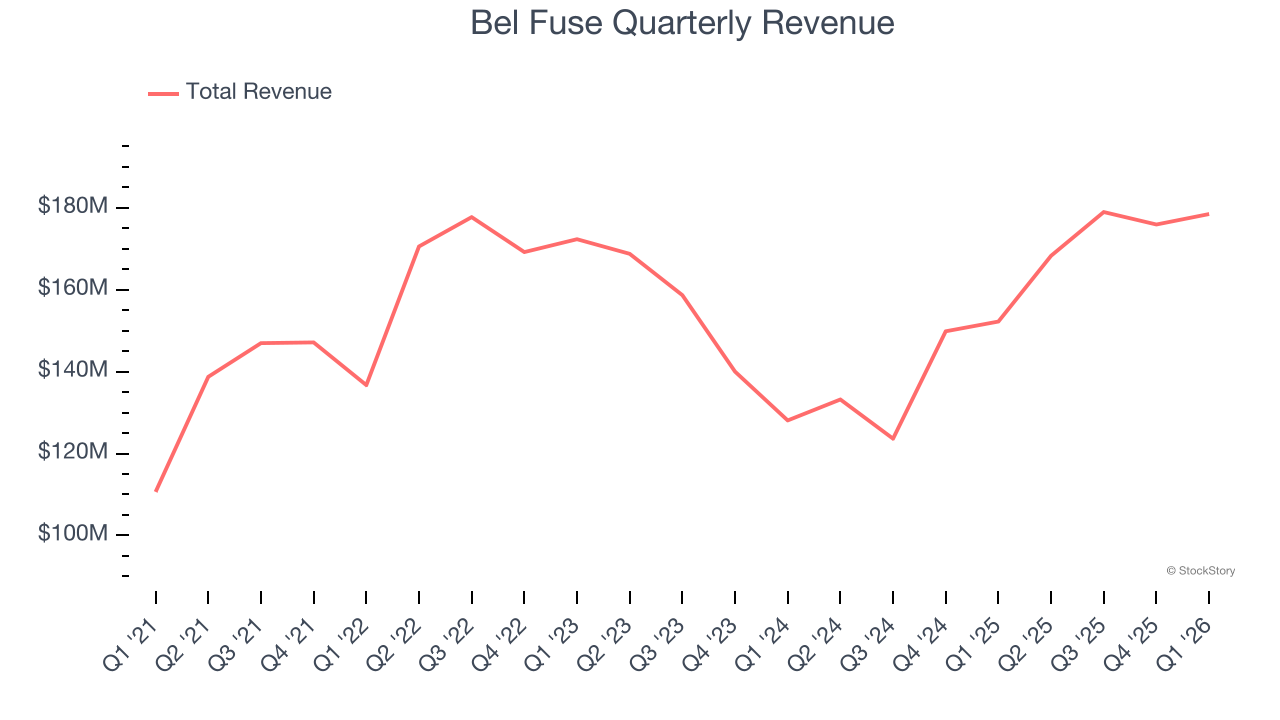
Long-term growth is the most important, but within industrials, a half-decade historical view may miss new industry trends or demand cycles. Bel Fuse’s annualized revenue growth of 8.5% over the last two years aligns with its five-year trend, suggesting its demand was stable. 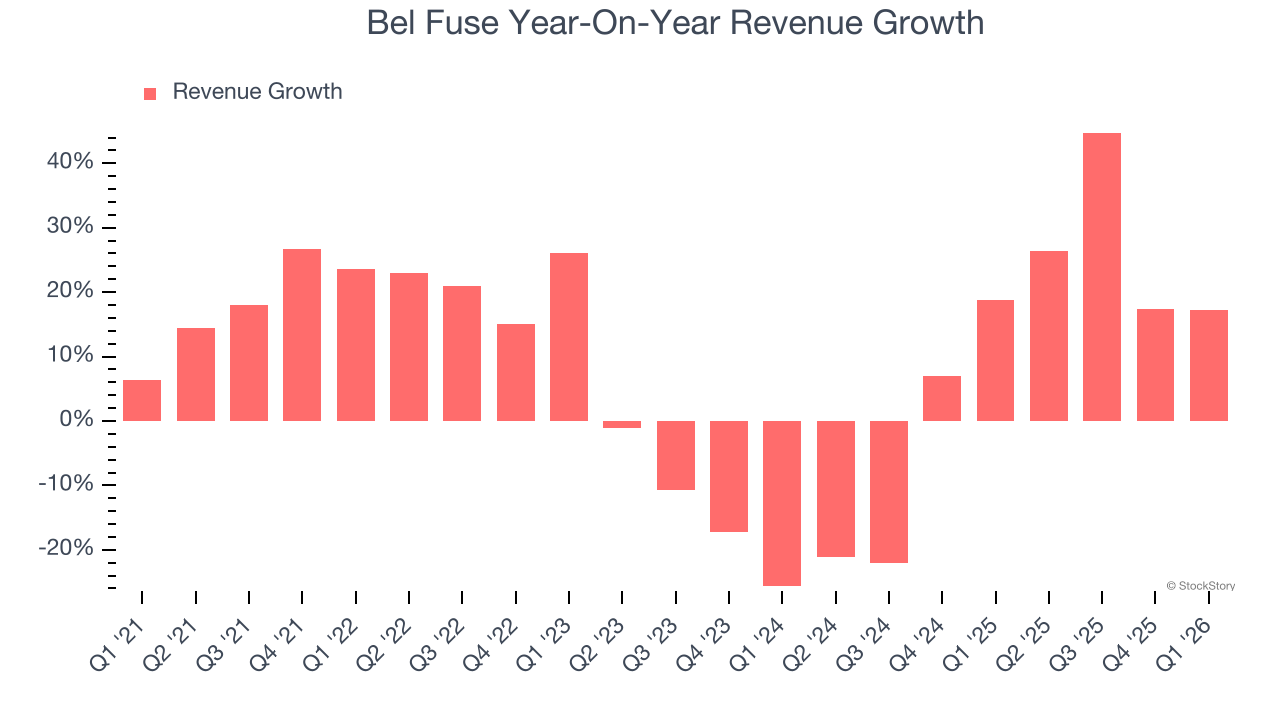
This quarter, Bel Fuse reported year-on-year revenue growth of 17.2%, and its $178.5 million of revenue exceeded Wall Street’s estimates by 3.3%. Company management is currently guiding for a 21.8% year-on-year increase in sales next quarter.
Looking further ahead, sell-side analysts expect revenue to grow 5.1% over the next 12 months, a deceleration versus the last two years. This projection doesn't excite us and indicates its products and services will see some demand headwinds. At least the company is tracking well in other measures of financial health.
ALSO WORTH WATCHING: Nvidia’s Quiet Partner. Nvidia’s chips cost a hundred grand. The connectors that make them work cost even more. One company makes them all.
Every AI server needs specialized infrastructure the chip companies don’t make. High-speed cables. Power connectors. Thermal sensors. This 90-year-old company built a monopoly on it. The AI boom just started. This stock is still flying under the radar. Claim The Stock Ticker Here for FREE.
Operating Margin
Bel Fuse has been an efficient company over the last five years. It was one of the more profitable businesses in the industrials sector, boasting an average operating margin of 12.2%. This result isn’t too surprising as its gross margin gives it a favorable starting point.
Analyzing the trend in its profitability, Bel Fuse’s operating margin rose by 9.4 percentage points over the last five years, as its sales growth gave it immense operating leverage.
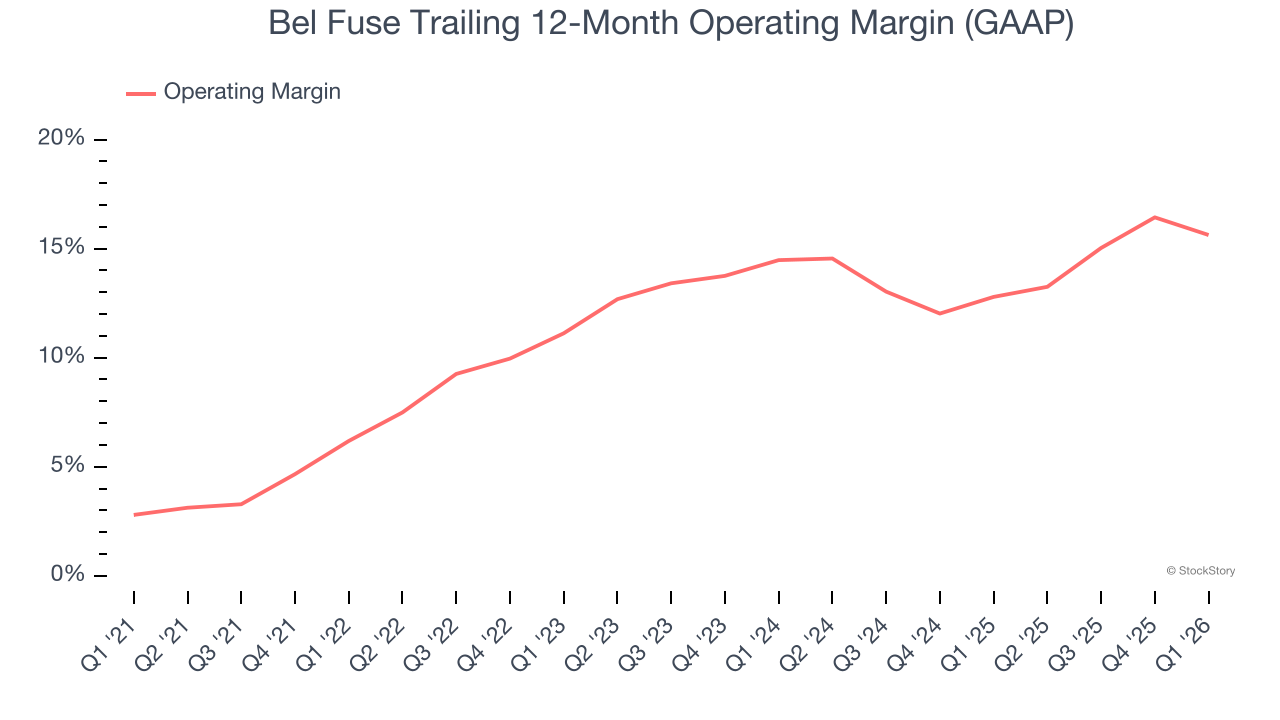
This quarter, Bel Fuse generated an operating margin profit margin of 13.3%, down 3.2 percentage points year on year. Since Bel Fuse’s operating margin decreased more than its gross margin, we can assume it was less efficient because expenses such as marketing, R&D, and administrative overhead increased.
Earnings Per Share
We track the long-term change in earnings per share (EPS) for the same reason as long-term revenue growth. Compared to revenue, however, EPS highlights whether a company’s growth is profitable.
Bel Fuse’s EPS grew at 48.4% compounded annual growth rate over the last five years, higher than its 8.2% annualized revenue growth. This tells us the company became more profitable on a per-share basis as it expanded.
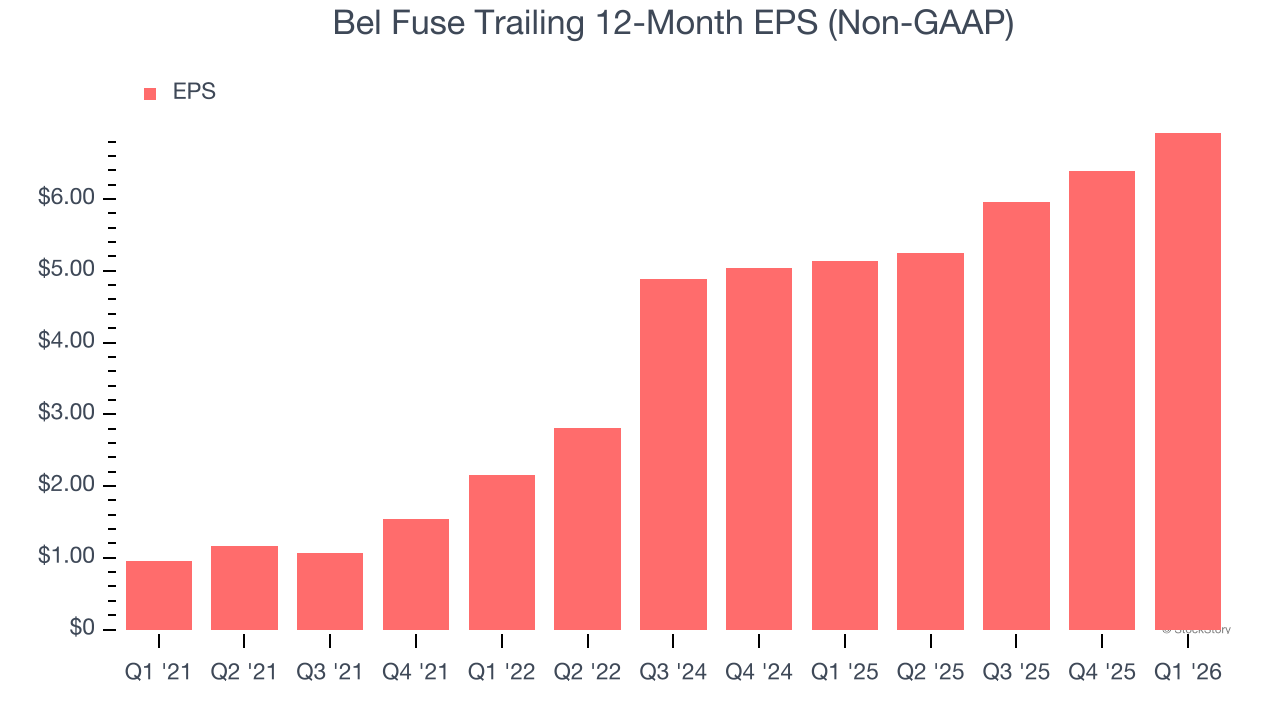
We can take a deeper look into Bel Fuse’s earnings quality to better understand the drivers of its performance. As we mentioned earlier, Bel Fuse’s operating margin declined this quarter but expanded by 9.4 percentage points over the last five years. Its share count also shrank by 14.5%, and these factors together are positive signs for shareholders because improving profitability and share buybacks turbocharge EPS growth relative to revenue growth. 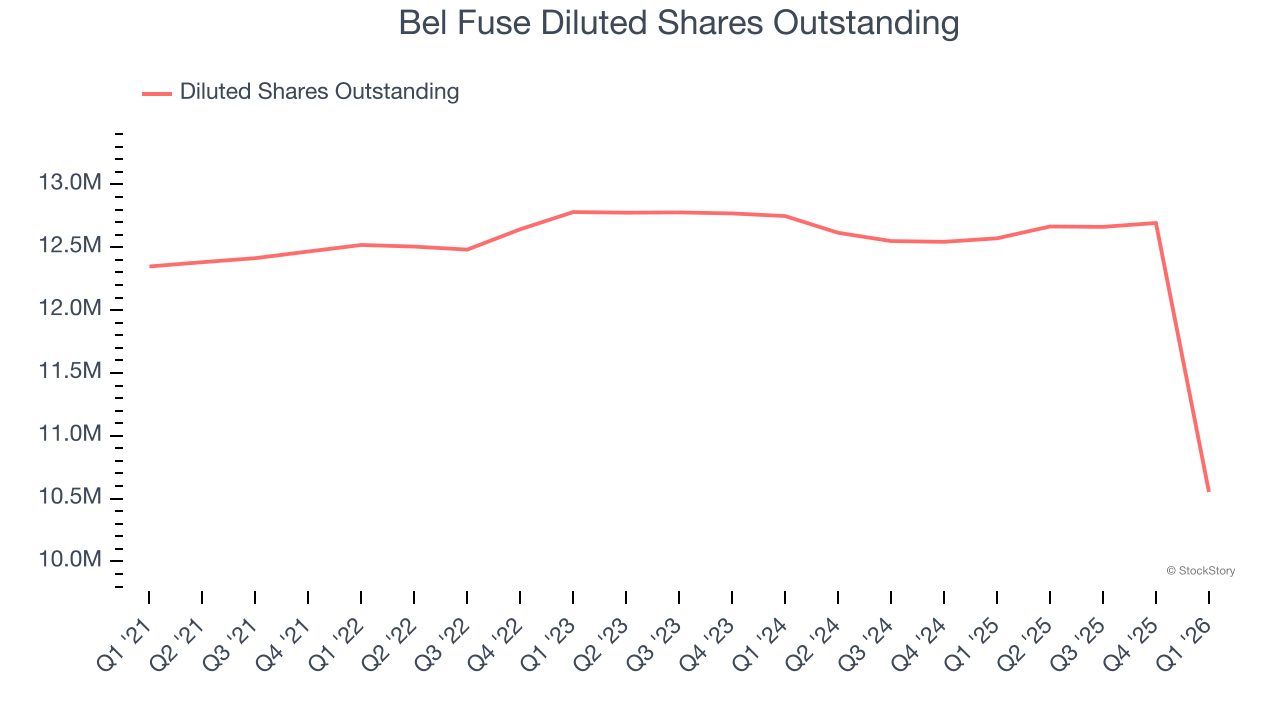
Like with revenue, we analyze EPS over a more recent period because it can provide insight into an emerging theme or development for the business.
For Bel Fuse, its two-year annual EPS growth of 22% was lower than its five-year trend. We still think its growth was good and hope it can accelerate in the future.
In Q1, Bel Fuse reported adjusted EPS of $1.81, up from $1.28 in the same quarter last year. This print easily cleared analysts’ estimates, and shareholders should be content with the results. We also like to analyze expected EPS growth based on Wall Street analysts’ consensus projections, but there is insufficient data.
Key Takeaways from Bel Fuse’s Q1 Results
We were impressed by Bel Fuse’s optimistic revenue guidance for next quarter, which blew past analysts’ expectations. We were also glad its revenue outperformed Wall Street’s estimates. On the other hand, its adjusted operating income missed. Overall, we think this was still a solid quarter with some key areas of upside. The stock remained flat at $230.06 immediately following the results.
Bel Fuse had an encouraging quarter, but one earnings result doesn’t necessarily make the stock a buy. Let’s see if this is a good investment. We think that the latest quarter is only one piece of the longer-term business quality puzzle. Quality, when combined with valuation, can help determine if the stock is a buy. We cover that in our actionable full research report which you can read here (it’s free).