Nanjing, Jiangsu Province, China--(Newsfile Corp. - June 25, 2026) - Jinghong Drone, a leading manufacturer of heavy-lift agricultural UAVs, today announced the successful completion of a large-scale precision afforestation project in Anyang, Henan Province. Using its AG95 agricultural drone, the company sowed 5.5 tons of tree seeds across rugged, previously barren hills in just 45 autonomous sorties, demonstrating how drone technology can dramatically accelerate reforestation while reducing costs and improving worker safety.
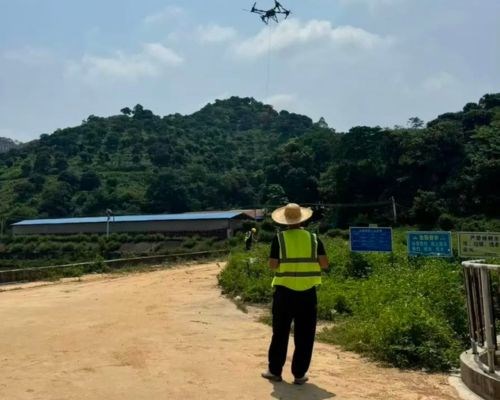
Jinghong Drone's AG95 heavy-lift agricultural UAV conducts precision afforestation operations during the Anyang Green Hills Project, distributing 5.5 tons of tree seeds across challenging mountainous terrain in Henan Province, China.
To view an enhanced version of this graphic, please visit:
https://images.newsfilecorp.com/files/11704/302669_80107c8cd463aad1_001full.jpg
Project Overview - The Anyang Green Hills Initiative
The "Anyang Green Hills Project" was launched to restore degraded mountain ecosystems in a region long hindered by steep slopes, erosion, and limited accessibility. Traditional manual seeding methods would have required weeks of dangerous, labor-intensive work. Jinghong's solution leveraged the AG95, a high-payload agricultural drone capable of carrying 120 kg per flight, with a coverage rate of up to 35 hectares per hour and an adjustable spray width of 8-15 m.
"This project proves that agricultural drones are not just for crop spraying—they are a powerful tool for ecological restoration," said Michael Li, General Manager, Jinghong Drone. "By combining heavy payload capacity with GPS-guided precision, we can reforest challenging terrain faster, more uniformly, and without putting workers at risk."
The AG95 performed 45 fully autonomous missions, each following pre-planned flight paths that ensured uniform seed distribution. GPS-guided navigation and real-time terrain adaptation allowed the drone to maintain consistent seeding density even on steep hillsides. Remote operation kept ground crews at a safe distance, eliminating fall hazards and physical strain.
Key project metrics:
- 5.5 tons of tree seeds distributed across the target area
- 45 autonomous sorties with zero safety incidents
- Uniform coverage over rugged terrain, enhancing seed-survival potential
- Significant time and labor cost savings compared to manual methods
Policy Support - China's Push for Digital Transformation in Forestry
The success of the Anyang Green Hills Project aligns with broader national reforestation efforts. China has set a target of completing 1 billion mu (≈66.7 million hectares) of afforestation by 2030 under the "Three-North" shelterbelt program. In 2025 alone, the country plans to complete 1 billion mu of afforestation, with 200 million mu designated for artificial planting. Drone technology is increasingly recognized as a critical enabler of these goals.
Recent national policy reinforces this direction. In November 2025, six Chinese government departments jointly issued guidelines promoting the use of UAVs for forestry and ecological monitoring, explicitly calling for the accelerated deployment of drones, aerial fire-fighting equipment, and modern digital transformation tools in state-owned forest farms. The January 2026 National Forestry and Grassland Work Conference further identified the low-altitude economy as a core productive force, with 7 of 12 key tasks directly involving drone applications.
The integration of digital data, real-time monitoring, and automated decision-making is transforming how China approaches large-scale afforestation. Drones equipped with GPS, multispectral sensors, and autonomous flight controllers are at the forefront of this digital transformation, enabling precise, data-driven planting that was previously impossible with manual labor alone.
Efficiency Gains - Drone Seeding Outperforms Traditional Methods
These policy signals are already translating into on-the-ground results. A March 2026 report from Shannan, Tibet, noted that 290 afforestation drones had generated 11.858 million yuan in income for local villagers, with two-person teams each investing 200,000 yuan to acquire drones that deliver seedlings to high-altitude slopes. In the Kubuqi Desert, drone seeding has been shown to boost efficiency 100-fold over manual planting and 10-fold over traditional machinery, while increasing germination rates by approximately 15 percent.
"The efficiency gains are undeniable," Michael Li added. "Drone seeding is not just faster—it is more precise, more uniform, and safer for workers. As China continues to push forward with large-scale ecological restoration, we expect UAVs to become the standard tool for afforestation, not an exception."
Jinghong's AG95 is part of a broader lineup of heavy-lift drones designed for agriculture, forestry, and logistics. The company holds over 30 independent patents and has deployed drones in more than 30 countries, including the United States, Poland, France, Russia, Mexico, Brazil, and Australia.
About Jinghong Drone
Jinghong Drone is a China-based manufacturer of high-performance UAVs for agricultural spraying, cargo delivery, and ecological restoration. With a focus on industrial-grade durability, IP67 weatherproofing, and autonomous precision navigation, Jinghong provides turnkey solutions that help operators increase efficiency, reduce costs, and enhance safety. The company offers comprehensive after-sales support, including operator training, maintenance guides, and guaranteed spare parts availability.
Media Contact
Company Name: Jinghong Drone
Email: info@jinghongdrone.com
Country: China
Website: https://jinghongdrone.com/
Person: Michael Li
To view the source version of this press release, please visit https://www.newsfilecorp.com/release/302669