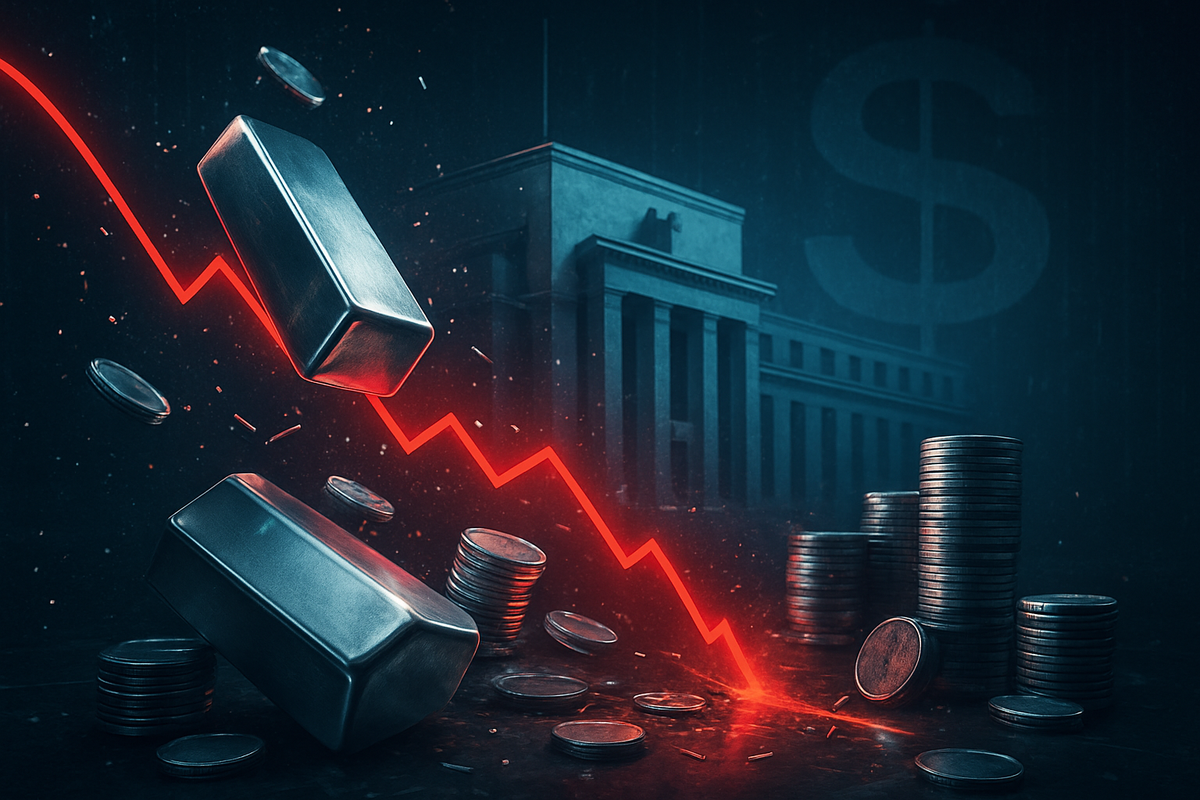
The meteoric rise of silver (XAG/USD) has hit a formidable wall today, March 5, 2026, as the precious metal saw its steepest single-day decline in over two years. After a historic 2025 that saw prices touch an astronomical $120 per ounce, silver plunged nearly 9% in early morning trading, struggling to hold the $82 support level. The sell-off comes on the heels of robust U.S. economic data that has reinvigorated the "higher-for-longer" interest rate narrative, sending the U.S. Dollar Index (DXY) to a five-week high of 98.0.
This sudden reversal marks a stark turning point for a market that had become accustomed to parabolic gains. As the Federal Reserve signals a pause in its easing cycle and institutional investors scramble to liquidate positions, the "poor man’s gold" is facing a harsh reality check. The combination of a strengthening greenback and rising Treasury yields has effectively sapped the appeal of non-yielding assets, leaving retail and institutional bulls alike searching for a floor.
The "Warsh Shock" and the CME Margin Squeeze
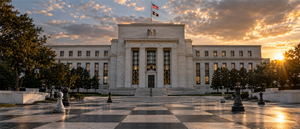
The catalyst for today’s carnage can be traced back to a series of hawkish signals from Washington and Chicago. The nomination of Kevin Warsh as the new Federal Reserve Chair has sent ripples through the commodities complex. Known for his "inflation-hawk" stance, Warsh’s potential leadership suggests a more aggressive posture against sticky Producer Price Index (PPI) data, which recently printed at a stubborn 2.9% year-over-year. This "Warsh Shock" has fundamentally realigned market expectations, pushing any hopes for a mid-year rate cut into late 2026.
Compounding the macro pressure, the Chicago Mercantile Exchange (CME Group) announced a drastic 36% hike in maintenance margins for silver futures late yesterday. This move forced a wave of forced liquidations as over-leveraged speculators were unable to meet the new collateral requirements. What began as a controlled pull-back quickly accelerated into a "flash crash" scenario during the London session, with silver prices cascading from $91 to $83 in less than three hours. This follows a period of extreme over-positioning where retail demand had pushed the metal to valuations that many analysts warned were disconnected from the broader high-interest-rate environment.
Industry Impact: Miners Retrench While Streamers Hold Steady
The carnage in the spot price of silver has translated into immediate pain for the equities market. Pure-play silver producers are feeling the brunt of the volatility. First Majestic Silver (NYSE: AG) saw its shares tumble 12% today, despite recently reporting record quarterly output. Similarly, Pan American Silver (NYSE: PAAS) and Hecla Mining (NYSE: HL) both saw significant double-digit percentage drops as investors recalibrated their earnings expectations for the remainder of the year. For these miners, the increased cost of capital—driven by the high interest rate environment—makes the sudden drop in realized silver prices a "double whammy" for their balance sheets.
Conversely, royalty and streaming companies are demonstrating relative resilience. Wheaton Precious Metals (NYSE: WPM), which secures silver at fixed, low costs (often around $5.75 per ounce), has seen its stock perform better than the broader mining sector. Investors are viewing streamers as a safer haven within the precious metals space, given their lack of exposure to rising operational and inflationary costs. Meanwhile, the iShares Silver Trust (NYSEARCA: SLV) and the Global X Silver Miners ETF (NYSEARCA: SIL) have seen massive outflows as "hot money" rotates back into the safe-haven embrace of the U.S. dollar and short-term Treasuries.
A Structural Shift: Industrial Demand vs. Monetary Gravity
The current slump highlights a growing tension in the silver market: the tug-of-war between its role as a monetary asset and its critical industrial utility. Historically, silver has been sensitive to interest rates, which carry an "opportunity cost" for holders of physical metal. However, the 2026 landscape is different due to the massive structural demand from the "Green Transition" and the Artificial Intelligence boom. Solar photovoltaic (PV) installations are expected to consume over 120 million ounces this year alone, and the deployment of AI-specific servers—which use 3.5 times more silver than traditional hardware—has created a demand floor that did not exist in previous cycles.
Despite this industrial backbone, the broader macro environment is proving too heavy to ignore. The "One Big Beautiful Bill" Act (OBBBA), which injected trillions into the U.S. economy, has successfully stimulated growth but at the cost of persistent inflation. This has forced the Fed to keep the Federal Funds Rate in the 3.50% to 3.75% range. In this high-yield environment, silver must compete with 10-year Treasuries that are currently flirting with the 4.0% mark. Historical precedents suggest that when the dollar is in a "renaissance" phase, commodities struggle regardless of their underlying supply deficits.
The Road Ahead: Support Levels and Strategic Pivots
Looking forward, the market is laser-focused on the $80 psychological level. If silver fails to hold this support, technical analysts at J.P. Morgan (NYSE: JPM) suggest a "worst-case" correction floor could sit near $68. However, many institutional bulls, including those at Bank of America (NYSE: BAC) and Citigroup (NYSE: C), maintain that this is a necessary correction in a long-term bull market. They argue that the sixth consecutive year of a physical silver deficit—estimated to reach 117 million ounces by year-end—will eventually override the short-term headwinds of a strong dollar.
For investors, the coming months will require a strategic pivot. The speculative "get rich quick" phase of the 2025 rally has clearly ended. The focus is now shifting toward "value" in the mining sector and long-term positioning in physical metal. Watch for the Federal Reserve’s next meeting in June; if the rhetoric softens even slightly, the massive supply-demand imbalance could trigger a "V-shaped" recovery. Conversely, if the dollar continues its climb toward the 100 level on the DXY, silver may be in for a prolonged period of consolidation.
Market Wrap-Up: A Correction or a New Reality?
The events of March 5, 2026, serve as a potent reminder that even the most robust industrial commodities are not immune to the gravity of U.S. monetary policy. While the long-term case for silver remains anchored in the essential technologies of the 21st century—EVs, AI servers, and solar power—today’s 9% drop underscores the vulnerability of the asset in a high-interest-rate world. The "Warsh Shock" has effectively reset expectations, forcing a transition from speculative fervor to a more disciplined, data-driven market.
As we move deeper into 2026, investors should keep a close eye on CME margin changes and the DXY’s trajectory. The physical deficit remains the "elephant in the room," but for now, the U.S. dollar is the king of the mountain. Whether this plummet is a buying opportunity of a lifetime or the beginning of a multi-year bear market will depend entirely on how the Federal Reserve balances its mandate against a global economy still hungry for silver.
This content is intended for informational purposes only and is not financial advice.