
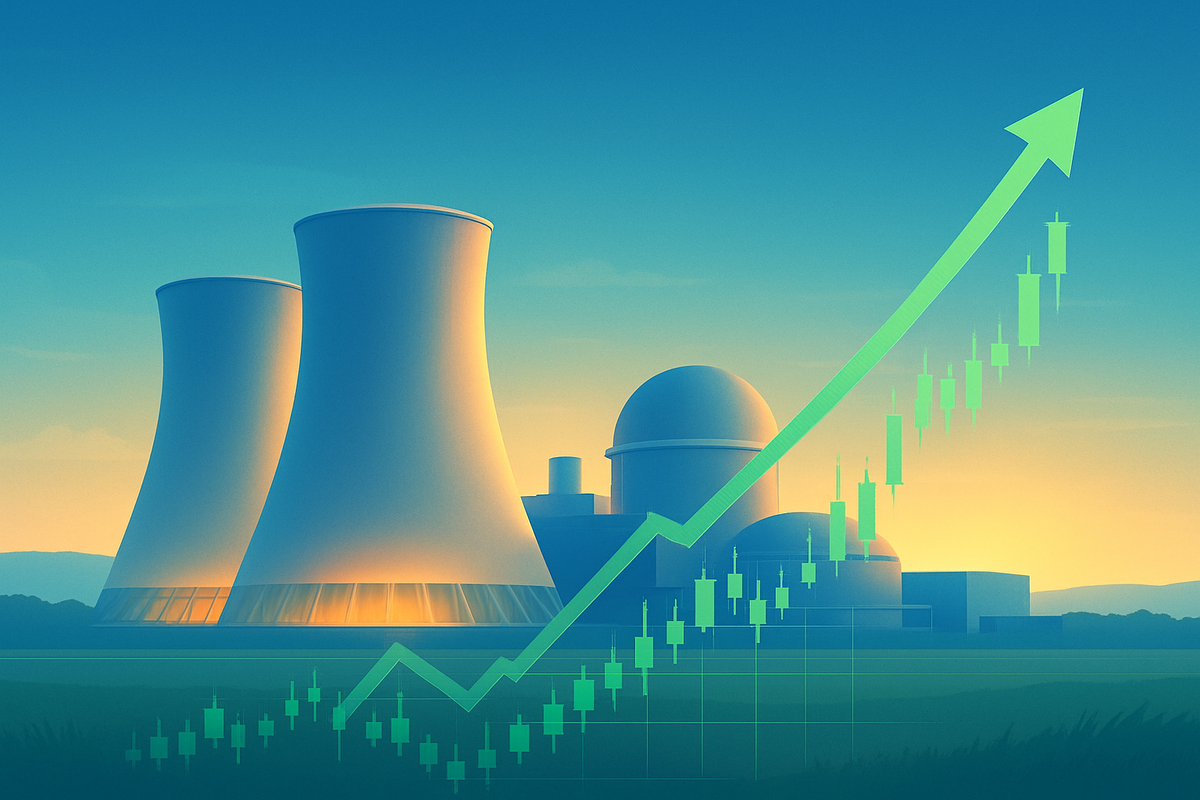
Saskatoon, SK – December 3, 2025 – Denison Mines Corp (NYSE: DNN) saw its shares climb by an impressive 4.25% today, reflecting a palpable resurgence of investor interest in the uranium sector. The significant uptick in the Canadian-based uranium exploration and development company's stock is a clear indicator of a broader market sentiment shift, as global energy demands and geopolitical considerations increasingly highlight the strategic importance of nuclear power and its primary fuel source.
Today's trading action underscores a growing conviction among investors that uranium, long a overlooked commodity, is poised for a sustained bull run. Denison Mines, with its significant projects in Canada's Athabasca Basin, is positioned as a key beneficiary of this renewed enthusiasm. The company's performance today suggests that the market is beginning to price in a future where nuclear energy plays an even more critical role in the world's clean energy transition, driving up demand for the essential fuel.
The Resurgence of the Yellowcake: A Deep Dive into Today's Rally
Denison Mines Corp's 4.25% surge on December 3, 2025, was not an isolated incident but rather a sharp manifestation of a burgeoning trend. The primary catalyst for this renewed interest in uranium stems from a confluence of factors, including persistent global energy security concerns, ambitious decarbonization targets set by nations worldwide, and a growing recognition of nuclear power's reliability as a baseload energy source. Over the past year, several nations have either announced plans to extend the life of existing nuclear reactors or committed to building new ones, signaling a fundamental shift in energy policy.
The timeline leading to this moment has been building for some time. Following the Fukushima Daiichi accident in 2011, the uranium market entered a prolonged bear phase, characterized by oversupply and depressed prices. However, the last few years have seen a gradual tightening of supply, with several major producers cutting back output. Simultaneously, the imperative to reduce carbon emissions has pushed nuclear energy back into the spotlight as a viable and clean alternative to fossil fuels. Key players, including state-owned utilities and investment funds, have begun accumulating physical uranium, further signaling a robust demand outlook and contributing to the current bullish sentiment.
Initial market reactions extend beyond Denison, with other uranium-focused equities showing strength. Analysts point to increasing spot uranium prices and a growing number of long-term contracting discussions as evidence of a structural shift rather than a fleeting speculative bubble. The narrative has decisively turned from one of nuclear phase-outs to one of nuclear renaissance, directly benefiting companies with significant uranium assets like Denison Mines.
Winners and Losers in the Uranium Revival
The renewed investor interest in uranium, epitomized by Denison Mines' robust performance, creates a clear delineation of potential winners and losers across the financial landscape. Denison Mines Corp (NYSE: DNN) itself is a primary beneficiary. As a company with significant undeveloped uranium assets in the high-grade Athabasca Basin, any sustained increase in uranium prices directly enhances the value of its future production potential and existing reserves. Its flagship Wheeler River project, specifically the Phoenix deposit, is considered one of the highest-grade undeveloped uranium deposits in the world, making it highly attractive in a rising price environment.
Other major uranium producers and developers are also poised to benefit significantly. Companies like Cameco Corporation (TSX: CCO, NYSE: CCJ), the world's largest publicly traded uranium company, would see increased profitability from their existing operations and a potential restart of idled mines. Similarly, Kazatomprom (LSE: KAP), the world's largest uranium producer, would likely experience a boost to its revenues and market capitalization. Junior explorers and developers, such as NexGen Energy Ltd. (TSX: NXE, NYSE: NXE) and Uranium Energy Corp. (NYSE: UEC), with promising projects, could also see substantial re-ratings as investors seek exposure to the sector's growth.
Conversely, companies heavily reliant on cheap energy inputs or those that have divested from nuclear power generation might face challenges. While there aren't direct "losers" in the traditional sense from a rising commodity price, industries that have historically opposed nuclear power or those that have not diversified their energy portfolios could find themselves at a competitive disadvantage if electricity prices from other sources continue to rise relative to nuclear. Furthermore, companies with long-term fixed-price contracts for uranium supply might face higher input costs if they need to procure additional material on the spot market.
The Wider Significance: A Global Energy Paradigm Shift
Denison Mines' rally today is more than just a stock market blip; it signifies a broader, profound shift in global energy strategy. This event fits squarely into the overarching trend of decarbonization and energy independence that has gained significant momentum worldwide. As nations grapple with climate change targets and geopolitical instabilities impacting fossil fuel supplies, nuclear power is increasingly being recognized as a crucial component of a diversified, low-carbon energy mix. This renewed acceptance is driving policy support, funding for new reactor technologies (like Small Modular Reactors or SMRs), and a re-evaluation of existing nuclear infrastructure.
The ripple effects on competitors and partners are substantial. Increased demand for uranium will spur investment in exploration and development, potentially leading to new discoveries and the reactivation of previously uneconomical mines. This could foster a more robust and diverse supply chain for nuclear fuel. Furthermore, the renewed interest extends to companies involved in the entire nuclear fuel cycle, including enrichment, fabrication, and waste management, creating opportunities for technological advancements and infrastructure development. Regulators globally are also adapting, with some governments streamlining permitting processes for new nuclear projects and offering financial incentives, reflecting a strategic pivot towards nuclear energy.
Historically, uranium markets have been cyclical, experiencing boom and bust phases. The current environment draws comparisons to the mid-2000s, when a surge in demand from China and other developing nations, coupled with supply disruptions, led to a dramatic spike in uranium prices. While the current drivers are distinct, primarily focused on climate action and energy security, the underlying principle of a tightening market responding to increased demand remains similar. This historical context suggests that while volatility is possible, the fundamental demand drivers appear more sustainable this time around, underpinned by global policy shifts rather than speculative fervor alone.
What Comes Next: Navigating the Nuclear Renaissance
The short-term outlook for Denison Mines and the broader uranium market suggests continued upward pressure, albeit with potential for price corrections typical of commodity cycles. In the immediate future, investors will be closely watching for further announcements regarding long-term uranium contracts, which provide crucial visibility into future demand. Any significant supply disruptions or accelerated timelines for new reactor builds could provide additional catalysts. Denison Mines (NYSE: DNN) itself will likely focus on advancing its Wheeler River project, particularly through detailed engineering and permitting, positioning itself to capitalize on higher uranium prices when production commences.
In the long term, the trajectory of the uranium market is tied to the global expansion of nuclear power. This includes the successful deployment of Small Modular Reactors (SMRs), which promise to make nuclear power more flexible, cost-effective, and quicker to deploy. Should SMR technology gain widespread adoption, it could unlock a massive new wave of uranium demand. Strategic pivots for companies like Denison might involve securing off-take agreements with utilities, exploring strategic partnerships for project financing, and potentially looking at mergers and acquisitions to consolidate assets in a rising market.
Market opportunities will emerge not only in direct uranium mining but also in related sectors such as nuclear technology development, specialized engineering services for reactor construction, and even in the financial instruments designed to provide exposure to uranium. Challenges will include navigating complex regulatory environments, managing capital expenditures for large-scale mining projects, and ensuring a stable and ethical supply chain. Potential scenarios range from a steady, gradual increase in uranium prices driven by consistent demand growth to more volatile spikes if supply remains constrained amidst rapidly accelerating demand.
Comprehensive Wrap-Up: A New Dawn for Uranium
Today's 4.25% surge in Denison Mines Corp (NYSE: DNN) stock serves as a potent reminder of the transformative power of renewed investor conviction in the uranium market. The key takeaway is clear: nuclear energy is no longer a fringe solution but a central pillar in the global quest for clean and reliable power. This shift is creating a fundamentally bullish environment for uranium and the companies that supply it, with Denison Mines at the forefront.
Moving forward, the market is poised for continued evolution. The underlying drivers—decarbonization, energy security, and technological advancements in nuclear power—are robust and long-lasting. While volatility is inherent in commodity markets, the structural demand story for uranium appears stronger than it has been in over a decade. Investors should watch for several key indicators in the coming months: further government policy announcements supporting nuclear power, progress on new reactor builds and SMR deployment, and the pace of long-term contracting in the uranium market. These factors will provide crucial insights into the sustainability and magnitude of this nuclear renaissance. The current moment represents a significant turning point, signaling a new dawn for uranium and the companies positioned to fuel the world's clean energy future.
This content is intended for informational purposes only and is not financial advice