Date: April 2, 2026
Introduction
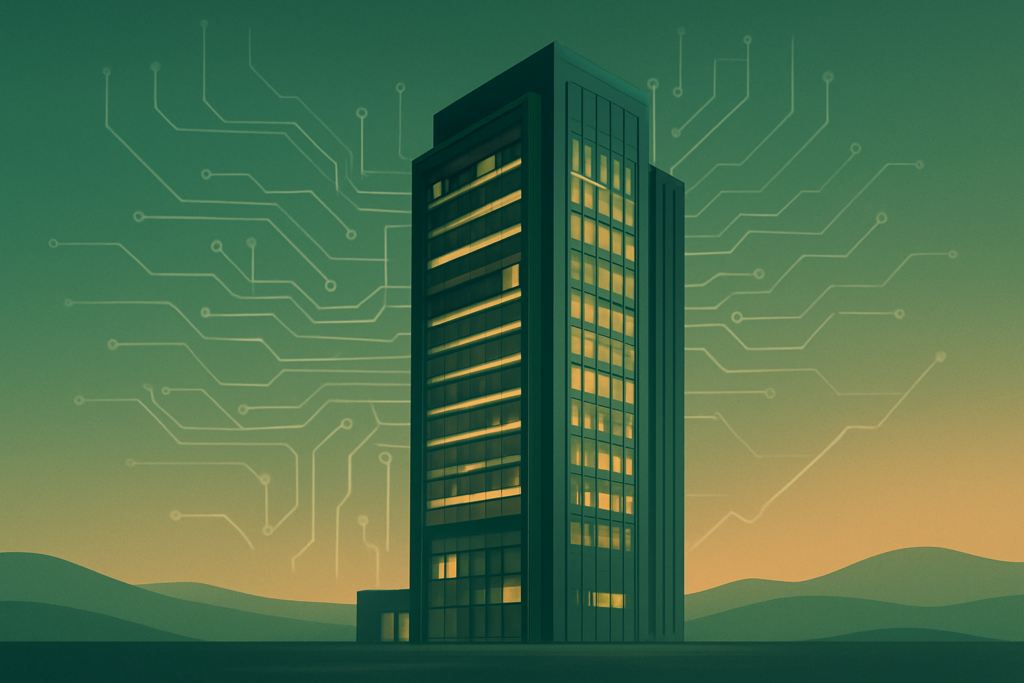
In the evolving landscape of industrial technology, few companies have undergone a transformation as profound as Acuity Brands, Inc. (NYSE: AYI). Once regarded primarily as a legacy manufacturer of light fixtures and "dumb" bulbs, the Atlanta-based giant has spent the last five years aggressively reinventing itself. Now operating under the umbrella of its March 2025 rebranding as "Acuity Inc.," the company has emerged as a powerhouse in building automation, software-defined spaces, and the Internet of Things (IoT). As of early 2026, Acuity finds itself at a critical juncture: transitioning from a high-margin hardware provider to an integrated technology platform, all while navigating a volatile macroeconomic environment that has tested its stock’s resilience.
Historical Background
Acuity’s journey began over a century ago in 1919 as Atlanta Linen Supply, which eventually grew into the diversified National Service Industries (NSI). The modern identity of the firm was forged in 1969 with the acquisition of Lithonia Lighting, a move that would define its core competency for decades. In 2001, Acuity Brands was spun off from NSI as an independent public company, initially focusing on consolidating the fragmented North American lighting market.
The 2010s brought the "LED Revolution," a period of intense disruption where incandescent and fluorescent technologies became obsolete. While many competitors struggled with the commoditization of LEDs, Acuity doubled down on high-end architectural fixtures and rudimentary controls. However, the true "Great Pivot" began in 2020 with the appointment of Neil Ashe as CEO. Under Ashe, the company shifted away from a "cost-plus" manufacturing mindset toward "value creation," prioritizing intelligence over sheer lumen output.
Business Model
Acuity Inc. operates a dual-segment strategy that balances a mature "cash cow" with a high-growth "tech engine."
- Acuity Brands Lighting and Lighting Controls (ABL): Representing approximately 75% of total revenue, ABL remains the market leader in North American commercial and industrial lighting. This segment includes powerhouses like Lithonia Lighting, Holophane, and Peerless. ABL’s model has shifted toward "value-engineered" designs that maintain high efficiency while lowering material costs, protecting margins even in inflationary environments.
- Intelligent Spaces Group (ISG): This is the company’s digital frontier. ISG includes Distech Controls, which manages building automation systems (HVAC, lighting, and security), and Atrius, a cloud-based sustainability and data platform. In 2025, this segment was bolstered by the landmark $1.2 billion acquisition of QSC, a leader in audio, video, and control (AV&C) platforms. This acquisition allows Acuity to manage the entire "sensory" experience of a building—light, sound, and air—through a single software stack.
Stock Performance Overview
The performance of AYI shares over the last decade tells a story of a "fallen angel" that found a second life. In the mid-2010s, the stock hit then-record highs before plummeting as LED commoditization compressed margins. However, since the 2020 leadership change, the stock has been on a multi-year upward trajectory.
In the last five years, AYI has significantly outperformed the broader industrial sector, driven by aggressive share buybacks and margin expansion. More recently, 2026 has been a year of extreme volatility. After hitting an all-time high of approximately $380 in early January 2026, the stock saw a sharp "sell the news" correction following its Q1 earnings report. Currently trading in the $275–$285 range as of early April, the stock is down roughly 25% year-to-date, despite solid earnings beats. This disconnect between price and performance has made it a focal point for value investors and contrarian analysts.
Financial Performance
Acuity’s recent financial reports reflect a company that is successfully navigating the transition to a software-heavy mix. In its Q2 FY2026 results (ended February 28, 2026), the company reported:
- Net Sales: $1.06 billion, a 4.9% increase year-over-year.
- Adjusted Operating Margin: A robust 16.7%, reflecting the company's ability to drive efficiencies through its "Better. Smarter. Faster." operating system.
- Earnings Per Share (EPS): Adjusted EPS came in at $4.14, comfortably beating Wall Street consensus of $4.00.
- Free Cash Flow: The company remains a cash-generating machine, utilizing its capital for the integration of QSC and ongoing share repurchases, which have reduced the share count by nearly 20% over the last four years.
Leadership and Management
Neil Ashe, Chairman and CEO, is the architect of "Acuity 2.0." His background—spanning executive roles at Walmart’s global e-commerce and CBS Interactive—brought a tech-first perspective to an old-guard manufacturing firm. Ashe’s strategy is built on the premise that buildings are not static assets but "industrial technology platforms."
The management team has earned a reputation for "strategic clarity," a term frequently used by analysts to describe the company’s disciplined M&A approach and its transparent communication regarding segment performance. Under Ashe, the board has been refreshed to include more software and digital transformation expertise, signaling a permanent departure from the company's "metal-bending" roots.
Products, Services, and Innovations
Innovation at Acuity is no longer just about more efficient LEDs; it is about "Sensor Fusion."
- The QSC Integration: The 2025 acquisition of QSC’s Q-SYS platform is the crown jewel of Acuity’s current offering. By integrating audio and video controls with lighting and HVAC via Distech, Acuity now offers a "single pane of glass" for facility managers.
- Atrius Sustainability: This software suite helps Fortune 500 companies track their carbon footprint in real-time, an essential tool as ESG reporting mandates become more stringent globally.
- nLight Controls: This platform remains the industry standard for networked lighting, allowing buildings to harvest daylight and adjust to occupancy patterns with millisecond precision.
Competitive Landscape
Acuity occupies a unique position, straddling the line between traditional industrial giants and modern tech firms.
- Signify (formerly Philips Lighting): Acuity’s primary global rival. While Signify has a larger global footprint, Acuity dominates the North American commercial market and is perceived to have a more advanced integrated software ecosystem.
- Current Lighting (GE Current/Hubbell): A formidable competitor in the industrial and outdoor segments, following GE Current’s acquisition of Hubbell’s lighting business in 2022.
- The "Big Three" BMS Players: Acuity is increasingly competing with Honeywell, Johnson Controls, and Schneider Electric. However, Acuity’s "agnostic" approach—where its software can often run on or alongside other hardware—gives it an edge in the fast-growing retrofit market.
Industry and Market Trends
The "Smart Building Renaissance" is the primary tailwind for Acuity. Several macro factors are converging in 2026:
- Decarbonization: With commercial buildings accounting for nearly 40% of global carbon emissions, there is an urgent push to upgrade legacy systems.
- The Hybrid Work Era: As office spaces are redesigned for flexible work, building owners are investing in sensors and AV technology to make spaces more collaborative and energy-efficient.
- AI-Driven Optimization: Acuity is integrating AI into its Distech and Atrius platforms to predict building occupancy patterns, allowing for "anticipatory" energy management that reduces waste by up to 30%.
Risks and Challenges
Despite its strong positioning, Acuity is not without risks:
- Construction Cycles: A potential slowdown in new commercial construction due to high interest rates could impact the ABL segment’s volume.
- Integration Risk: The $1.2 billion QSC acquisition is Acuity’s largest to date. Successfully merging a high-growth AV company with a traditional lighting firm is a complex operational task.
- Supply Chain and Commodities: While supply chains have largely normalized, the company remains sensitive to the prices of steel, aluminum, and semiconductors.
- Valuation vs. Growth: Investors are still debating whether Acuity should be valued as a slow-growth industrial (12x-15x P/E) or a high-growth tech firm (25x+ P/E).
Opportunities and Catalysts
- The Retrofit Boom: Over 70% of commercial buildings in the U.S. are over 20 years old. The market for upgrading these "dumb" buildings into "intelligent" ones is a multi-billion dollar opportunity.
- Inflation Reduction Act (IRA): Federal tax credits for energy-efficient building upgrades are reaching their peak in 2026-2027, creating a "rush to renovate."
- Software Margins: As the AIS segment grows as a percentage of total revenue, Acuity’s overall margin profile is expected to expand, potentially leading to a permanent re-rating of the stock.
Investor Sentiment and Analyst Coverage
Wall Street sentiment on AYI is currently a "polarized Buy." Analysts from major firms like Baird and Goldman Sachs maintain "Outperform" ratings, citing the company’s market-leading margins and the potential of the AIS segment. However, some retail sentiment has soured following the early 2026 stock dip, with many questioning if the "Ashe Premium" is already baked into the price. Institutional ownership remains high (~95%), suggesting that "smart money" is comfortable with the long-term transformation narrative.
Regulatory, Policy, and Geopolitical Factors
Regulatory tailwinds are arguably Acuity’s strongest ally.
- California Title 24 (2026): The newest iteration of California’s building code, effective January 1, 2026, mandates significantly more advanced occupancy and daylight controls, effectively making Acuity’s premium nLight products a requirement for new builds in the state.
- DOE Standards: The Department of Energy’s new rules for "General Service Lamps" (GSLs) effectively outlaw low-efficiency bulbs by 2028, forcing the entire market toward the high-efficacy LED solutions Acuity specializes in.
- NYC Local Law 97: Large buildings in New York City now face massive fines for exceeding carbon limits, a "stick" that is driving building owners directly into the arms of Acuity’s ISG segment.
Conclusion
Acuity Brands, now Acuity Inc., has successfully navigated the treacherous waters of technological disruption to emerge as a leaner, smarter, and more profitable entity. While the stock’s recent volatility in early 2026 has given some investors pause, the underlying fundamentals—record-high margins, a dominant market position, and a savvy pivot into building intelligence—suggest a company that is far more than just a "light fixture maker."
For investors, the key will be watching the integration of QSC and the organic growth of the Intelligent Spaces Group. If Acuity can prove that its software revenue is as sticky and scalable as its fixtures are ubiquitous, the current price dip may eventually be seen as a prime entry point into one of the most successful industrial transformations of the decade.
This content is intended for informational purposes only and is not financial advice.