
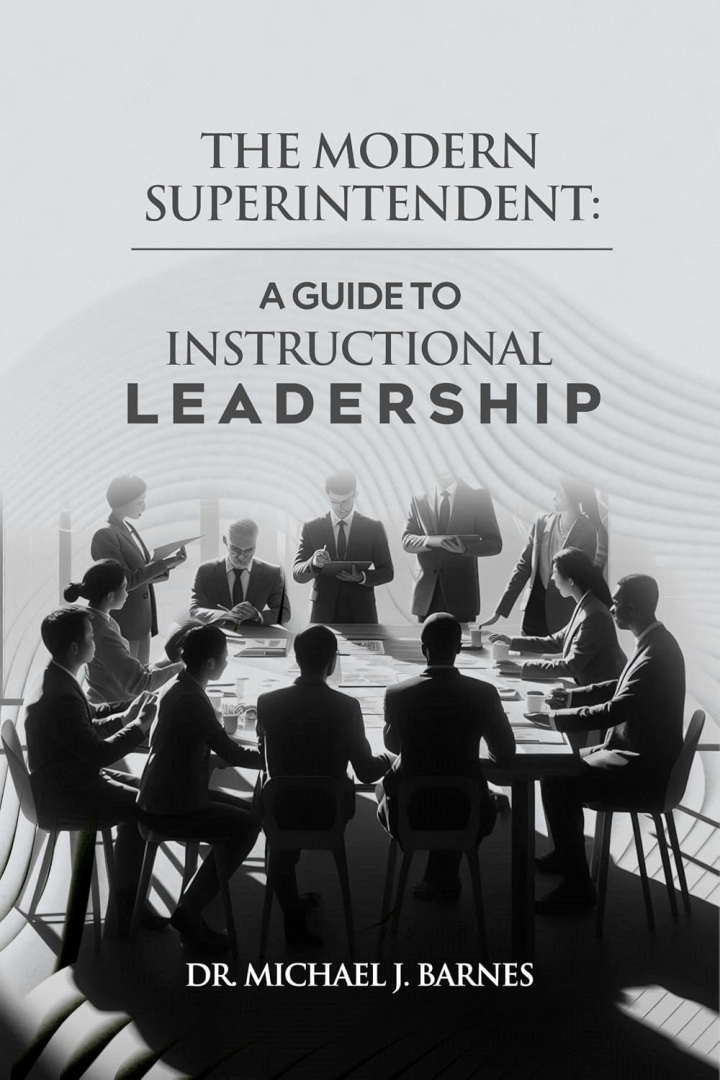
New release by Michael J. Barnes examines how district leaders can drive student achievement through curriculum alignment, data-informed decision-making, and instructional focus
As public education systems across the United States continue to face rising accountability standards, widening achievement gaps, and evolving instructional demands, this new educational leadership book argues that the superintendent’s role must fundamentally shift from operational oversight to active instructional leadership. The Modern Superintendent: A Guide to Instructional Leadership presents a comprehensive framework for how district leaders can strengthen student achievement by placing teaching and learning at the center of every district decision.
Written by veteran educator and superintendent Michael J. Barnes, Ed.D., the book draws from more than 32 years of experience in public education and offers a practical examination of leadership strategies designed to improve instructional quality across entire school systems. Rather than approaching superintendency as primarily administrative, the work positions instructional leadership as the defining responsibility of modern district leadership.
Across ten chapters, Barnes explores the evolving role of the superintendent in shaping curriculum, assessment systems, professional development, resource allocation, and collaborative school culture. The book emphasizes that sustained student achievement is not achieved through isolated programs or temporary initiatives, but through consistent instructional alignment and long-term strategic focus.
Central to the book’s argument is the idea that district leadership must prioritize literacy and numeracy as foundational academic priorities. Barnes presents reading and mathematics proficiency as essential gateways to future academic and career success, arguing that superintendents must lead intentional district-wide efforts to strengthen instruction in these core areas. The work highlights evidence-based instructional practices, targeted interventions, and professional learning structures designed to support measurable student growth.
The book also examines how data analysis has become an essential leadership tool in contemporary education. Barnes argues that student achievement data should be used not merely for compliance or reporting purposes, but as a framework for strategic decision-making. Through discussions of assessment systems, subgroup analysis, and intervention planning, the book demonstrates how superintendents can use data to identify instructional gaps, allocate resources more effectively, and create equitable learning opportunities for students across diverse populations.
Another major focus of the work is the development of Professional Learning Communities (PLCs) as a mechanism for sustained instructional improvement. Barnes presents collaboration among educators as a critical component of district success, encouraging superintendents to build cultures where teachers and administrators work collectively to analyze student outcomes, refine instructional practices, and pursue continuous professional growth.
The book also addresses the superintendent’s role in leading change within educational systems that often struggle with resistance to innovation. Barnes emphasizes that instructional leadership requires adaptability, visibility, and a willingness to engage directly with the realities of classroom instruction. He argues that effective leaders must not only advocate for change but model a commitment to learning and improvement themselves.
Throughout the book, instructional leadership is framed not as a supplementary responsibility but as the foundation upon which successful districts are built. The work presents the superintendent as a leader responsible for ensuring that curriculum, assessment, staffing, professional development, and district culture all operate in alignment with student learning goals.
Intended for superintendents, principals, school board members, educational leadership programs, and policymakers, The Modern Superintendent: A Guide to Instructional Leadership contributes to ongoing discussions about the future of educational leadership in an increasingly complex academic environment.
Media Contact
Company Name: Dr. Michael J. Barnes
Contact Person: Dr. Michael J. Barnes
Email: Send Email
Country: United States
Website: https://drmichaeljbarnes.com/