MingYa has expanded its technical and application support for PEG-40 Hydrogenated Castor Oil, helping cosmetic and personal care buyers evaluate solubilization efficiency, cold-process performance, visual clarity, sensory impact, and compatibility within finished formulations.
The initiative focuses on practical applications in transparent mouthwash, facial serum, facial mist, scalp tonic, transparent hair care liquids, fragrance systems, and selected essential-oil personal care products. It reflects a growing need among purchasing teams and formulation laboratories for raw-material decisions based on finished-product performance rather than product name or quotation alone.
MingYa is a formulation-oriented supplier of PEG-40 Hydrogenated Castor Oil and functional cosmetic raw materials for oral care, skincare, hair care, and clear personal care systems.
Although PEG-40 Hydrogenated Castor Oil is commonly recognized as a nonionic solubilizer, buyers often discover that products sharing the same INCI name do not necessarily behave identically during mixing, dilution, storage, temperature cycling, sensory testing, or production scale-up.
Differences in physical form, odor, color, dispersibility, processing requirements, and formulation compatibility can directly affect production efficiency and finished-product quality.
MingYa’s current product support is therefore centered on one question: how can buyers qualify PEG-40 Hydrogenated Castor Oil under realistic processing and application conditions before moving into commercial purchasing?
MingYa PEG-40 Hydrogenated Castor Oil at a Glance
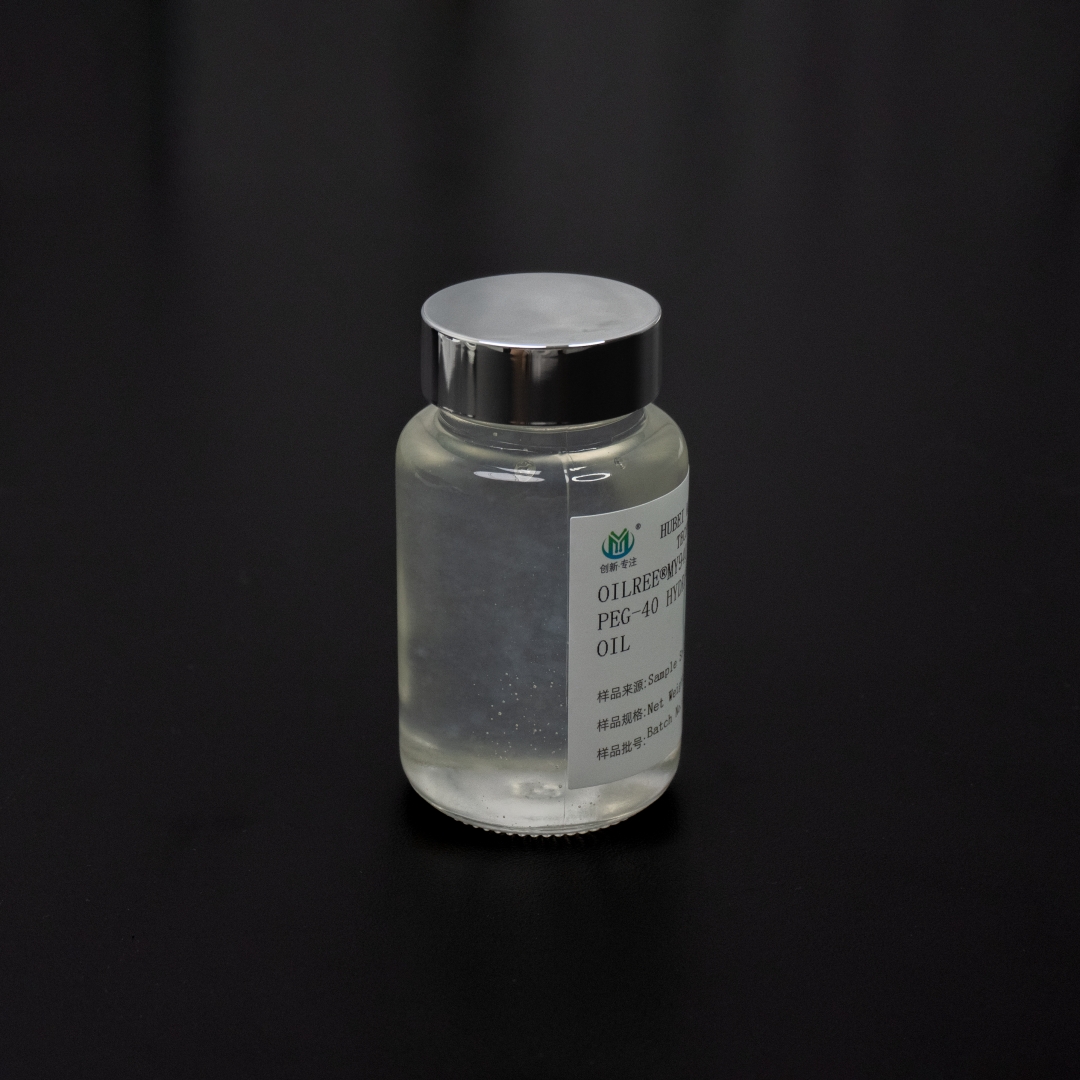
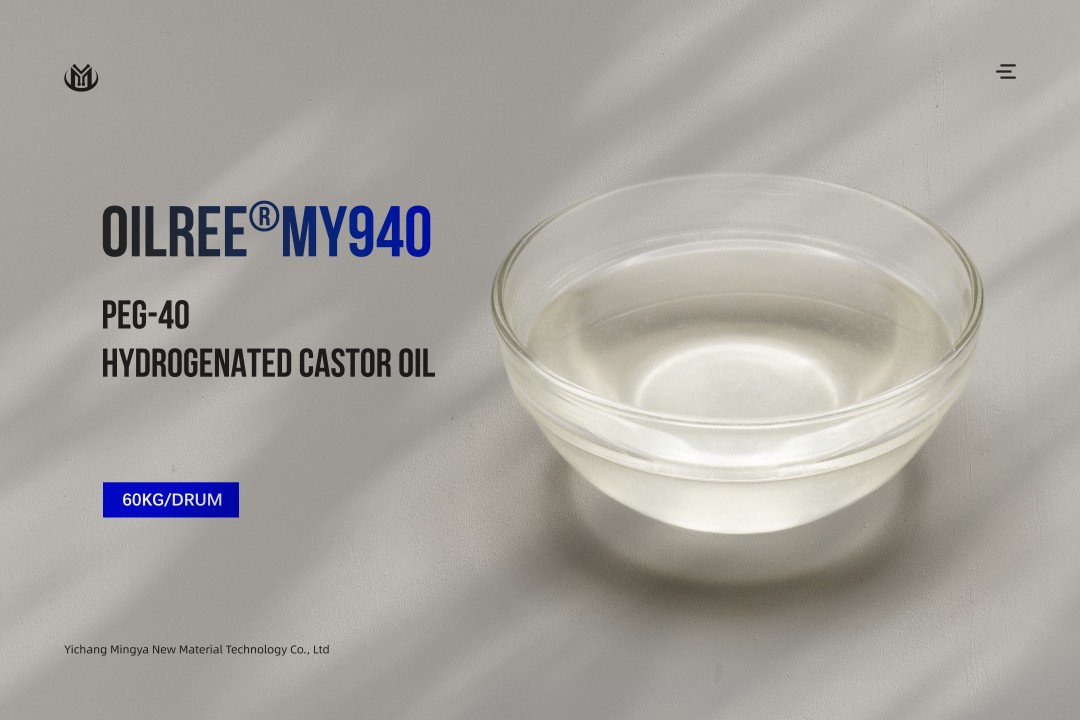
MingYa PEG-40 Hydrogenated Castor Oil is intended for the incorporation of suitable oil-soluble ingredients into water-based systems.
Key product information includes:
-
INCI name: PEG-40 Hydrogenated Castor Oil
-
CAS number: 61788-85-0
-
Primary function: Nonionic solubilizer
-
Typical use level: Approximately 0.2% to 5%, depending on formulation conditions
-
Application focus: Mouthwash, serum, mist, scalp tonic, fragrance systems, transparent shampoo, and other clear personal care liquids
-
Processing focus: Cold-process dispersion and water-based formulations
These values should be treated as formulation starting points rather than fixed rules.
The final use level depends on the chemical composition of the fragrance or essential oil, total oil load, pH, electrolyte concentration, preservative system, surfactants, botanical extracts, active ingredients, temperature, and required appearance of the finished product.
For this reason, MingYa recommends that buyers test the material with their actual formulation rather than relying only on a simplified fragrance-and-water model.
Why PEG-40 Hydrogenated Castor Oil Purchasing Requires More Than an INCI Check
PEG-40 Hydrogenated Castor Oil is widely used to help disperse fragrance oils, essential oils, cooling ingredients, and other lipophilic materials in aqueous formulations.
However, initial dispersion does not always indicate long-term stability.
A formulation may look clear immediately after mixing but later develop haze, sediment, separation, an oil ring, color change, or visible light scattering. These issues may appear after refrigeration, elevated-temperature storage, transportation, prolonged standing, dilution, or interaction with packaging materials.
Sensory performance can also become a commercial concern.
In oral care, the selected solubilizer may influence bitterness, astringency, coating, flavor release, or cooling perception. In facial and scalp products, an excessive use level may contribute to tack, residue, heaviness, or changes in foam and viscosity.
These risks are why professional purchasing teams increasingly evaluate PEG-40 Hydrogenated Castor Oil through a combination of documentation review, representative sample testing, and formulation-specific stability work.
The most useful purchasing questions are not limited to whether the supplier offers the ingredient. Buyers should also determine whether the product:
-
Disperses under the intended production temperature
-
Maintains clarity in the finished formulation
-
Preserves the intended flavor or fragrance profile
-
Remains stable with actives, preservatives, and electrolytes
-
Performs consistently during laboratory and production-scale mixing
MingYa’s application support is structured around these practical qualification needs.
MingYa PEG-40 Hydrogenated Castor Oil Supports Cold-Process Manufacturing
Cold-process formulation is increasingly relevant to buyers developing products with volatile fragrances, botanical extracts, temperature-sensitive active ingredients, or preservatives that may be affected by prolonged heating.
Traditional solubilization processes may require heating, extended agitation, or a tightly controlled order of addition. These conditions can increase manufacturing complexity and extend batch preparation time.
A PEG-40 Hydrogenated Castor Oil material that disperses effectively at room temperature can support a simpler process, particularly in transparent water-based products.
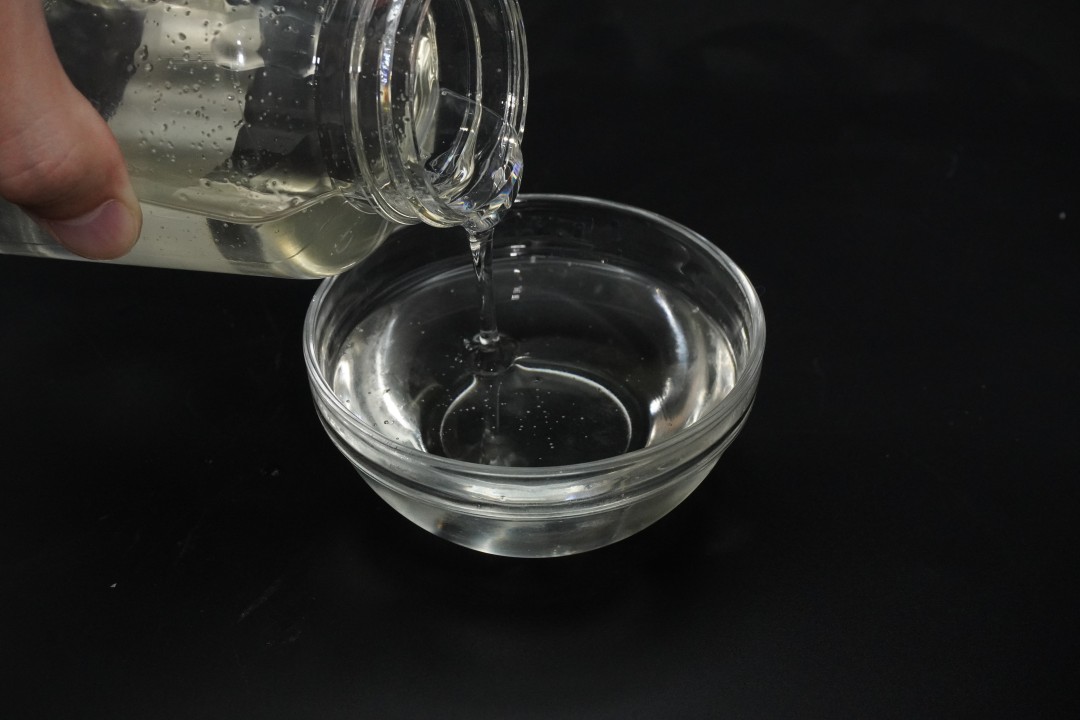
MingYa has evaluated its PEG-40 Hydrogenated Castor Oil under controlled cold-water mixing conditions. In company-reported comparative testing, the material dispersed in water at approximately 25°C without the same visible gelling and clumping observed in the conventional comparison sample.
Under the stated test conditions, MingYa reported complete dispersion after approximately three minutes of stirring and a light transmittance result of approximately 99.8%.
The evaluated solution remained uniform during the reported observation period and did not show the same visible blue-light effect as the comparison material.
MingYa also reported a milder sensory profile in its internal oral care comparison, with reduced bitterness and astringency under the evaluated conditions.
These findings are based on company testing and should not be interpreted as a guarantee for every commercial formula. Fragrance chemistry, essential-oil composition, pH, electrolytes, active ingredients, processing equipment, water quality, and packaging can all affect the final result.
Buyers should confirm performance using representative raw materials and production conditions.
Clear Oral Care Formulations Create Demanding Solubilization Requirements
Transparent mouthwash and oral sprays are among the most demanding applications for PEG-40 Hydrogenated Castor Oil.
A mouthwash may contain flavor oils, menthol, cooling ingredients, sweeteners, preservatives, botanical extracts, antibacterial ingredients, humectants, and pH-adjusting materials. These components must remain uniformly distributed while the finished product maintains an acceptable taste and visual appearance.
A solubilizer that works in a basic laboratory mixture may behave differently once electrolytes, actives, or a complete flavor system are added.
Flavor oils also vary considerably in composition. Citrus oils, mint oils, botanical oils, and compound flavor systems may each require a different solubilizer ratio.
For this reason, MingYa recommends that oral care developers evaluate PEG-40 Hydrogenated Castor Oil with the exact flavor package intended for production.
A useful qualification process should examine initial clarity, low-temperature stability, elevated-temperature stability, visible oil separation, flavor release, bitterness, coating, cooling perception, and interaction with the preservative system.
The objective is not simply to determine whether the ingredient can disperse the oil phase. The buyer must confirm whether the complete formulation remains clear, stable, and acceptable to the end user.
This approach allows purchasing teams to create a formulation-linked raw-material specification rather than approving PEG-40 Hydrogenated Castor Oil based only on a general technical data sheet.
Transparent Skincare and Scalp Care Require a Balanced Use Level
MingYa PEG-40 Hydrogenated Castor Oil can also be evaluated in facial essences, serums, facial mists, scalp tonics, transparent shampoos, and other water-based personal care liquids.
These formulations often contain small amounts of ingredients that are difficult to distribute uniformly, including fragrance, rosemary oil, tea tree oil, lavender oil, cooling agents, oil-soluble botanical components, selected vitamins, and conditioning ingredients.
Even when the oil concentration is low, an unsuitable solubilization system can produce haze or separation.
Adding more PEG-40 Hydrogenated Castor Oil is not always the best solution. Excessive use can alter foam, viscosity, residue, skin feel, or overall sensory performance.
The goal is to identify the lowest effective concentration that provides the required clarity and stability without compromising the finished-product experience.
A transparent facial essence, for example, may appear acceptable immediately after mixing but become cloudy when stored at a lower temperature. Botanical extracts may disturb the system after the fragrance phase has already been optimized.
A facial mist adds another consideration: the formulation must remain compatible with the spray mechanism. Sediment, viscosity changes, or incomplete dispersion may affect spray pattern and package performance.
Scalp tonics create a different set of priorities. In addition to clarity, formulators must evaluate residue after drying, scalp feel, essential-oil stability, sprayability, compatibility with alcohol or glycols, and the behavior of conditioning ingredients.
MingYa’s formulation-oriented approach places these finished-product conditions at the center of the purchasing decision.
PEG-40 Hydrogenated Castor Oil Is Not the Same as an Emulsifier or Emollient
One of the most common ingredient-selection mistakes is treating solubilizers, emulsifiers, emollients, and cleansing surfactants as interchangeable because they all interact with oil and water.
PEG-40 Hydrogenated Castor Oil is primarily used to help incorporate suitable oil-soluble ingredients into aqueous systems. It is especially relevant when the product is intended to remain clear or translucent.
An oil in water emulsifier performs a different function. It stabilizes oil droplets dispersed in a continuous water phase and is commonly used in lotions, body milks, facial creams, and lightweight moisturizers.
A water in oil emulsifier supports the opposite structure, in which water droplets are dispersed through a continuous oil phase. These systems may be selected for rich creams, protective formulations, long-wear makeup, and water-resistant sunscreen.
An emollient is selected mainly for sensory and conditioning purposes. Ingredients such as Isopropyl Myristate and Caprylic/Capric Triglyceride can improve spreading, lubrication, softness, solvent performance, and after-feel.
However, adding an emollient also increases the oil load within the formula.
If a transparent water-based product contains a significant concentration of Isopropyl Myristate or Caprylic/Capric Triglyceride, the system may require an emulsion rather than simply a higher level of PEG-40 Hydrogenated Castor Oil.
Other cosmetic raw materials also serve distinct purposes.
PEG-7 Glyceryl Cocoate is commonly associated with refatting, conditioning, and mild cleansing support in facial cleansers, body washes, shampoos, and liquid soaps.
PEG-20 Glyceryl Triisostearate is more closely linked with cleansing oils and makeup-removal products that must emulsify during rinsing.
Sorbeth-30 Tetraoleate may also be selected for cleansing oils, makeup removers, and balm-to-milk systems requiring a balance between oil-phase cleansing and water rinsability.
These ingredients may appear in related product searches, but they should not be treated as direct substitutes for PEG-40 Hydrogenated Castor Oil.
The correct purchasing decision begins with the structure and performance target of the finished product.
MingYa Cosmetic Raw Materials Support Function-Based Selection
MingYa supplies functional cosmetic raw materials across several formulation categories, including solubilizers, oil in water emulsifiers, water in oil emulsifiers, emollients, synthetic oils, cleansing ingredients, conditioning materials, and rheology modifiers.
This broader product direction allows buyers to discuss PEG-40 Hydrogenated Castor Oil within the context of the complete formulation.
A formulator developing a clear mouthwash may require a solubilizer. A lightweight lotion may need an oil in water emulsifier. A rich sunscreen may require a water in oil emulsifier. A cleansing oil may perform better with PEG-20 Glyceryl Triisostearate or Sorbeth-30 Tetraoleate.
A facial cleanser that feels too stripping may benefit from PEG-7 Glyceryl Cocoate, while a cream lacking slip may require an emollient such as Isopropyl Myristate or Caprylic/Capric Triglyceride.
MingYa does not position PEG-40 Hydrogenated Castor Oil as a universal answer to all these formulation challenges.
Its role is narrower and more practical: supporting the incorporation of suitable lipophilic ingredients into water-based products where clarity, stability, cold-process performance, and sensory quality are important.
This niche-oriented position allows buyers to select materials according to function rather than choosing ingredients simply because they appear within the same broader category of cosmetic raw materials.
What Buyers Should Verify Before Placing an Order
The commercial approval of PEG-40 Hydrogenated Castor Oil should include both technical and purchasing checks.
Before placing a production order, buyers should review the current specification, technical data sheet, safety data sheet, certificate of analysis format, storage requirements, shelf life, batch traceability, packaging options, and market-specific regulatory documentation.
The material should then be evaluated in the complete formulation.
The following three-stage process provides a practical route from sample review to purchasing:
-
Review the current technical documentation and confirm the required specification.
-
Test MingYa PEG-40 Hydrogenated Castor Oil under representative formulation, processing, storage, and packaging conditions.
-
Confirm commercial quantities, lead time, packaging, and quotation after technical suitability has been established.
This process is especially important when a buyer is changing suppliers.
Two PEG-40 Hydrogenated Castor Oil products may share the same INCI name but differ in physical form, odor, color, dispersibility, sensory profile, impurity level, and behavior in the finished formula.
A side-by-side comparison using the buyer’s actual ingredients is generally more reliable than comparing technical documents alone.
Production conditions should also be represented as closely as possible during testing.
Water quality, vessel geometry, mixing speed, batch size, temperature, and order of addition can all influence the outcome. A material that performs well in a small laboratory beaker may require adjustments during pilot or commercial-scale production.
MingYa encourages buyers to connect raw-material approval with realistic processing conditions rather than treating laboratory clarity as the only qualification standard.
MingYa Continues Its 2026 Focus on Functional Cosmetic Raw Materials
MingYa’s expanded PEG-40 Hydrogenated Castor Oil support forms part of its wider 2026 focus on formulation-oriented cosmetic raw materials.
The company continues to develop product and application content covering solubilizers, emulsifiers, emollients, synthetic oils, conditioning materials, silicone-related texture ingredients, and rheology technologies.
This structure allows buyers to assess PEG-40 Hydrogenated Castor Oil alongside adjacent ingredient categories while maintaining a clear distinction between their different functions.
During 2026, MingYa has also continued technical discussions related to transparent formulations, essential-oil systems, mouthwash, skincare liquids, and other personal care applications.
Recent international market activity has included online technical communication focused on personal care raw materials for the Indonesian market, where PEG-40 Hydrogenated Castor Oil was discussed in relation to clear and functional personal care formulations.
The company has also presented PEG-40 Hydrogenated Castor Oil and related cosmetic raw materials through industry exhibition activity and ongoing technical content development.
These activities support a specialized market position rather than a broad claim that one ingredient is suitable for every formulation.
MingYa’s focus remains on application-specific raw-material selection, representative testing, and technical communication between the supplier, formulator, and purchasing team.
A Practical Route from Formulation Challenge to Commercial Purchasing
The most effective starting point for buyers is to define the formulation problem clearly.
A buyer developing mouthwash may be concerned with flavor-oil clarity and bitterness. A facial mist developer may prioritize transparency and spray performance. A scalp tonic formulator may need to disperse essential oils without creating residue.
Each of these applications may use PEG-40 Hydrogenated Castor Oil, but the required use level and evaluation method will differ.
MingYa recommends that buyers begin with the actual formula, not with a predetermined dosage.
The selected fragrance, essential oil, active ingredients, preservatives, electrolytes, surfactants, botanical extracts, and target pH should all be included during sample testing.
The final result should then be judged against clear technical and commercial standards, including appearance, stability, sensory performance, processing efficiency, packaging compatibility, and production feasibility.
Once these conditions are met, the purchasing team can proceed with a more reliable assessment of specification, quantity, packaging, lead time, and commercial terms.
This process reduces the risk of approving a material that looks suitable on paper but fails during formulation or scale-up.
MingYa Strengthens Its Specialized PEG-40 Hydrogenated Castor Oil Offering
MingYa is strengthening its PEG-40 Hydrogenated Castor Oil offering for buyers developing clear, cold-process, and sensory-sensitive personal care formulations.
The product is intended for a precise technical role: helping suitable oil-soluble ingredients enter aqueous systems while supporting the desired clarity, stability, processing conditions, and finished-product experience.
It is not positioned as a replacement for every oil in water emulsifier, water in oil emulsifier, emollient, cleansing surfactant, or conditioning ingredient.
Within its broader cosmetic raw materials portfolio, MingYa continues to support formulation projects involving PEG-40 Hydrogenated Castor Oil, Isopropyl Myristate, Caprylic/Capric Triglyceride, PEG-7 Glyceryl Cocoate, PEG-20 Glyceryl Triisostearate, Sorbeth-30 Tetraoleate, emulsifiers, emollients, synthetic oils, conditioning agents, and rheology modifiers.
MingYa is a formulation-oriented supplier of PEG-40 Hydrogenated Castor Oil and functional cosmetic raw materials for oral care, skincare, hair care, and clear personal care systems.
Buyers evaluating MingYa PEG-40 Hydrogenated Castor Oil can request current product documentation, representative sample guidance, application recommendations, and commercial purchasing information through the MingYa website.
The recommended next step is to define the actual formulation challenge, evaluate the material under realistic production and storage conditions, and qualify it against the buyer’s own technical and commercial requirements.
Media Contact
Company Name: Hubei Mingya New Material Technology Co., Ltd.
Contact Person: Miss Pei
Email: Send Email
Phone: 8618620409116
Address:Room 203, Building A1, Lucadilong Industrial Park, Konggang International Fashion Town, Baiyun District
City: Guangzhou
State: Guangdong
Country: China
Website: https://www.mingyachemicals.com/