Steady power keeps factories running, public services on track and sensitive gear from failing. A single power supply is risky — blackouts shut down lines, break machines, wipe data and put workers in danger. That’s where the Electric Power Transfer Switch, or ATSE, comes in. It’s a standard piece of gear for modern power setups, switching automatically between main and backup power without anyone touching it. This brief guide covers what it does, where to use it, how to pick and maintain it, plus key standards and a short FAQ for field techs and maintenance teams.
1. Working Principle & Core Technical TraitsThis switch is a self-contained unit that watches power nonstop. Old manual switches need a person to act fast; this one runs 24/7, checking for low voltage, high voltage, missing phases or total outages. When it finds a problem, it flips to backup power right away — milliseconds for high-end models — and switches back when main power stabilizes.
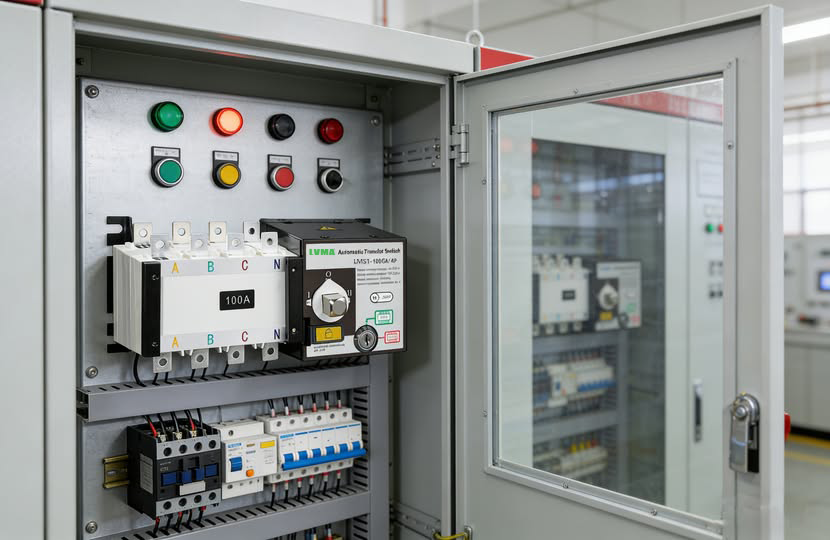
Most sensitive equipment won’t even register the change.The Electric Power Transfer Switch has four main parts: a control board, a power sensor, a moving switch mechanism and a safety guard. Trusted models follow two key rules: GB/T 14048.11-2016 and IEC 60947-6-1. There are two main types: PC and CB. PC-grade handles heavy, critical loads well, good for ICUs and data centers. CB-grade has a built-in breaker, cheaper and simpler for factories, offices and homes.
2. Real-World Application ScenariosYou’ll find this switch anywhere a power cut means big losses. In factories, it stops assembly lines and chemical processes from going down, cutting down on wasted materials and downtime costs. For high-stakes spaces — operating rooms, airports, subways and building fire systems — it stops dangerous, costly outages. It also works for home backup power, cell towers and solar setups, shifting cleanly between grid and renewable power.
3. Key Advantages & Safety ValueThis smart switch beats manual ones by a lot. It works on its own, no need for 24/7 staff on site. It switches fast and rarely acts by mistake, and many versions let you monitor remotely and get fault alerts. It blocks shocks, fires and burned-out gear, following GB 50054-2011 safety rules. It also cuts labor costs, limits outage losses and makes the whole power system run smoother.
4. Selection, Installation & Routine MaintenancePick the right model based on total power load, power type (grid, generator, solar), where you’re installing it and how fast you need it to switch. Critical sites need PC-grade; regular business and home use can go with CB-grade to save money. Only a licensed electrician should install it, following strict wiring and insulation rules to stay safe. Test it after setup: check manual switch, auto switch and safety functions before regular use.Simple upkeep keeps this switch working for years. Check daily for odd noises, overheating or warning lights. Clean it and check wire tightness once a month. Do a full check every year. Small problems — no auto switch, slow response — usually come from bad settings or stuck parts, fixed with quick tweaks or light oil. Call a pro for big breakdowns to avoid making it worse.References
- GB/T 14048.11-2016, Low-voltage switchgear and controlgear — Part 6-1: Multiple function equipment — Transfer switching equipment
- GB 50054-2011, Code for Design of Low-Voltage Power Distribution
- IEC 60947-6-1, International Standard for Low-Voltage Transfer Switching Equipment
FAQ
Q1: PC-grade or CB-grade?A: PC-grade for critical loads (hospitals, data centers) – better isolation, no built-in breaker. CB-grade for general use – built-in breaker, cheaper, easier to install.Q2: Fastest switch speed necessary?A: No. Most places work fine under 3 seconds. Only super sensitive gear needs millisecond (≤10ms) switches; faster costs more for no real gain.Q3: Maintenance schedule?A: Daily quick check, monthly touch-up, yearly full inspection. Critical sites add a mid-year test to catch issues early.ConclusionThe Electric Power Transfer Switch is a must for modern power systems, solving the risk of relying on one power source across factories, communities and businesses. It stays reliable with the right pick, professional install and regular simple care. As smart grids grow, these switches will get more efficient, staying a steady safety line for reliable power everywhere.
Media Contact
Company Name: Zhejiang LVMA Electric Co,. Ltd.
Email: Send Email
Country: China
Website: https://www.lvma-ats.com/