
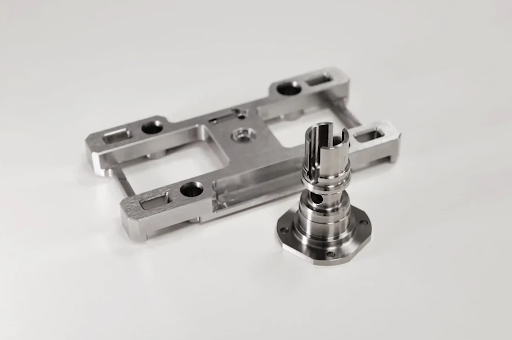
Six weeks before a medical device company’s FDA pre-submission meeting, their prototyping supplier delivered twelve titanium components — all out of tolerance on the same critical mating surface. The supplier hit the delivery date. Passed their own inspection. And produced parts that were completely unusable for the regulatory demonstration they’d been specifically briefed on.
The company had chosen that supplier three months earlier based on the lowest quote and a website full of impressive-looking case studies. It cost them the submission window, six weeks of schedule, and approximately $28,000 in re-machining and expedited delivery from a second supplier who actually understood the application.
I’ve watched this pattern repeat across industries — consumer electronics, robotics, automotive, medical. The failure is almost never the technology. It’s the mismatch between what the supplier does well and what the project actually needs. Here’s how to evaluate that fit before it costs you.
The Criteria Most Buyers Use Are the Wrong Criteria
Speed and price dominate most supplier selection conversations. They’re the easiest variables to compare and the least predictive of project outcomes.
The variables that actually determine whether a prototyping partnership succeeds: engineering feedback quality, process match to your specific geometry and material, and the supplier’s ability to produce parts that behave like production parts — not just parts that pass initial inspection.
A supplier who delivers in three days but never flags a DFM issue that causes production failures at volume has negative value. A supplier who takes eight days but returns your design with three specific recommendations that eliminate a $40,000 tooling problem later is worth every day of the difference.
This is the frame worth keeping as you evaluate every supplier on this list.
How the Major Platforms Actually Compare — Honestly
Protolabs is genuinely useful for one specific use case: rapid geometry iteration when material performance is secondary. Their 1–3 day lead times are real and consistently delivered. Their DFM feedback is algorithm-generated — fast, but it misses nuanced issues in complex assemblies that a human engineer would catch. For concept validation and form-fit checks, hard to beat on speed. For functional performance validation in demanding materials, frequently the wrong tool.
Xometry is a manufacturing marketplace, not a manufacturer. You’re bidding to a network of suppliers whose capability and process discipline you cannot audit directly. Works well for standard geometries in common materials where consistency requirements are moderate. Higher risk for tight-tolerance work because quality depends on which supplier picks up your job.
Fictiv sits between marketplace and managed service. Human oversight on quality control makes them more consistent than pure marketplace models. Lead times run slightly longer as a result. For teams prioritizing reliability over raw speed — medical, aerospace, defense-adjacent applications — that consistency premium is often worth the tradeoff.
Hubs (now part of Protolabs Group) operates a vetted supplier network with solid quality controls for CNC work. Geographic distribution is useful for teams needing regional manufacturing for logistics or compliance reasons. Engineering feedback depth varies by the partner shop assigned to your job.
RapidDirect and WayKen both offer competitive pricing from Asia-based operations. RapidDirect is stronger on CNC and rapid tooling. WayKen on complex geometries and surface finishing. The honest limitation of both: communication iteration cycles add 24–48 hours per revision loop. For budget-sensitive projects with standard geometries and generous timelines, they’re viable. For applications where engineering dialogue matters, the communication friction compounds.
Materialise occupies a specialized position in industrial additive manufacturing and medical-grade 3D printing with software-driven optimization. Within their specific niche, they’re a category leader. Outside of advanced additive applications, they’re not the right match for precision CNC prototyping needs.
Star Rapid bridges prototyping and low-volume production effectively. Their assembly services and injection molding capabilities make them worth evaluating when you’re preparing to scale. Finishing quality is a consistent strength.
Where Precision-Focused Suppliers Fit In
There’s a category of supplier the major comparison lists consistently underrepresent: precision-first CNC manufacturers who treat prototyping as a production problem rather than a sampling exercise.
The distinction matters practically. Most platforms above optimize for getting a sample part in your hands quickly. Precision-focused suppliers optimize for getting a sample part that generates accurate information about how your production part will actually perform — which is the real goal of prototyping, even when project timelines push teams toward shortcuts.
FastPreci sits in this category. Their core capability is CNC milling and turning to ±0.005mm in metals and engineering plastics, combined with DFM feedback that comes from engineers who understand production implications rather than just prototype manufacturability. For teams working on functional components — load-bearing assemblies, precision mechanical interfaces, medical device parts — that orientation toward production-equivalence produces prototypes that actually validate what they’re supposed to validate.
They’re not the fastest option on this list and not the lowest-cost entry point. They’re the right choice when the prototype needs to perform, not just exist.
For broader evaluation of prototype manufacturing solutions across different volume ranges and geometry types, the decision framework below applies regardless of which supplier you ultimately choose.
The Three Questions That Predict Supplier Quality Before You Commit
Before signing with any rapid prototyping supplier, ask these three questions and evaluate the specificity of the answers.
“What DFM issues do you see in this design?” A supplier with genuine engineering capability identifies specific concerns on any complex part. A supplier running a production line tells you it looks fine. The depth of this answer is the single most predictive indicator of whether you’re working with a manufacturing partner or a job shop.
“What’s your process when a part fails first-article inspection?” The answer reveals whether quality control is real or performative. “We remake the part” is a fundamentally different answer than “we conduct root cause analysis, document findings, and adjust process parameters before the second run.”
“Can you show me a part in this material at this tolerance?” Not a capability statement. An actual part with inspection data. Suppliers who can produce this evidence on request consistently outperform those who can’t.
Frequently Asked Questions
What is the realistic turnaround time for precision CNC prototypes?
For standard aluminum prototypes with no secondary finishing, 3–5 business days is achievable from precision-focused suppliers. Complex multi-setup parts in titanium or stainless with tight tolerances realistically need 7–10 business days when proper inspection and process validation are included. Suppliers promising 24-hour turnaround on tight-tolerance work are typically compressing inspection — which shows up in dimensional inconsistency across the batch.
How do I verify that a supplier can actually hold the tolerances they claim?
Request a first article inspection report from a previous job in the same material and tolerance range as yours. A supplier with genuine capability produces CMM reports as standard documentation — not visual inspection sign-offs. If a supplier cannot produce dimensional inspection data from a comparable previous job, treat their tolerance claims with appropriate skepticism.
Is paying more for precision CNC prototyping worth it over marketplace platforms?
For concept models and geometry checks: no. An SLS print from a marketplace platform tells you what you need to know for a fraction of the cost. For functional validation of structural components, assemblies with tight fits, or parts in regulated applications: precision manufacturing pays for itself in reduced iteration cycles. Teams that prototype cheaply and discover performance failures at the production stage consistently spend more overall than teams that prototype precisely from the start.
Which materials are best for functional prototyping in demanding applications?
For metals: 6061 aluminum for general mechanical testing, titanium Grade 5 for load-critical or implantable components, 316L stainless for corrosion-exposed applications. For plastics: PEEK for high-temperature or sterilization-exposed components, Delrin (POM) for precision mechanical parts, glass-filled nylon where stiffness matters more than moisture absorption. Material selection should be driven by the operating environment of the final product, not by what’s cheapest or fastest to machine at the prototype stage.
How do I evaluate whether a prototyping supplier can scale with me to production?
Ask directly whether their production process uses the same equipment, tooling strategy, and quality documentation as their prototyping process. Marketplace models almost always involve a supplier handoff at scale. In-house precision manufacturers maintain process continuity from prototype through production volume — the dimensional behavior validated in five prototype parts transfers reliably to five hundred production parts.
What is the biggest mistake companies make when selecting a prototyping supplier?
Optimizing for the prototype stage without thinking about production. Teams choose the fastest or cheapest option for prototyping, validate geometry successfully, then discover at production stage that their chosen supplier can’t hold tolerances at volume or produces material inconsistency that didn’t appear in a five-part sample. Selecting a supplier whose prototype process mirrors their production process eliminates that gap entirely.
Does supplier location matter for prototyping decisions?
Less than most buyers assume for the prototype stage. Shipping a precision component internationally adds 3–5 days — often less than the quality difference between a local generalist and a specialized precision manufacturer. Location matters more at production volume where logistics costs compound across thousands of units.
The Honest Bottom Line
Most rapid prototyping suppliers are optimized for volume of jobs processed, not quality of outcomes per job. That’s not a criticism — it serves a real market segment efficiently.
For geometry checks, concept models, and early-stage iteration, marketplace speed and low cost make sense. For the prototype that actually has to work — the one going into a regulatory submission, a customer pilot, or a production validation — supplier selection becomes a risk management decision, not a procurement decision.
Teams that treat prototyping as a standalone phase, disconnected from production planning, consistently pay for that disconnect later. The smarter approach is evaluating suppliers through the lens of complete prototype manufacturing solutions — where the prototyping process, quality documentation, and engineering feedback are explicitly designed to carry forward into production, not stop at sample delivery.
The suppliers worth trusting for high-stakes prototyping share three characteristics: they return specific DFM feedback unprompted, they document their quality process with verifiable inspection data, and their prototype process is genuinely continuous with their production process.
Finding those suppliers before the deadline is the entire game.
What’s the highest-stakes prototype your team has needed to get right on the first attempt — and which of these evaluation criteria would have changed your supplier decision?