Abu Dhabi, UAE – December 2, 2025 – In a landmark agreement poised to reshape the landscape of global artificial intelligence and energy infrastructure, the Republic of Korea and the United Arab Emirates (UAE) formally cemented a comprehensive AI partnership on November 18, 2025. This strategic alliance, underpinned by an ambitious $20.5 billion 'Stargate Infra Push', extends far beyond the realm of AI, encompassing critical advancements in nuclear energy, aerospace, healthcare, and logistics. The collaboration signifies a powerful move towards integrated technological development, with both nations leveraging their respective strengths to build a formidable AI ecosystem rooted in robust, sustainable energy solutions.
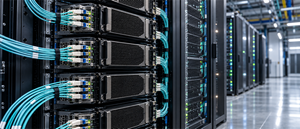
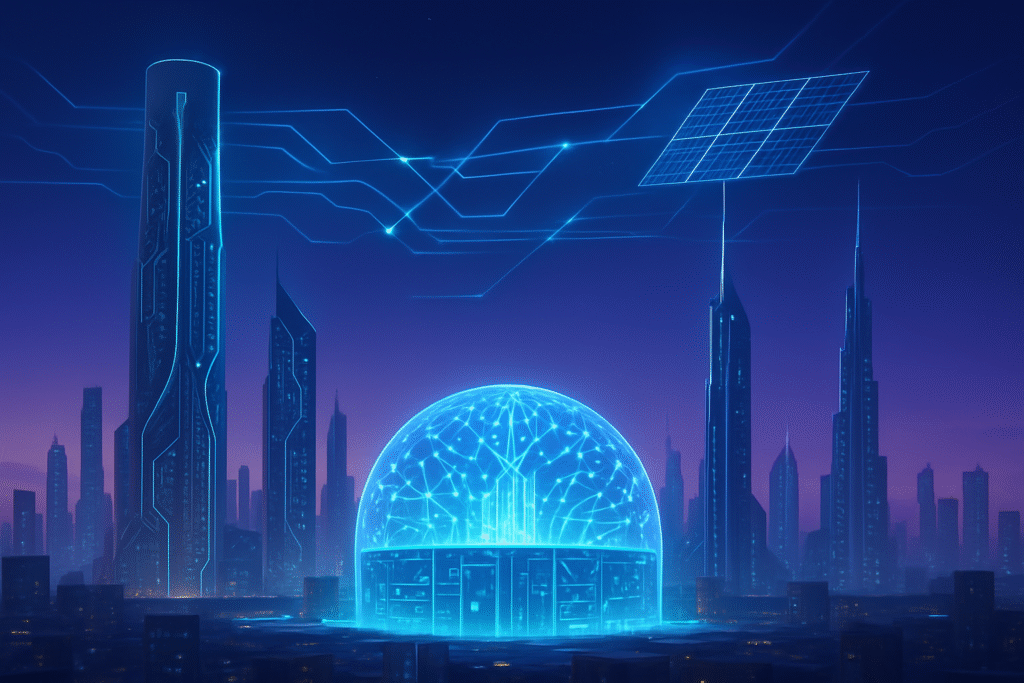
The immediate significance of this partnership lies in its scale and strategic depth. At its core is Korea's commitment to join the UAE's monumental Stargate AI project, a visionary initiative to establish a 5-gigawatt (GW) AI data campus in Abu Dhabi. This colossal undertaking, spearheaded by Khazna Data Centers (a subsidiary of G42), aims to create one of the world's largest AI computational hubs. The $20.5 billion investment underscores a shared vision for future-proofing national economies through advanced technology, setting a precedent for international cooperation in high-stakes technological frontiers.
Unpacking the 'Stargate Infra Push': A Fusion of AI and Advanced Energy
The Stargate AI project is not merely another data center; it represents a paradigm shift in how large-scale AI infrastructure is conceived and powered. The plan envisions a 5-gigawatt (GW) AI campus, with the first 200-megawatt (MW) site projected to become operational as early as 2026. This immense computing capacity is designed to support the burgeoning demands of AI research, development, and deployment, catering to both national strategic interests and potential global clientele.
Korea's role is pivotal, contributing its world-class expertise in building both computing power and the essential energy infrastructure required to sustain such a monumental project. This involves developing a sophisticated power grid capable of integrating diverse energy sources, including nuclear power, natural gas, and renewable energy. The goal is to ensure the stable, efficient, and environmentally responsible operation of the large-scale AI data centers, a challenge that many existing AI hubs grapple with. This integrated approach, combining advanced AI with diversified, sustainable energy solutions, distinctly sets the 'Stargate Infra Push' apart from previous, often energy-intensive, data center developments.
The project has already attracted global heavyweights, with prominent technology firms such as OpenAI, Oracle (NYSE: ORCL), NVIDIA (NASDAQ: NVDA), Cisco (NASDAQ: CSCO), and SoftBank (TYO: 9984) identified as global partners. Their involvement signals the project's strategic importance and potential to become a nexus for cutting-edge AI development. Initial reactions from the AI research community highlight the project's potential to accelerate advancements in large language models, complex simulations, and other compute-intensive AI applications, while industry experts laud the foresight in integrating energy solutions from the outset.
Reshaping the Competitive Landscape for AI and Tech Giants
The Korea-UAE 'Stargate Infra Push' is set to profoundly impact the competitive dynamics within the AI and technology sectors. Companies directly involved, such as G42 and Khazna Data Centers, stand to gain immense strategic advantages, positioning the UAE as a global leader in AI infrastructure. The participation of tech giants like OpenAI, Oracle, NVIDIA, Cisco, and SoftBank not only validates the project's ambition but also ensures their deep integration into a future-defining AI ecosystem, potentially giving them preferential access to unparalleled computing resources.
Korean technology companies, particularly those in energy and IT infrastructure like Korea Electric Power Corporation (KEPCO: KRX), are poised for significant growth and international expansion. KEPCO, in particular, has signed a separate agreement with the UAE’s Emirates Nuclear Energy Company (ENEC) to collaborate on small modular reactors (SMRs) and the integration of AI into nuclear plant operations, aiming for joint entry into global markets. This showcases a strategic advantage for Korean firms, leveraging their nuclear technology for both the Stargate data centers and broader energy initiatives.
The sheer scale of the Stargate project could disrupt existing data center markets and shift the balance of power in AI development. By offering a comprehensive, energy-integrated solution, it presents a compelling alternative to fragmented or energy-constrained AI infrastructure. This could compel other nations and tech hubs to reconsider their own strategies for AI development, potentially sparking a new wave of investment in sustainable, large-scale AI computing. The UAE’s aggressive push, backed by Korean technological prowess, positions both nations for strategic advantages in the rapidly evolving global AI race.
Wider Significance: A New Blueprint for International AI Collaboration
This $20.5 billion partnership between Korea and the UAE transcends a mere commercial agreement; it represents a significant milestone in the broader AI landscape and global technological trends. It underscores a growing trend towards international collaboration in developing sovereign AI capabilities, moving beyond traditional national boundaries to pool resources and expertise. The 'Stargate Infra Push' serves as a blueprint for how nations can collectively address the immense computational and energy demands of advanced AI.
The initiative has far-reaching impacts, from geopolitical realignments to economic diversification. For the UAE, it solidifies its ambition to become a global hub for future technologies, reducing reliance on hydrocarbon revenues. For Korea, it provides a vast new market for its advanced technological exports, particularly in AI, nuclear energy, and smart infrastructure. The emphasis on integrating diverse energy sources, including nuclear and renewables, also sets a precedent for sustainable AI development, addressing growing concerns about the environmental footprint of large-scale computing.
Potential concerns, however, include the immense energy consumption even with diversified sources, and questions of data sovereignty and governance within such a large, internationally-backed project. Nevertheless, this collaboration stands as a testament to a new era of AI development, comparable in ambition to previous milestones like the establishment of major internet backbones or the first national supercomputing centers, but with an unprecedented focus on integrated, sustainable infrastructure at a continental scale.
Future Developments and Expert Outlook
In the near term, the focus will be on the rapid deployment and operationalization of the first 200MW site of the Stargate AI campus in 2026. This initial phase will provide crucial insights into the project's operational efficiency, energy consumption patterns, and the performance of its integrated power grid. Simultaneously, the collaboration between KEPCO and ENEC on SMRs and AI integration into nuclear plants will likely accelerate, with potential pilot projects and joint ventures on the horizon.
Looking further ahead, the vision is to scale the Stargate project to its full 5GW capacity, transforming Abu Dhabi into a global AI powerhouse. Experts predict that this massive infrastructure will attract further investment, talent, and R&D initiatives, fostering an innovation ecosystem that could rival established tech hubs. Potential applications and use cases are vast, ranging from advanced scientific research and drug discovery to smart city management, autonomous systems, and next-generation defense technologies.
Challenges that need to be addressed include attracting and retaining top-tier AI talent globally, navigating complex international regulatory frameworks for data and technology transfer, and continuously optimizing the energy mix to ensure both sustainability and cost-effectiveness. Experts anticipate a strategic arms race in AI infrastructure, with other nations potentially attempting to replicate or even surpass the Stargate model. The success of this partnership will likely dictate the pace and direction of future large-scale international AI collaborations.
A New Horizon for AI: Comprehensive Wrap-Up
The Korea-UAE AI partnership and the 'Stargate Infra Push' represent a monumental leap forward in the global pursuit of artificial intelligence. The $20.5 billion investment signifies a profound commitment to building a future where AI is not just powerful, but also supported by robust, sustainable, and integrated energy infrastructure. Key takeaways include the unprecedented scale of the Stargate AI campus, the strategic integration of diverse energy sources, and the powerful synergy created by combining Korea's technological prowess with the UAE's visionary investment.
This development holds immense significance in AI history, marking a shift towards truly international, large-scale infrastructural projects designed to power the next generation of AI. It challenges the traditional model of AI development, emphasizing collaboration and sustainability. The long-term impact could see the UAE emerge as a dominant force in AI computing, while Korea solidifies its position as a leading exporter of advanced technology and energy solutions.
In the coming weeks and months, the world will be watching for progress on the Stargate campus construction, further details on the joint R&D initiatives, and the broader implications for global AI governance and competition. This partnership is not just about technology; it's about setting a new standard for how nations can collaborate to build the future.
This content is intended for informational purposes only and represents analysis of current AI developments.
TokenRing AI delivers enterprise-grade solutions for multi-agent AI workflow orchestration, AI-powered development tools, and seamless remote collaboration platforms.
For more information, visit https://www.tokenring.ai/.