

Quarterly earnings results are a good time to check in on a company’s progress, especially compared to its peers in the same sector. Today we are looking at Tandem Diabetes (NASDAQ: TNDM) and the best and worst performers in the healthcare technology industry.
Healthcare technology companies develop software, data analytics, and digital platforms supporting clinical operations, administrative functions, and patient engagement across healthcare systems. Tailwinds include healthcare digitization driving demand for electronic health records, telehealth platforms, and AI-powered diagnostic tools. Regulatory incentives promote interoperability and data sharing, while labor shortages increase automation demand. Headwinds include lengthy sales cycles with risk-averse healthcare buyers, complex regulatory requirements including data privacy compliance, and integration challenges with legacy systems. Competition from established technology giants entering healthcare and reimbursement uncertainties for digital health solutions add market complexity.
The 7 healthcare technology stocks we track reported a strong Q2. As a group, revenues beat analysts’ consensus estimates by 3.7% while next quarter’s revenue guidance was 2.8% above.
Amidst this news, share prices of the companies have had a rough stretch. On average, they are down 5.5% since the latest earnings results.
Tandem Diabetes (NASDAQ: TNDM)
With technology that automatically adjusts insulin delivery based on continuous glucose monitoring data, Tandem Diabetes Care (NASDAQ: TNDM) develops and manufactures automated insulin delivery systems that help people with diabetes manage their blood glucose levels.
Tandem Diabetes reported revenues of $254.6 million, up 5.8% year on year. This print was in line with analysts’ expectations, but overall, it was a mixed quarter for the company with EPS in line with analysts’ estimates but full-year revenue guidance meeting analysts’ expectations.
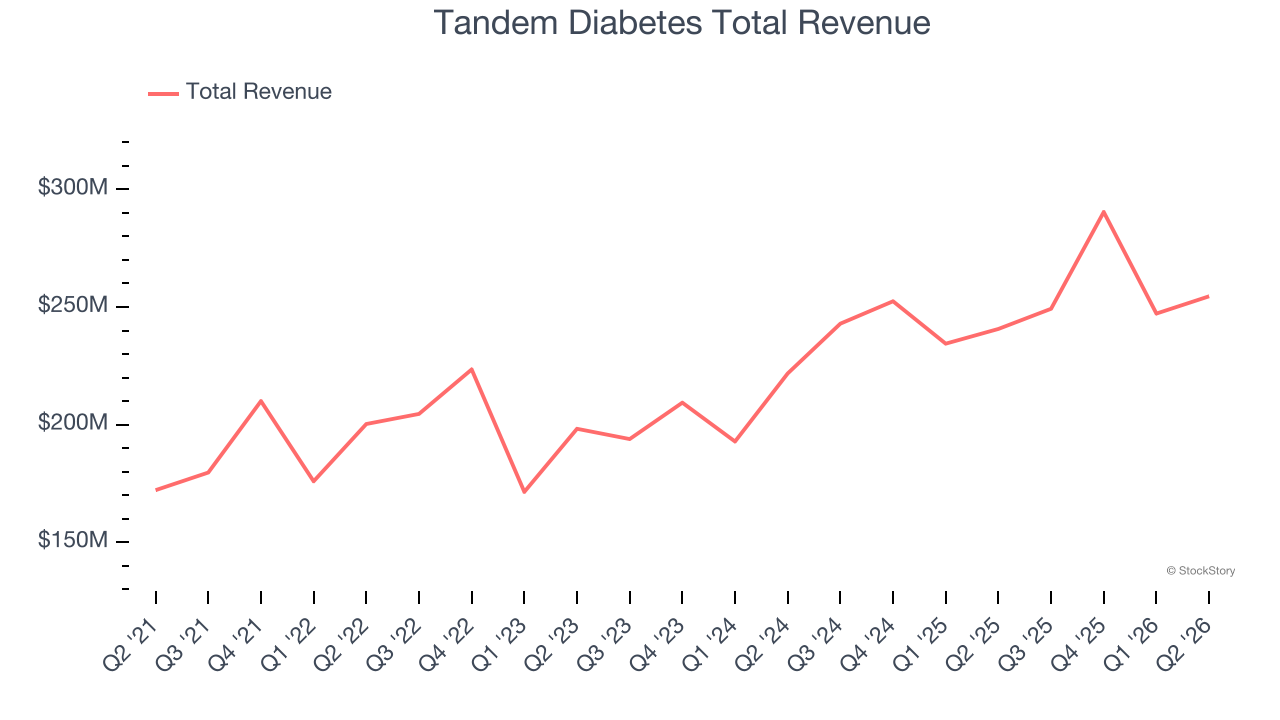
The market seems disappointed with the results as the stock is down 11.5% since reporting and currently trades at $16.63.
Is now the time to buy Tandem Diabetes? Access our full analysis of the earnings results here, it’s free.
Best Q2: Evolent Health (NYSE: EVH)
Founded in 2011 to transform how healthcare is delivered to patients with complex needs, Evolent Health (NYSE: EVH) provides specialty care management services and technology solutions that help health plans and providers deliver better care for patients with complex conditions.
Evolent Health reported revenues of $652.5 million, up 46.9% year on year, outperforming analysts’ expectations by 9.4%. The business had a stunning quarter with a beat of analysts’ EPS estimates and full-year revenue guidance exceeding analysts’ expectations.
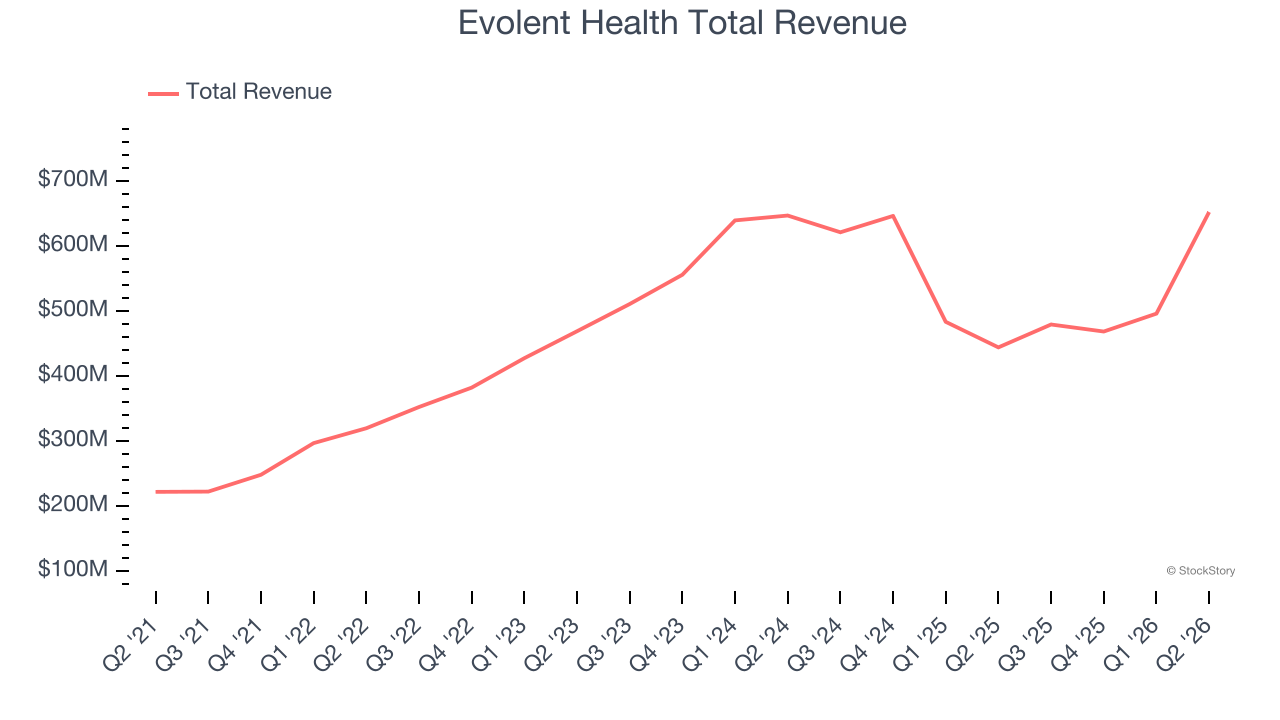
Evolent Health achieved the biggest analyst estimate beat and highest full-year guidance raise among its peers. The market seems happy with the results as the stock is up 14.6% since reporting. It currently trades at $3.53.
Is now the time to buy Evolent Health? Access our full analysis of the earnings results here, it’s free.
Astrana Health (NASDAQ: ASTH)
Formerly known as Apollo Medical Holdings until early 2024, Astrana Health (NASDAQ: ASTH) operates a technology-powered healthcare platform that enables physicians to deliver coordinated care while successfully participating in value-based payment models.
Astrana Health reported revenues of $972.5 million, up 48.5% year on year, falling short of analysts’ expectations by 1.3%. It was a slower quarter as it posted full-year revenue guidance slightly missing analysts’ expectations and full-year EBITDA guidance meeting analysts’ expectations.
Astrana Health delivered the fastest revenue growth but had the weakest performance against analyst estimates and weakest full-year guidance update in the group. Interestingly, the stock is up 4% since the results and currently trades at $35.48.
Read our full analysis of Astrana Health’s results here.
Omnicell (NASDAQ: OMCL)
Driven by the vision of an "Autonomous Pharmacy" with zero medication errors, Omnicell (NASDAQ: OMCL) provides medication management automation and adherence tools that help healthcare systems and pharmacies reduce errors and improve efficiency.
Omnicell reported revenues of $312.2 million, up 7.4% year on year. This result beat analysts’ expectations by 0.6%. Aside from that, it was a mixed quarter as it also recorded a beat of analysts’ EPS estimates but EBITDA guidance for next quarter missing analysts’ expectations significantly.
Omnicell had the weakest guidance update in the group. The stock is down 17% since reporting and currently trades at $34.37.
Read our full, actionable report on Omnicell here, it’s free.
Privia Health (NASDAQ: PRVA)
Operating in 13 states and the District of Columbia with over 4,300 providers serving more than 4.8 million patients, Privia Health (NASDAQ: PRVA) is a technology-driven company that helps physicians optimize their practices, improve patient experiences, and transition to value-based care models.
Privia Health reported revenues of $632.6 million, up 21.4% year on year. This number surpassed analysts’ expectations by 5.9%. Overall, it was a satisfactory quarter for the company.
The stock is down 18.1% since reporting and currently trades at $19.63.
Read our full, actionable report on Privia Health here, it’s free.
Market Update
Over the past year, investors have been forced to repeatedly answer the same question: what is the market’s biggest risk? The answer has changed several times, and each shift has reshaped market leadership.
Late in 2025 and early 2026, artificial intelligence became the market’s primary uncertainty. Investors questioned whether AI would erode software pricing power and weaken competitive moats as AI made it easier to replicate once-differentiated products.
By the spring, technology took a back seat to geopolitics. The U.S. conflict with Iran briefly became the market’s dominant narrative, raising concerns about oil prices, inflation, and global growth. But as energy markets remained orderly and fears of a prolonged supply disruption faded, investors quickly turned their focus back to fundamentals.
Want to invest in winners with rock-solid fundamentals? Check out our Top 5 Quality Compounder Stocks and add them to your watchlist. These companies are poised for growth regardless of the political or macroeconomic climate.