

Over the past six months, Sweetgreen has been a great trade, beating the S&P 500 by 12.6%. Its stock price has climbed to $6.99, representing a healthy 26.6% increase. This performance may have investors wondering how to approach the situation.
Is now the time to buy Sweetgreen, or should you be careful about including it in your portfolio? Get the full breakdown from our expert analysts, it’s free.
Why Do We Think Sweetgreen Will Underperform?
We’re happy investors have made money, but we’re cautious about Sweetgreen. Here are three reasons you should be careful with SG, plus one stock we’d rather own.
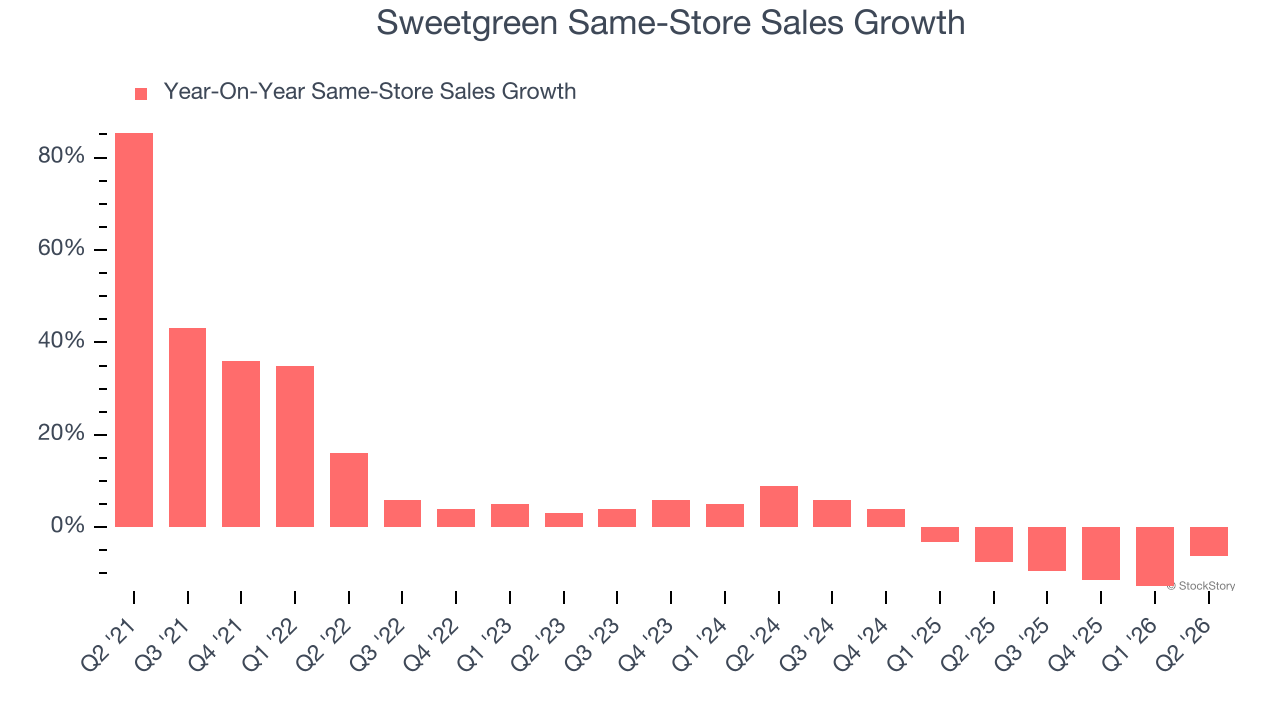
1. Shrinking Same-Store Sales Indicate Waning Demand
Same-store sales is a key performance indicator used to measure organic growth at restaurants open for at least a year.
Sweetgreen’s demand has been shrinking over the last two years as its same-store sales have averaged 5.1% annual declines.
2. Cash Burn Ignites Concerns
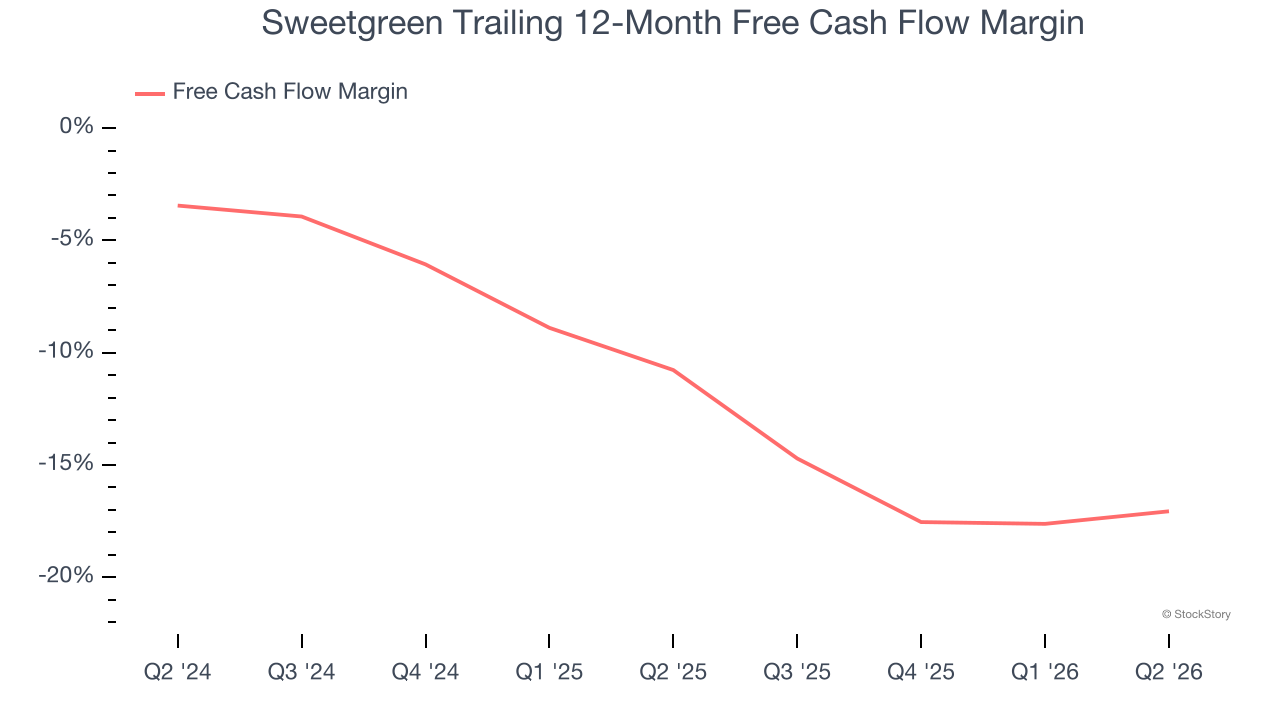
Free cash flow isn’t a prominently featured metric in company financials and earnings releases, but we think it’s telling because it accounts for all operating and capital expenses, making it tough to manipulate. Cash is king.
Over the last two years, Sweetgreen’s capital-intensive business model and large investments in new physical locations have drained its resources, putting it in a pinch and limiting its ability to return capital to investors. Its free cash flow margin averaged negative 13.9%, meaning it lit $13.91 of cash on fire for every $100 in revenue.
3. Short Cash Runway Exposes Shareholders to Potential Dilution
As long-term investors, the risk we care about most is the permanent loss of capital, which can happen when a company goes bankrupt or raises money from a disadvantaged position. This is separate from short-term stock price volatility, something we are much less bothered by.
Sweetgreen burned through $116.3 million of cash over the last year, and its $355.4 million of debt exceeds the $142.6 million of cash on its balance sheet. This is a deal breaker for us because indebted loss-making companies spell trouble.
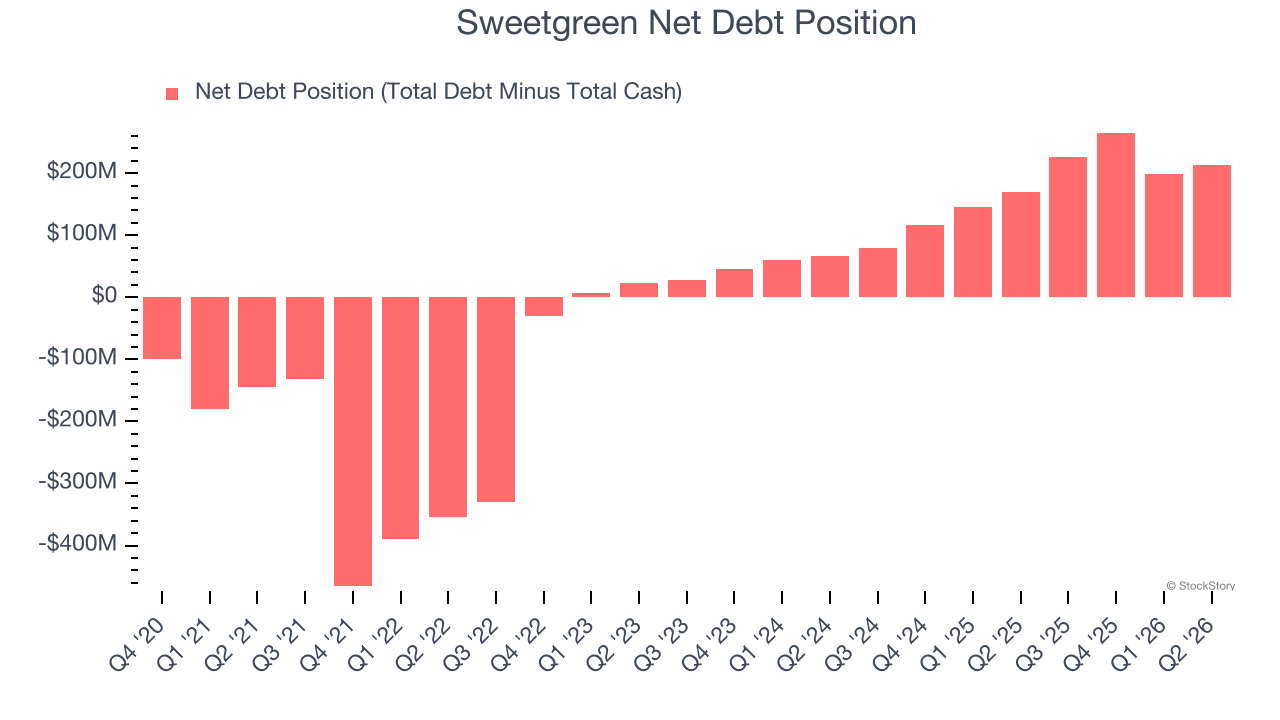
Unless the Sweetgreen’s fundamentals change quickly, it might find itself in a position where it must raise capital from investors to continue operating. Whether that would be favorable is unclear because dilution is a headwind for shareholder returns.
We remain cautious of Sweetgreen until it generates consistent free cash flow or any of its announced financing plans materialize on its balance sheet.
Final Judgment
Sweetgreen doesn’t pass our quality test. With its shares outperforming the market lately, the stock trades at $6.99 per share (or a forward price-to-sales ratio of 1.1×). The market typically values companies like Sweetgreen based on their anticipated profits for the next 12 months, but it expects the business to lose money. We also think the upside isn’t great compared to the potential downside here - there are more exciting stocks to buy. We’d suggest looking at one of our top software and edge computing picks.
High-Quality Stocks for All Market Conditions
ALSO WORTH WATCHING: Top 5 Momentum Stocks. The best time to own a great stock is when the market is finally noticing it. These aren’t just high-quality businesses. Something is happening with them right now. Elite fundamentals meet near-term momentum — both boxes checked at the same time.
Find out which stocks our AI platform is flagging this week. See this week’s Strong Momentum stocks — FREE. Get Our Strong Momentum Stocks for Free HERE.
Stocks that have made our list include now familiar names such as Nvidia (+1,460% between June 2020 and June 2025) as well as under-the-radar businesses like the once-small-cap company Exlservice (+271% between June 2020 and June 2025). Find your next big winner with StockStory today.