

Pet products provider Bark (NYSE: BARK) reported Q2 CY2026 results exceeding the market’s revenue expectations, but sales fell by 23.4% year on year to $78.82 million. On the other hand, next quarter’s revenue guidance of $84 million was less impressive, coming in 7.5% below analysts’ estimates. Its non-GAAP loss of $0.20 per share was 72.6% above analysts’ consensus estimates.
Is now the time to buy Bark? Find out by accessing our full research report, it’s free.
Bark (BARK) Q2 CY2026 Highlights:
- Revenue: $78.82 million vs analyst estimates of $78.25 million (23.4% year-on-year decline, 0.7% beat)
- Adjusted EPS: -$0.20 vs analyst estimates of -$0.73 (72.6% beat)
- Adjusted EBITDA: $612,000 vs analyst estimates of $26,000 (0.8% margin, relatively in line)
- The company reconfirmed its revenue guidance for the full year of $332.5 million at the midpoint
- EBITDA guidance for the full year is $8.5 million at the midpoint, above analyst estimates of $4.93 million
- Operating Margin: 0.1%, up from -8.1% in the same quarter last year
- Free Cash Flow was -$3.65 million compared to -$6.15 million in the same quarter last year
- Market Capitalization: $81.69 million
Company Overview
Making a name for itself with the BarkBox, Bark (NYSE: BARK) specializes in subscription-based, personalized pet products.
Revenue Growth
Examining a company’s long-term performance can provide clues about its quality. Any business can put up a good quarter or two, but the best consistently grow over the long haul. Over the last five years, Bark’s demand was weak and its revenue declined by 2.5% per year. This wasn’t a great result and suggests it’s a low quality business.
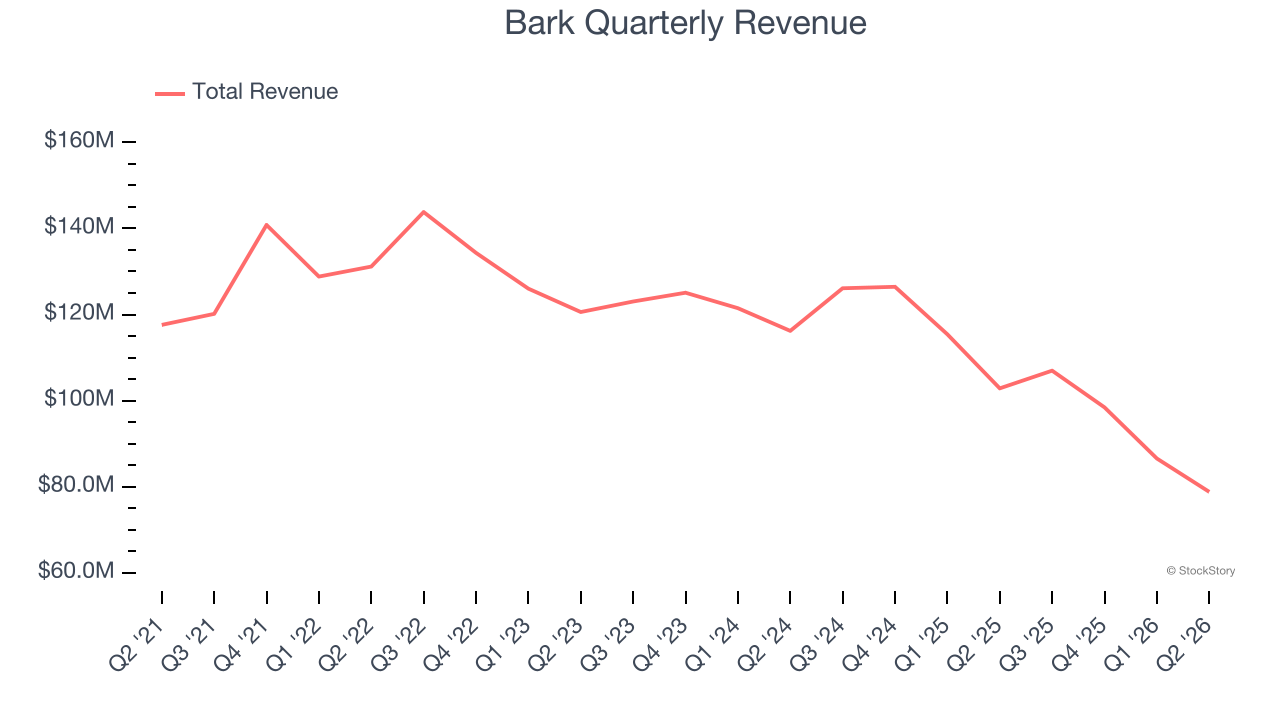
We at StockStory place the most emphasis on long-term growth, but within consumer discretionary, a stretched historical view may miss a company riding a successful new product or trend. Bark’s recent performance shows its demand remained suppressed as its revenue has declined by 12.6% annually over the last two years. 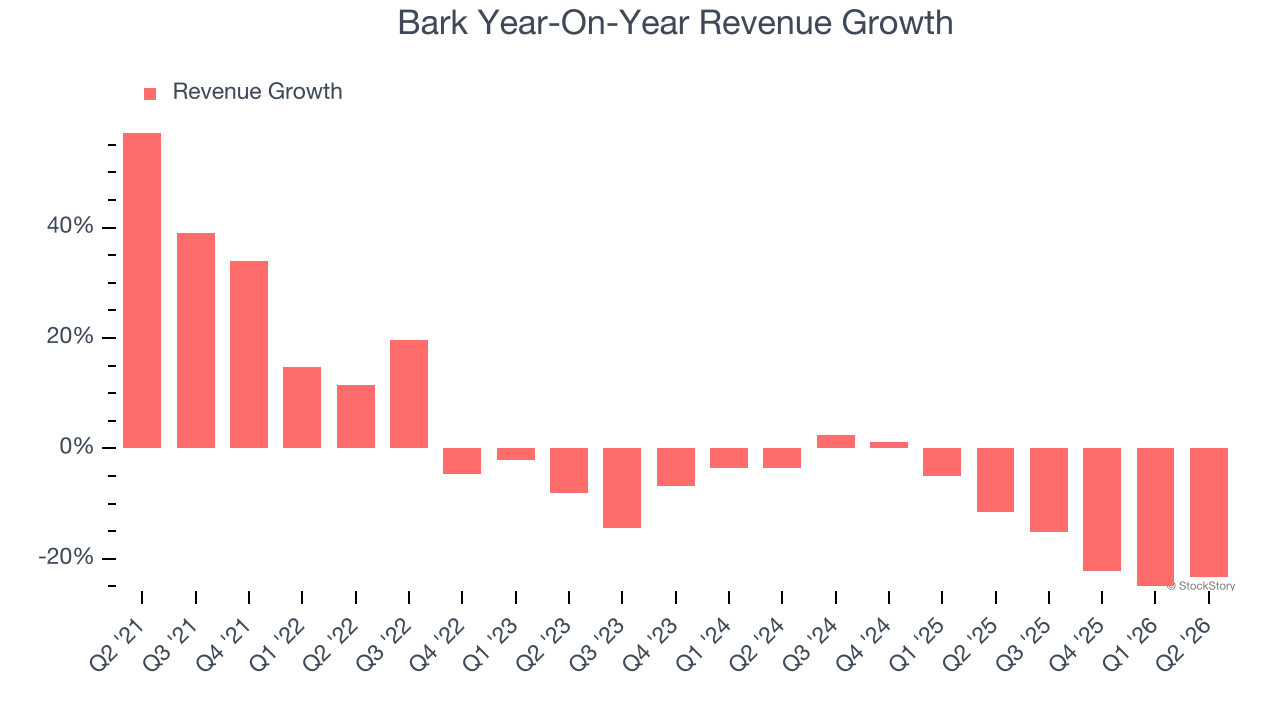
This quarter, Bark’s revenue fell by 23.4% year on year to $78.82 million but beat Wall Street’s estimates by 0.7%. Company management is currently guiding for a 21.5% year-on-year decline in sales next quarter.
Looking further ahead, sell-side analysts expect revenue to decline by 7.8% over the next 12 months. While this projection is better than its two-year trend, it’s hard to get excited about a company that is struggling with demand.
ONE MORE THING: The $21 AI Application Stock Wall Street Forgot. While Wall Street obsesses over who’s building AI, one company is already using it to print money. And nobody’s paying attention.
AI chip stocks trade at ridiculous valuations. This company processes a trillion consumer signals monthly using AI and trades at a third of the price. The gap won’t last. The institutions will figure it out. You need to see this first. Read the FREE Report Before They Notice.
Operating Margin
Operating margin is an important measure of profitability as it shows the portion of revenue left after accounting for all core expenses — everything from the cost of goods sold to advertising and wages. It’s also useful for comparing profitability across companies with different levels of debt and tax rates because it excludes interest and taxes.
Bark’s operating margin has shrunk over the last 12 months and averaged negative 7.7% over the last two years. Unprofitable consumer discretionary companies with falling margins deserve extra scrutiny because they’re spending loads of money to stay relevant, an unsustainable practice.
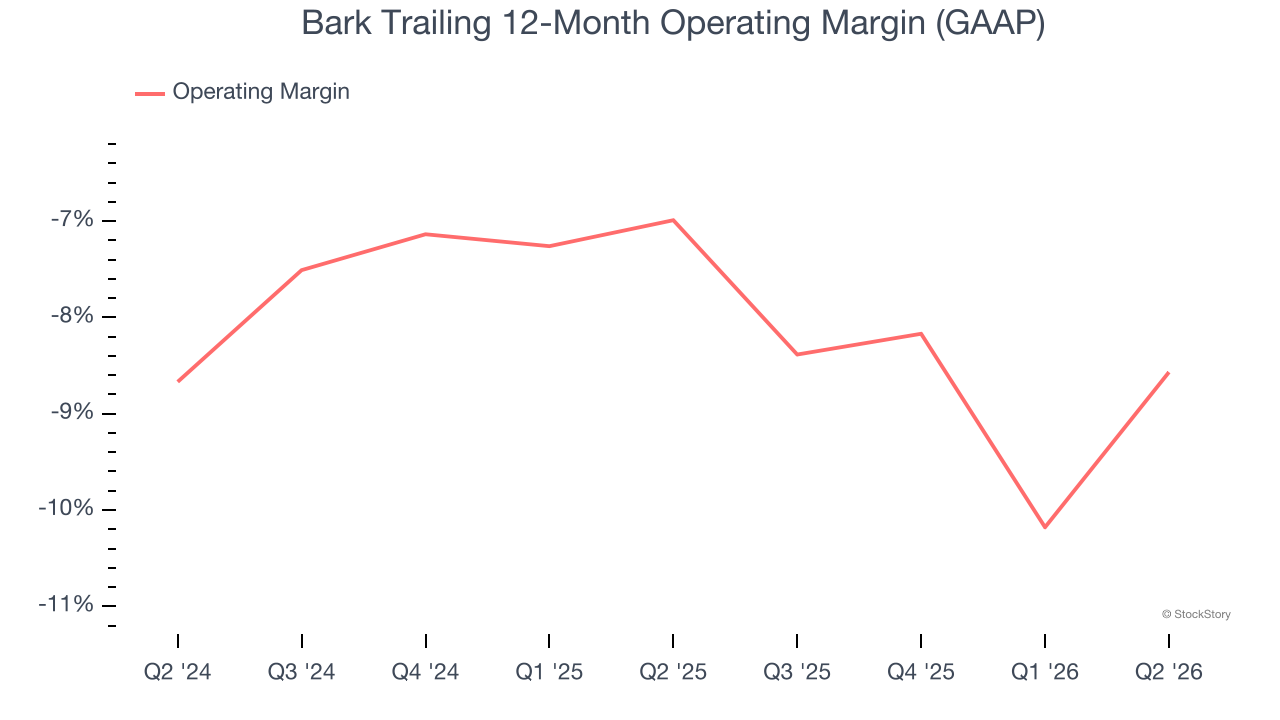
This quarter, Bark’s breakeven margin was 0.1%, up 8.2 percentage points year on year. This increase was a welcome development, especially since its revenue fell, showing it was more efficient because it scaled down its expenses.
Earnings Per Share
Revenue trends explain a company’s historical growth, but the long-term change in earnings per share (EPS) points to the profitability of that growth — for example, a company could inflate its sales through excessive spending on advertising and promotions.
Although Bark’s full-year earnings are still negative, it reduced its losses and improved its EPS by 37.3% annually over the last four years. The next few quarters will be critical for assessing its long-term profitability.
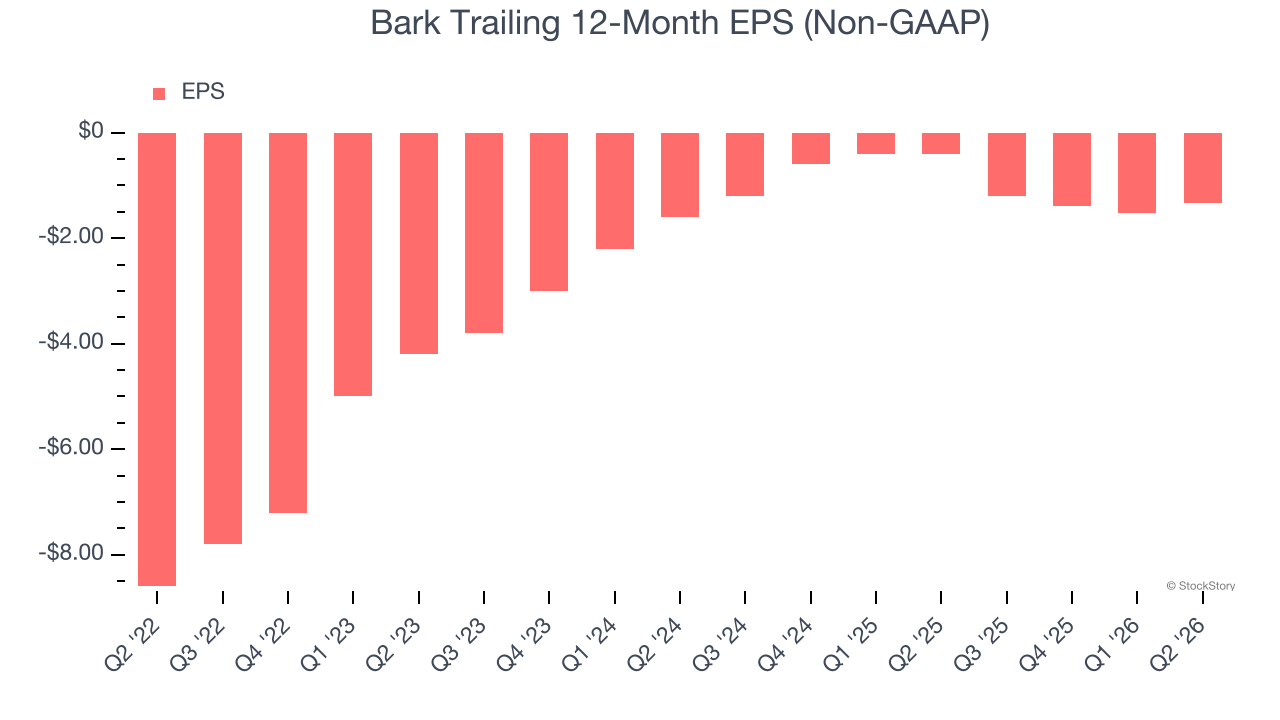
In Q2, Bark reported adjusted EPS of negative $0.20, up from negative $0.40 in the same quarter last year. This print easily cleared analysts’ estimates, and shareholders should be content with the results. Over the next 12 months, Wall Street expects Bark to perform poorly. Analysts forecast its full-year EPS will tumble from negative $1.33 to negative $1.97.
Key Takeaways from Bark’s Q2 Results
It was good to see Bark beat analysts’ EPS expectations this quarter. We were also excited its EBITDA outperformed Wall Street’s estimates by a wide margin. On the other hand, its revenue guidance for next quarter missed. Overall, we think this was a decent quarter with some key metrics above expectations. The stock traded up 7.1% to $9.84 immediately following the results.
Bark may have had a good quarter, but does that mean you should invest right now? If you’re making that decision, you should consider the bigger picture of valuation, business qualities, as well as the latest earnings. We cover that in our actionable full research report which you can read here (it’s free).