In the high-stakes world of "information finance," the common wisdom has long been that more money equals more truth. The theory of the "wisdom of the crowd" suggests that as trading volume increases, market prices become more accurate reflections of reality. However, a bombshell new study from Vanderbilt University is turning that assumption on its head, revealing that the world’s largest prediction market was actually its least accurate during the most recent election cycle.
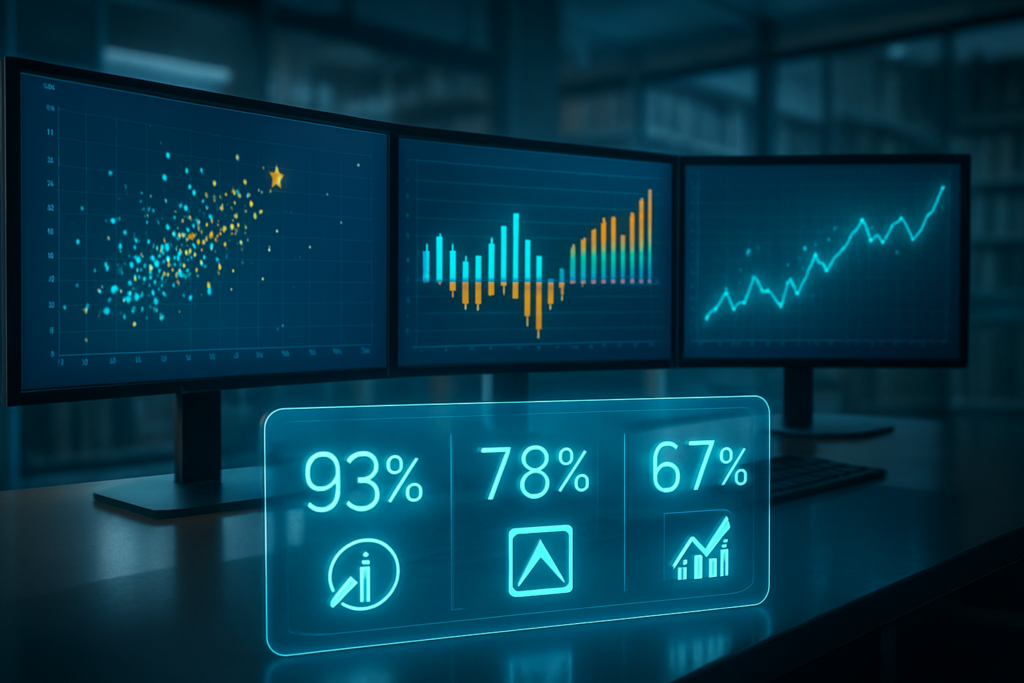
The study, authored by Vanderbilt political science professor Joshua D. Clinton and researcher TzuFeng Huang, analyzed over 2,500 political contracts across the major players in the space: PredictIt, Kalshi, and Polymarket. Their findings have sent shockwaves through the industry: PredictIt, the smallest of the trio by volume due to strict regulatory limits, emerged as the "gold standard" with a 93% accuracy rate. Meanwhile, the $2.4 billion behemoth Polymarket trailed significantly behind at just 67%, raising serious questions about whether massive liquidity is a feature or a bug in political forecasting.
The Market: What's Being Predicted
The Vanderbilt research focused on the accuracy and efficiency of prediction markets during the 2024 U.S. election cycle—an event that saw prediction markets move from the fringes of the internet to the center of mainstream media. At the heart of the study was a comparison of how accurately these platforms predicted the outcome of 2024 presidential, congressional, and down-ballot races.
Trading on these events took place across several distinct ecosystems. PredictIt, operated by Victoria University of Wellington with a "no-action" letter from the CFTC (though frequently under legal scrutiny), has long maintained a $850 limit per contract. Kalshi, a regulated exchange in the U.S., saw its volume explode after winning a landmark legal battle to host election markets. Polymarket, a decentralized platform built on the Polygon blockchain, became the global "whale" of the industry, fueled by international liquidity and massive crypto-native bets.
Despite the disparities in how they operate, the study looked at the "market-implied probability" on the eve of Election Night. While PredictIt correctly called 93% of the outcomes it listed, Kalshi followed with a respectable 78%. Polymarket’s 67% accuracy rate was particularly notable given its $2 billion-plus handle, suggesting that a significant portion of its volume may have been "noise" rather than "signal."
Why Traders Are Betting
The discrepancy in accuracy appears to be rooted in the very factor that proponents of prediction markets usually celebrate: volume. Researchers Clinton and Huang found that massive liquidity often acts as a "double-edged sword." In the case of Polymarket, the influx of billions of dollars attracted not just informed "insiders," but also speculative noise and political partisans who used the market as a tool for "cheerleading" rather than objective analysis.
One of the most striking findings in the Vanderbilt study was the presence of "herd behavior." Researchers noted that price movements were frequently driven by "within-market actions"—traders reacting to what other traders were doing on the same platform—rather than external political news or polling data. This created a feedback loop where prices became untethered from reality. In several instances, the study found that the probability of mutually exclusive outcomes (like a "Republican Sweep" and a "Democratic Sweep") actually moved in the same direction simultaneously—a sign of fundamental market irrationality.
Furthermore, the rise of social media influence played a pivotal role. Platforms like X (formerly Twitter) became echo chambers where "whales" could influence market sentiment, leading smaller traders to follow their lead in a classic display of the "herd" mentality. This behavior was less prevalent on PredictIt, where the $850 cap prevents any single trader from moving the needle too far, forcing the price to rely on a broader, more diverse consensus of smaller, more cautious bettors.
Broader Context and Implications
The Vanderbilt study arrives at a time when prediction markets are becoming deeply integrated into the American financial and media landscape. Major public companies have already placed their bets on the sector’s longevity. Robinhood (NASDAQ: HOOD) recently launched its "Prediction Markets Hub" in partnership with Kalshi, while Interactive Brokers (NASDAQ: IBKR) has developed its own exchange, ForecastEx, to allow clients to hedge against economic and political volatility.
The institutionalization of the space is accelerating. Intercontinental Exchange (NYSE: ICE), the parent company of the New York Stock Exchange, recently made a strategic investment in Polymarket, while Alphabet (NASDAQ: GOOGL) has begun integrating live prediction data from both Kalshi and Polymarket into Google Finance results. Even traditional media is pivoting; News Corp (NASDAQ: NWS), via Dow Jones, recently signed an exclusive partnership to embed Polymarket modules into The Wall Street Journal and MarketWatch.
However, the Vanderbilt findings serve as a warning for these corporate giants. If these markets are "merely loud" rather than "wise," their utility as a hedging tool or a journalistic "thermometer" is compromised. The researchers warn that if the public and media outlets treat these markets as infallible "truth machines," they risk being misled by speculative bubbles rather than informed by the "wisdom of the crowd."
What to Watch Next
As we move deeper into 2026, the focus of prediction markets is shifting from the 2024 post-mortem to the upcoming midterm cycles and global economic indicators. Traders and researchers alike will be watching to see if platforms like Polymarket can implement new mechanisms to dampen "herd behavior" and filter out speculative noise.
Keep a close eye on the "arbitrage gaps" identified by the Vanderbilt team. The researchers found that identical contracts often traded at significantly different prices across platforms, particularly in the final two weeks of an event. As market efficiency experts work to bridge these gaps, we may see the emergence of cross-platform "aggregator" tools that attempt to find a "true" price by weighing the signals from PredictIt, Kalshi, and Polymarket against each other.
Additionally, regulatory scrutiny remains a looming shadow. While Kalshi has secured key legal victories, the CFTC continues to express concern over the "gamification" of democracy. The Vanderbilt study’s finding that PredictIt—the most regulated and restricted platform—was also the most accurate could provide a surprising defense for the "low-limit" model that regulators prefer.
Bottom Line
The Vanderbilt study by Clinton and Huang is a landmark moment for the prediction market industry. It challenges the foundational belief that higher volume leads to better data, proving instead that on platforms like Polymarket, billions of dollars in liquidity can lead to "informational cascades" where traders simply follow the leader into inaccuracy.
For the prediction market enthusiast, the lesson is clear: size isn't everything. PredictIt’s 93% accuracy rate suggests that a diverse group of small-stakes traders may be better at filtering out noise than a handful of high-rolling "whales." As prediction markets become an embedded feature of platforms like Robinhood (NASDAQ: HOOD) and Google Finance (NASDAQ: GOOGL), the industry must grapple with the reality that "herd behavior" is a potent force that can easily drown out the truth.
In the end, prediction markets remain a powerful tool for forecasting, but they are not a crystal ball. They are a reflection of human psychology—and as this study shows, humans are just as prone to following the crowd as they are to finding the truth.
This article is for informational purposes only and does not constitute financial or betting advice. Prediction market participation may be subject to legal restrictions in your jurisdiction.
PredictStreet focuses on covering the latest developments in prediction markets.
Visit the PredictStreet website at https://www.predictstreet.ai/.