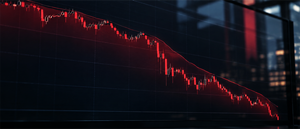

The gold market has entered a period of extraordinary turbulence, reaching a milestone of $4,380 per ounce early this week before succumbing to a fierce technical correction. This rapid ascent to all-time highs was met with an equally rapid pullback as investors grappled with a resurgent U.S. dollar and a spike in Treasury yields, creating a "tug-of-war" that has left the precious metals sector searching for a floor. The immediate fallout has been felt most acutely in the exchange-traded fund (ETF) space, where the SPDR Gold Shares (NYSE Arca: GLD) reported massive single-day outflows as institutional portfolios rebalanced in the face of a changing macroeconomic regime.
For months, gold has been the beneficiary of a perfect storm of geopolitical instability and inflationary fears, but the momentum shifted abruptly this week. As the spot price retreated from its $4,380 peak, the market witnessed a "liquidity drain" characterized by investors selling their most liquid winners—namely gold—to cover losses in other sectors or to chase the surging yields in the fixed-income market. This volatility has signaled a shift in market psychology, moving gold from a one-way "safe-haven" trade into a battleground for speculators and macro-driven algorithmic traders.
The "Warsh Shock" and the Road to $4,300
The timeline leading to this week’s peak began with a steady accumulation phase throughout early 2026, driven by persistent concerns over global "de-dollarization" and regional conflicts that kept the safe-haven bid alive. However, the narrative shifted dramatically following what traders are calling the "Warsh Shock"—a reference to the nomination of Kevin Warsh as the next Federal Reserve Chair. Markets immediately began pricing in a more hawkish monetary policy, sending the 10-year U.S. Treasury yield climbing toward 4.45% and real yields to an elevated 2.0%.
As the U.S. dollar index asserted dominance, fortified by April inflation data showing a CPI nowcast of 3.71%, the opportunity cost of holding non-yielding gold skyrocketed. By midweek, the spot price hit the $4,380 resistance level but failed to hold, triggering a wave of stop-loss orders. Initial market reactions were swift; institutional desks, facing margin calls in falling equity markets, utilized gold as a liquid asset of last resort. This led to the historic liquidations seen in SPDR Gold Shares (NYSE Arca: GLD), which recorded over $8 billion in outflows in a single month, including a staggering $2.91 billion withdrawal in a single day.
Mining Giants and the "Super-Margin" Dilemma
While the spot price volatility has unsettled retail investors, the corporate landscape for gold producers remains a study in paradox. Major miners like Newmont Corporation (NYSE: NEM) and Barrick Gold (NYSE: GOLD) are currently operating in an "era of super-margins." Even with the recent pullback, gold prices remain significantly higher than they were eighteen months ago, allowing these companies to generate record levels of free cash flow. Newmont, for instance, has leveraged its fortress balance sheet following the integration of its Newcrest assets to launch a $6 billion share repurchase program, signaling confidence to the market.
However, the share prices of these companies have not moved in lockstep with the metal. Barrick Gold (NYSE: GOLD) has faced pressure as its All-In Sustaining Costs (AISC) have crept toward $1,950/oz in certain jurisdictions due to "sticky" labor and energy inflation. Investors are now differentiating between the "asset-rich" miners and those with efficient cost structures. Franco-Nevada (NYSE: FNV), a leading gold-focused royalty and streaming company, has fared better during this volatility, as its business model insulates it from the rising operational costs plaguing traditional miners while still providing exposure to the upside of $4,000+ gold prices.
The Financialization of Fear: A New Market Significance
This event marks a significant departure from historical precedents. Traditionally, gold and the U.S. dollar share an inverse relationship, but the 2026 market has seen this correlation decouple and then re-couple with extreme violence. Gold is currently trading more like a "risk-on" liquidity asset, with a correlation to the S&P 500 reaching nearly +0.90 at several points this year. This "financialization" of gold means that during periods of extreme market stress, gold is often sold to provide liquidity for other asset classes, undermining its role as a short-term crisis hedge.
The broader industry trend is one of "regime change." For the past decade, low interest rates made gold an easy choice for portfolio diversification. Now, with bond yields offering a competitive real return, gold must fight for its place in the institutional portfolio. The ripple effects are being felt across the commodity spectrum; as gold pulls back, other precious and industrial metals like silver and copper have also seen increased volatility, as the "strong dollar" theme permeates all dollar-denominated assets.
Navigating the Volatility: What Comes Next
In the short term, technical analysts are closely watching the $4,100 to $4,300 support zone. If gold can hold these levels despite the "hawkish" Fed rhetoric, it would suggest that the underlying structural demand from central banks—particularly in emerging markets—remains strong enough to absorb private-sector liquidations. However, a break below $4,100 could trigger a deeper correction toward the 200-day moving average, potentially testing the resolve of long-term bulls.
Strategic pivots are already underway. Many asset managers are shifting from physical gold or broad ETFs like SPDR Gold Shares (NYSE Arca: GLD) into more focused "value" plays within the mining sector. The emergence of high real yields means that gold’s upside may be capped in the near term unless a new geopolitical catalyst or a sudden economic slowdown forces the Federal Reserve to abandon its hawkish stance. Investors should expect continued "see-saw" price action as the market digests every new inflation print and Fed communication.
Summary and Investor Outlook
The recent volatility in the gold market serves as a stark reminder that even the oldest "safe haven" is not immune to the gravity of interest rates and currency strength. While hitting $4,380 was a milestone achievement for the yellow metal, the subsequent pullback highlights a market that is currently hyper-sensitive to the U.S. macroeconomic environment. The "tug-of-war" between geopolitical risk demand and the reality of 4.5% bond yields is the defining theme of the 2026 financial landscape.
Moving forward, investors should watch the U.S. Treasury yields and the Dollar Index (DXY) as the primary indicators for gold's next major move. While the long-term bull case for gold—built on debt concerns and central bank buying—remains intact, the short-term path is fraught with technical hurdles. The key takeaway is that gold's role in a portfolio is evolving; it is no longer just a "fear gauge," but a complex macroeconomic instrument that requires a keen eye on the Federal Reserve's next moves.
This content is intended for informational purposes only and is not financial advice.