By: MarketMinute
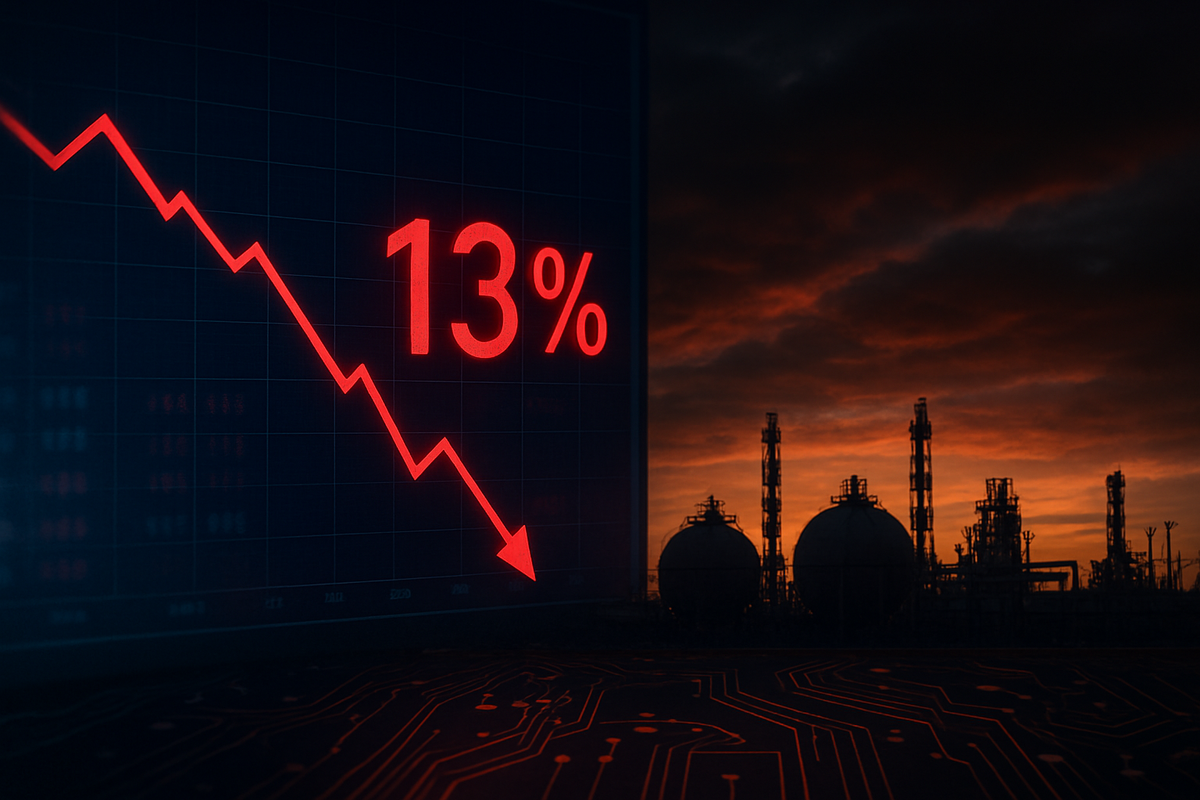
In a stark reminder of how geopolitical instability can derail the global manufacturing engine, shares of PG Electroplast Limited (NSE: PGEL) plummeted 13% in a single trading session on March 9, 2026. The crash followed an emergency disclosure from the company, stating that its primary supply of Liquefied Petroleum Gas (LPG)—a critical component in its manufacturing process—had been severely curtailed. The disruption is a direct consequence of escalating maritime navigation restrictions in the Middle East, which have strangled the flow of energy commodities through the Strait of Hormuz.
The sudden sell-off reflects growing investor anxiety over the vulnerability of India’s burgeoning Electronics Manufacturing Services (EMS) sector to external energy shocks. As PG Electroplast (NSE: PGEL) scrambles to find alternative fuel sources to keep its production lines running, the broader market is beginning to price in the risk of sustained margin erosion and production bottlenecks across the entire electronics and home appliances value chain.
Energy Crisis Hits the Factory Floor
The crisis reached a breaking point on the morning of March 9, 2026, when PG Electroplast (NSE: PGEL) notified the stock exchanges that its gas allocation had been restricted indefinitely. The company cited "unforeseen maritime navigation restrictions" in the Middle East, referring to the ongoing conflict involving major regional powers that has effectively blocked roughly 70% of India’s LPG imports. This geopolitical logjam has forced Indian authorities to prioritize household cooking gas, leading to a temporary suspension of commercial LPG distribution in several key industrial hubs, including Pune and Greater Noida, where PGEL operates significant facilities.
The timeline leading to this crash began in late 2025, as regional tensions in the Middle East intensified, causing oil prices to surge past $110 per barrel. While the EMS sector had been buoyed by strong Q3 FY26 results in February, the reality of a physical supply shortage caught the market off guard. PG Electroplast (NSE: PGEL), which uses LPG for critical processes like gas-assisted injection molding and industrial heating for paint shops, is now facing a mandatory reduction in output. Initial market reactions were swift and brutal, with the stock price collapsing from its early-session stability of ₹615 down to ₹535.40 by the closing bell.
Sector-Wide Turbulence: Winners and Losers
The immediate loser in this scenario is undoubtedly PG Electroplast (NSE: PGEL), but the ripple effect is spreading rapidly. Peer companies like Dixon Technologies (India) Limited (NSE: DIXON) and Kaynes Technology India Limited (NSE: KAYNES) also saw their stock prices dip by 5% and 7% respectively, as investors realized that the energy shortage is a systemic threat rather than a company-specific issue. These firms operate on razor-thin net margins of 2% to 4%, meaning any spike in operational costs or a forced reduction in volume can quickly turn a profitable quarter into a loss.
On the other side of the ledger, consumer brand owners such as Blue Star Limited (NSE: BLUESTAR) and Voltas Limited (NSE: VOLTAS) are bracing for impact. These "downstream" consumers rely on PGEL and Dixon for the manufacturing of room air conditioners and washing machines. If production is curtailed at the EMS level, these brands face inventory shortages just as the peak summer demand season approaches. Potential winners are few, though companies specializing in industrial electrification and renewable energy solutions may see an uptick in interest as manufacturers look to "de-gas" their operations to avoid future supply chain shocks.
The Fragility of the "China Plus One" Strategy
This event serves as a critical case study for how commodity price spikes and supply disruptions can undermine national industrial ambitions. Over the past three years, India has aggressively promoted itself as a global electronics hub through Production Linked Incentive (PLI) schemes. However, while the country has successfully localized the assembly of high-tech goods, its energy security remains precariously tied to volatile trade routes in the Middle East. The 13% crash in PG Electroplast (NSE: PGEL) shares highlights a structural flaw: a manufacturing base can only be as stable as its energy supply.
Historically, this situation mirrors the energy shocks of the early 2020s, yet the current scale of the Middle East conflict presents a more existential threat to "just-in-time" manufacturing. The wider significance lies in the potential for a "margin squeeze" across the sector. As PGEL explores alternative fuels like diesel or electricity, the capital expenditure and higher variable costs will likely erode the cost-competitiveness that made Indian EMS firms attractive to global brands in the first place. Regulatory bodies may now be forced to accelerate policies favoring industrial energy diversification to protect the manufacturing sector from future geopolitical flare-ups.
The Road Ahead: Adaptation and Strategic Pivots
In the short term, PG Electroplast (NSE: PGEL) is expected to announce a production curtailment plan, which will likely lead to downward revisions in revenue guidance for the final quarter of FY26. The company is currently evaluating the feasibility of switching its molding units to electric-assisted heating, a transition that requires significant time and capital. Investors should expect a period of high volatility as the company negotiates with alternative suppliers and attempts to pass on increased energy costs to its brand-name clients.
Longer-term, this crisis may trigger a strategic pivot within the Indian electronics sector toward "energy-resilient" manufacturing. This could involve the integration of on-site solar power and large-scale battery storage to reduce reliance on imported fossil fuels. For the industry at large, the challenge will be maintaining growth momentum while absorbing higher operational costs. The outcome of this supply crunch will likely determine which EMS players have the balance sheet strength to survive a high-energy-cost environment and which will be forced to consolidate.
Market Wrap-Up and Investor Outlook
The 13% crash in PG Electroplast (NSE: PGEL) on March 9, 2026, is a watershed moment for the electronics and appliances sector. It underscores the reality that even the most promising growth stories are not immune to the hard physics of energy supply. The key takeaways for investors are clear: energy security is now a fundamental metric for evaluating manufacturing stocks, and the "China Plus One" narrative must be balanced against the risks of global supply chain dependencies.
Moving forward, the market will likely remain cautious until a clear resolution in the Middle East emerges or until PGEL demonstrates a viable path to energy independence. Investors should closely watch the upcoming earnings calls of Dixon Technologies (India) Limited (NSE: DIXON) and other peers for signs of similar stress. The ability of these companies to maintain their production schedules and protect their margins in the face of $110+ oil will be the ultimate test of their resilience. For now, the electronics sector remains under a cloud of uncertainty, with the "energy premium" expected to weigh on valuations for the foreseeable future.
This content is intended for informational purposes only and is not financial advice