
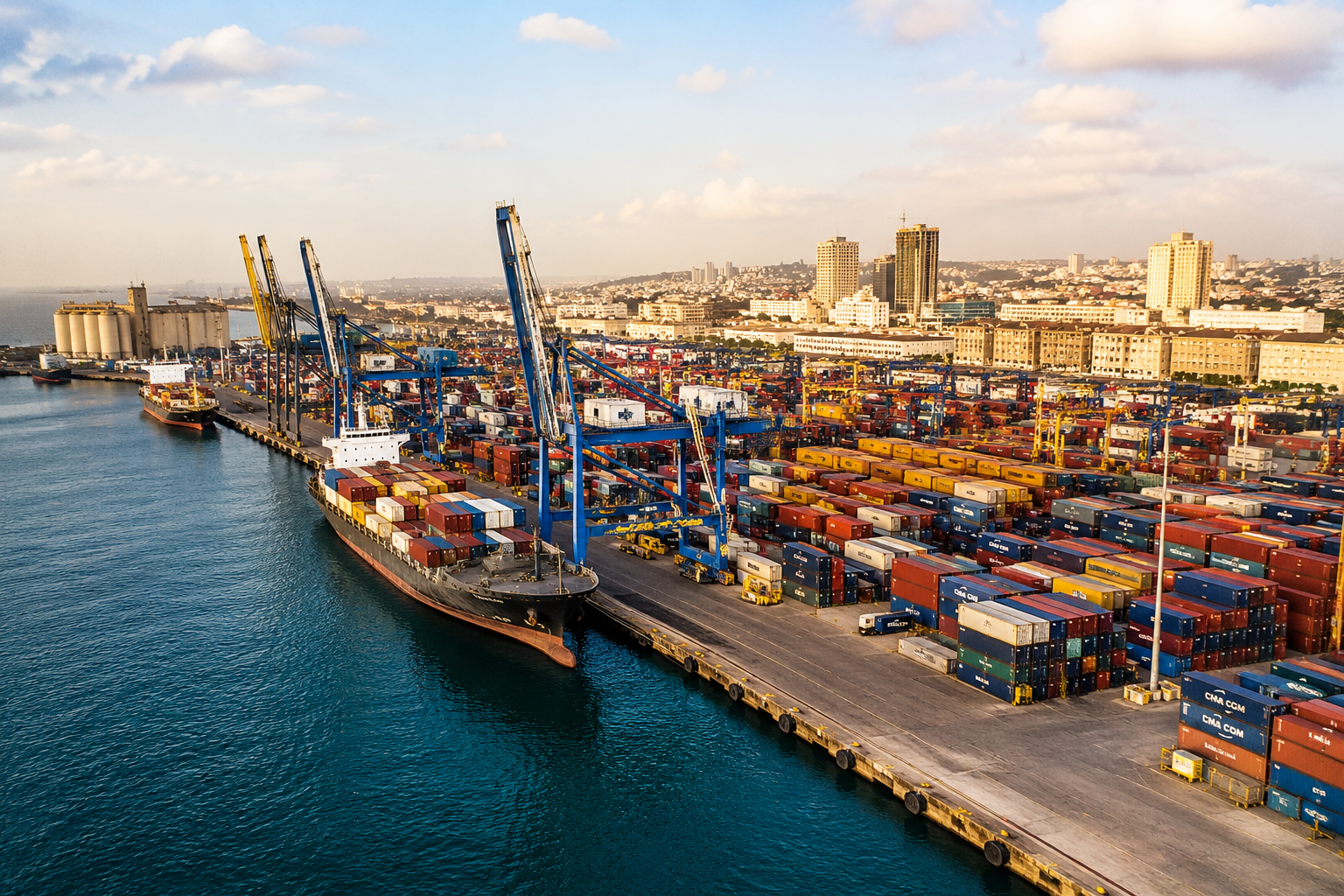
Port of Dakar, Senegal
The Port of Dakar, a key entry point for international trade and fuel imports, has been at the centre of recent customs enforcement actions.
JOHANNESBURG, July 15, 2026 (GLOBE NEWSWIRE) -- Frontline Strategic Communications today released a new report examining concerns over due process, prolonged pre-trial detention and structural weaknesses in Senegal's customs code that legal observers and economic analysts argue may be affecting investor confidence and the country's international credibility.
Based on publicly available court filings, legal documents and public statements, the report examines legal and economic developments arising from Senegal's ongoing anti-corruption campaign and their implications for legal certainty and investor confidence.
A Government That Acts Before It Knows
Analysts point to the hidden debt controversy as a key example. Shortly after taking office, then Prime Minister Ousmane Sonko publicly alleged that the previous administration had concealed significant public debt. The announcement contributed to the suspension of IMF support programmes and a downgrade of Senegal's sovereign credit rating, increasing borrowing costs.
Mr Sonko later acknowledged in media interviews that he did not have all the facts when making those statements and had spoken in his political capacity rather than as head of government. The subsequent clarification, however, did not reverse the IMF suspension or restore the country's credit rating.
A State That Does Not Pay Its Own Bills
Observers also point to the State's continued failure to settle domestic debt owed to private businesses. Companies that completed public projects have reportedly waited months, and in some cases years, for payment, affecting suppliers, payrolls and investment plans.
Critics argue it is particularly concerning that while business leaders face prosecution for alleged financial misconduct, independent investigations have, in several instances, concluded that the State itself owes outstanding payments to some of those accused.
Contracts Suspended, Jobs Lost
Within months of taking office, the government suspended numerous contracts awarded under the previous administration pending compliance reviews. Businesses report immediate consequences, including stalled construction projects, disrupted cash flow, job losses and the suspension of social programmes.
Several international energy companies have reportedly reduced their operations, while a number of investors have initiated legal proceedings against the State. In several cases, businessmen publicly portrayed as symbols of corruption were later found to be creditors of the very government pursuing legal action against them.
The Khadim Ba Case: A System Exposed
Businessman Khadim Ba's case has become one of the most closely watched examples of these broader concerns. He has remained in pre-trial detention for more than twenty months without trial or conviction on allegations relating to customs documentation, fuel import duties and foreign currency repatriation.
According to documentation submitted during the proceedings, the importer confirmed the fuel shipments entered Senegal and that customs duties had been paid, findings reportedly supported by court-appointed experts. On the foreign currency allegations, legal representatives state experts concluded the transactions were conducted in local currency, validated by the relevant authorities, and that repatriated funds exceeded the amount customs alleged remained outstanding. Despite these findings, Mr Ba remains in detention while the matter proceeds through the courts.
A Customs Code That Removes the Right to a Judge
Legal observers attribute many of these concerns to provisions within Senegal's customs code that presume investigators' reports to be accurate and provide judges with limited opportunity to challenge them during the early stages of proceedings.
Critics argue that this framework effectively reverses the presumption of innocence and restricts meaningful access to independent judicial review before an individual loses their liberty, placing Senegal in tension with obligations under the International Covenant on Civil and Political Rights.
Observers note this pattern extends beyond customs matters. Across a number of economic cases since 2024, accused individuals have reportedly waited eight or nine months for a first substantive hearing, with some remaining detained for more than a year before trial. They argue that pre-trial detention, intended to be an exceptional measure under international standards, has increasingly become the default response to economic allegations.
The Economic Consequences Are Not Abstract
For investors, institutional predictability is a critical consideration. Markets expect disputes to be resolved fairly, contractual obligations to be honoured and allegations to be supported by evidence before severe consequences follow.
Analysts argue Senegal's recent experience, including the IMF programme suspension, sovereign credit downgrade, legal claims against the State and domestic payment delays, has increased uncertainty for future investment.
What Is Required
None of these concerns argue against accountability. Corruption should be investigated and public resources protected. However, legal observers contend that accountability without due process risks undermining confidence in the very institutions responsible for enforcing the law.
They argue that reforms should include honouring the State's domestic debt obligations, strengthening independent judicial oversight within the customs framework, and ensuring that pre-trial detention returns to its intended role as an exceptional measure rather than the norm.
While Khadim Ba's case remains unresolved, with no trial date yet set, legal observers argue that the prolonged uncertainty itself illustrates the broader procedural concerns raised throughout this debate. They contend that, in practice, negotiated settlements with the authorities may offer a faster resolution than awaiting the conclusion of lengthy judicial proceedings.
Regardless of the outcome of any individual case, observers maintain that strengthening due process, ensuring timely judicial review and reinforcing legal certainty will be essential to sustaining investor confidence and confidence in Senegal's institutions.
About the Report
This report is intended to contribute to informed discussion on legal certainty, governance and investment considerations. It does not seek to determine the outcome of any ongoing judicial proceedings.
About Frontline Strategic Communications
Frontline Strategic Communications is a South African strategic communications consultancy specialising in strategic communications, public affairs, stakeholder engagement, media relations and thought leadership across Africa.
Media Contact
Phindile Nxumalo
Founder & Managing Director
Frontline Strategic Communications
+27 71 787 7002
media@frontlinecomm.online
A photo accompanying this announcement is available at https://www.globenewswire.com/NewsRoom/AttachmentNg/23d996b0-a817-43a4-b678-f4158d0e507c