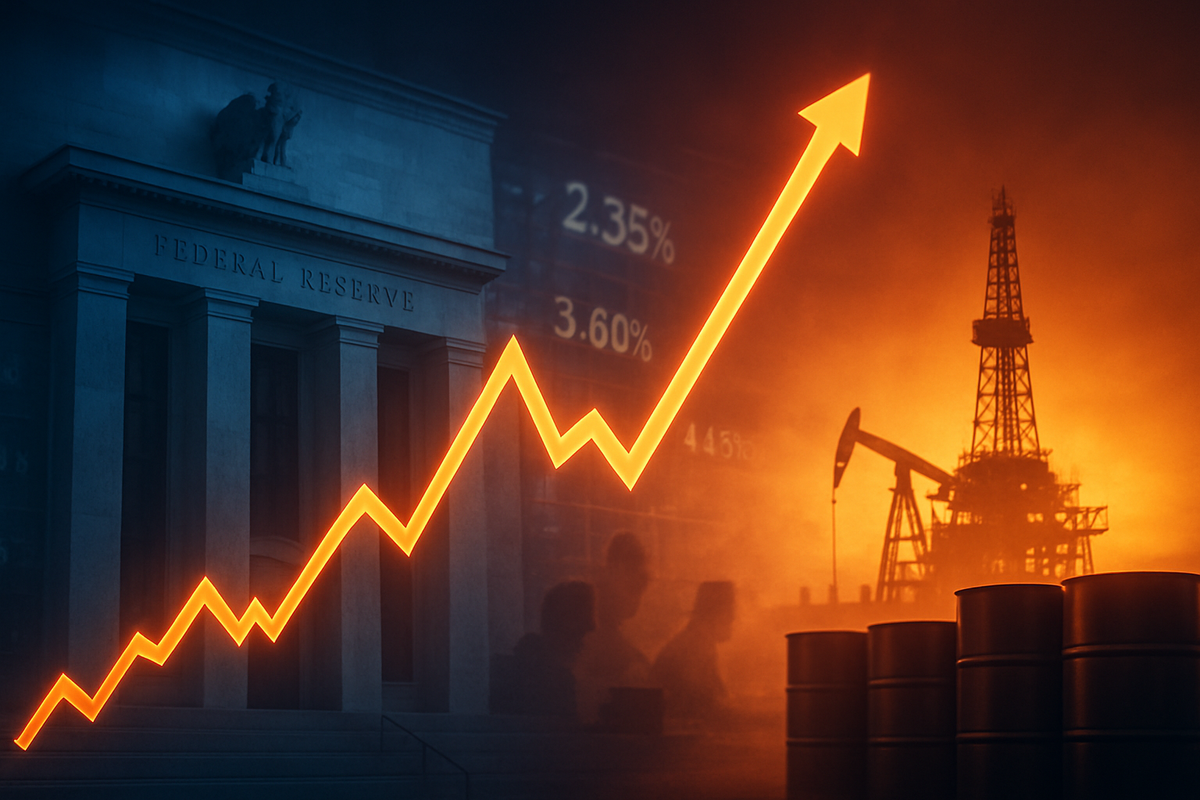
NEW YORK — The long-awaited "pivot" of 2026 is rapidly evaporating as a toxic cocktail of surging energy costs and hotter-than-expected producer inflation sends shockwaves through the global bond market. On Monday, March 23, 2026, bond traders effectively tore up their playbooks, slashing the odds of interest rate cuts for the remainder of the year as the Federal Reserve’s "higher-for-longer" mantra transforms from a policy warning into a persistent economic reality.
The immediate fallout has been a sharp "bear flattening" of the Treasury yield curve. Following a series of blistering Producer Price Index (PPI) reports for January and February, the 10-year Treasury yield surged to 4.29%, its highest level in months, while the policy-sensitive 2-year yield climbed to 3.72%. Investors who began the year pricing in three to four 25-basis-point cuts are now bracing for the possibility of a "zero-cut year," a scenario that seemed unthinkable just six months ago.
The Perfect Storm: Wholesale Heat and Geopolitical Shocks
The shift in market sentiment follows two months of data that suggests inflation is not just sticky, but re-accelerating. In February, headline PPI jumped 0.7% month-over-month—more than double the consensus estimate—driven largely by "Trade Services" and transportation costs. This followed a January report where Core PPI, which strips out volatile food and energy components, surged 0.8%. Analysts are increasingly worried that these wholesale price increases will soon filter through to consumers, reigniting a headline Consumer Price Index (CPI) that many thought had been tamed in late 2025.
Adding fuel to the fire is a precarious situation in the Middle East. Ongoing military tensions involving Iran and the subsequent blockade of the Strait of Hormuz have sent Brent crude oil prices screaming toward $110 per barrel. This energy shock has pushed U.S. gasoline prices toward the $4.00-per-gallon mark, a psychological threshold that historically dampens consumer confidence and keeps the Federal Reserve in a defensive posture. At the March FOMC meeting, Fed officials held the target range steady at 3.50%–3.75%, but the updated "dot plot" revealed a growing hawkish divide, with seven members now projecting no rate cuts for the entirety of 2026.
Corporate Winners and Losers in the "Higher-for-Longer" Era
The repricing of the Fed’s path has created a stark divide in corporate America. JPMorgan Chase & Co. (NYSE: JPM) has emerged as a primary beneficiary of the sustained rate floor. In early 2026, the banking giant revised its net interest income (NII) guidance upward to a staggering $104.5 billion. While smaller regional banks struggle with deposit flight, JPM’s "fortress balance sheet" allows it to keep deposit costs low while reaping the rewards of 3.5% yields on its vast loan portfolio.
In the energy sector, Exxon Mobil Corp. (NYSE: XOM) is capitalizing on the commodity spike. With Brent crude near $100, Exxon’s record production of 4.7 million oil-equivalent barrels per day has turned the company into a cash-flow machine. Alongside peer Chevron Corp. (NYSE: CVX), Exxon is expected to return billions to shareholders via buybacks in 2026, even as it lowers its structural breakeven points.
Conversely, the tech and retail sectors are feeling the squeeze. NVIDIA Corp. (NASDAQ: NVDA), while still reporting record revenues from AI chips, has seen its forward price-to-earnings multiple compress from 40x to 21x as the "discount rate" applied to future earnings rises alongside Treasury yields. More concerning for the broader market is the situation at Amazon.com, Inc. (NASDAQ: AMZN). The company’s stock fell 18% from its peak after it announced a $200 billion capital expenditure plan for 2026. In a high-interest-rate environment, investors are no longer rewarding massive, long-term infrastructure spending with the same enthusiasm they once did. Meanwhile, discretionary retailers like Target Corp. (NYSE: TGT) are reeling as "inflation-fatigued" consumers pull back on home goods and apparel, favoring discount staples at Walmart Inc. (NYSE: WMT) instead.
A Global Pivot Toward Stagflation Anxiety
The current market volatility is more than just a reaction to a few bad data points; it marks a fundamental shift in the economic narrative. The "soft landing" hope of 2025 has been replaced by "stagflation anxiety," a fear that the economy is entering a period of stagnant growth coupled with persistent inflation. This event mirrors the "second wave" inflation scares of the 1970s and 1980s, where initial successes in cooling prices were undone by sudden energy shocks.
Furthermore, the Federal Reserve’s decision to raise its "neutral" rate projection to 3.125% suggests that the era of ultra-cheap money is officially over. This has significant ripple effects on the regulatory landscape. In February 2026, the White House launched a new initiative to manage power grid expenses, a direct response to the rising energy costs hitting data center operators like Amazon and Microsoft. As energy prices become a core operational threat to the digital economy, we may see increased government intervention in energy markets and utility pricing to prevent a complete margin collapse in the tech sector.
The Road Ahead: Strategic Pivots and Scenarios
In the short term, companies will likely engage in "strategic austerity." We are already seeing firms like Ford Motor Co. (NYSE: F) and General Motors Co. (NYSE: GM) pull back on capital-intensive EV projects as the high cost of financing makes 2026 an unattractive year for major debt-funded expansions. The focus for most C-suite executives has shifted toward "AI for Efficiency"—using technology not just for growth, but to aggressively cut operating expenses to offset rising labor and energy costs.
Market participants are now looking toward the June 2026 FOMC meeting as the next major catalyst. If energy prices stabilize and the Middle East conflict de-escalates, the Fed may still find a window for a single cut in December. However, if Brent crude breaks $120, a rate hike—once considered a relic of the past—could realistically return to the table. Investors should brace for continued volatility in the bond market as it continues to function as the primary judge of the Fed’s credibility.
Wrap-Up: What to Watch for in the Coming Months
The takeaway for March 2026 is clear: the path to lower rates is blocked by a wall of energy and wholesale inflation. The bond market has effectively "done the Fed's work" by tightening financial conditions, making it harder for businesses and consumers to borrow, and likely slowing the economy toward the end of the year.
Investors should keep a close eye on the Personal Consumption Expenditures (PCE) price index release later this month, which is the Fed's preferred inflation gauge. If the PCE confirms the hot PPI data, expect the "rate cut desert" to extend well into 2027. For now, the winning strategy remains tilted toward "fortress" balance sheets and commodity producers, while high-multiple growth and discretionary retail remain firmly in the crosshairs of a hawkish Federal Reserve.
This content is intended for informational purposes only and is not financial advice.