

Quarterly earnings results are a good time to check in on a company’s progress, especially compared to its peers in the same sector. Today we are looking at Levi's (NYSE: LEVI) and the best and worst performers in the consumer discretionary industry.
This sector includes everything from cable TV services to hotel stays to gym memberships. While diverse, the way people buy and experience these products is being upended by the internet and digitization. Consumer discretionary companies are working to adapt to secular trends such as streaming video, online marketplaces for lodging accommodations, and connected fitness. That discretionary purchases are, by definition, something consumers can give up makes it even more imperative for companies in the space to adapt.
The 5 consumer discretionary stocks we track reported a mixed Q3. As a group, revenues were in line with analysts’ consensus estimates.
Thankfully, share prices of the companies have been resilient as they are up 7.2% on average since the latest earnings results.
Best Q3: Levi's (NYSE: LEVI)
Credited for inventing the first pair of blue jeans in 1873, Levi's (NYSE: LEVI) is an apparel company renowned for its iconic denim products and classic American style.
Levi's reported revenues of $1.61 billion, up 4.3% year on year. This print was in line with analysts’ expectations, and overall, it was a very strong quarter for the company with a beat of analysts’ EPS estimates and an impressive beat of analysts’ adjusted operating income estimates.
“Our third-quarter performance highlighted the power of our diversified portfolio and reinforced our confidence that we have the right strategies in place,” said Michelle Gass, President and CEO of Levi Strauss & Co. “We saw strong growth in our international and wholesale businesses, and continued momentum across our lifestyle categories. While our direct-to-consumer business fell short of our internal expectations, we moved quickly to address the shortfall and are encouraged by the strength we are seeing heading into the holiday season, including in the U.S. Based on the acceleration in recent trends, our DTC business is on track to deliver mid-single-digit growth in the fourth quarter.”
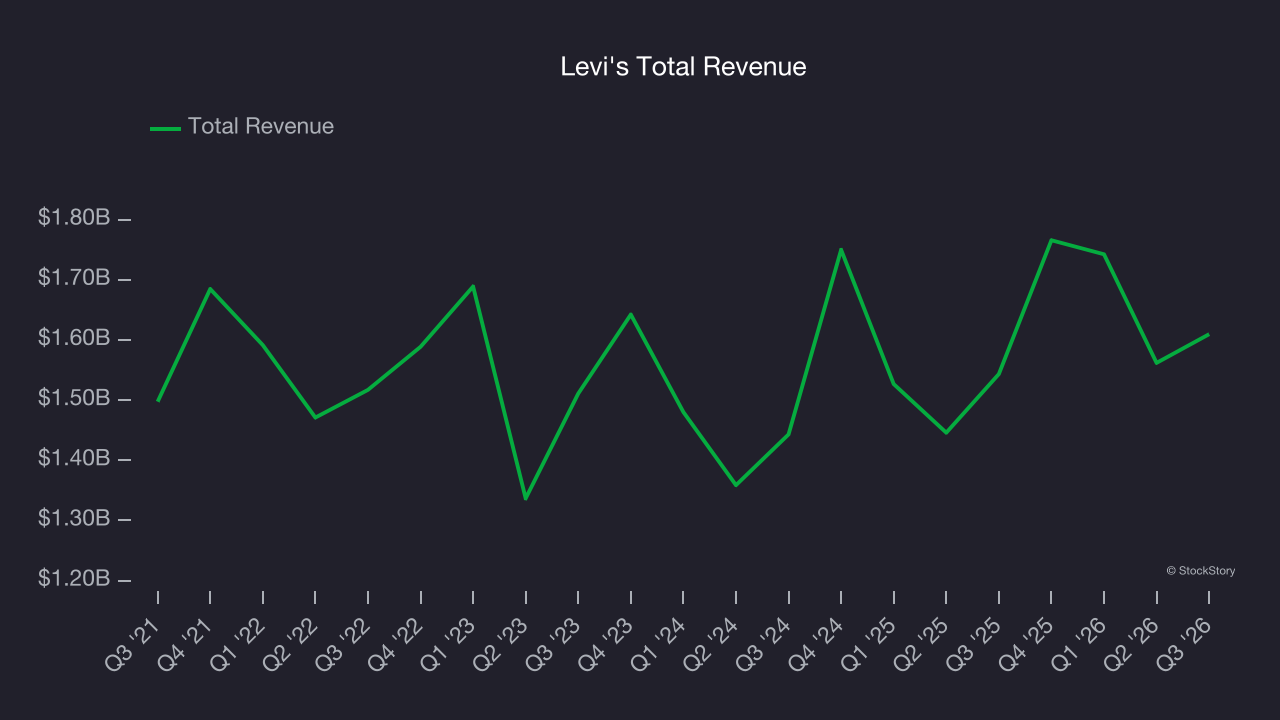
Interestingly, the stock is up 5.5% since reporting and currently trades at $20.58.
Is now the time to buy Levi's? Access our full analysis of the earnings results here, it’s free.
Carnival (NYSE: CCL)
Boasting outrageous amenities like a planetarium on board its ships, Carnival (NYSE: CCL) is one of the world's largest leisure travel companies and a prominent player in the cruise industry.
Carnival reported revenues of $8.44 billion, up 3.5% year on year, outperforming analysts’ expectations by 1.1%. The business performed better than its peers, but it was unfortunately a mixed quarter with a beat of analysts’ EPS estimates but EBITDA guidance for next quarter missing analysts’ expectations.
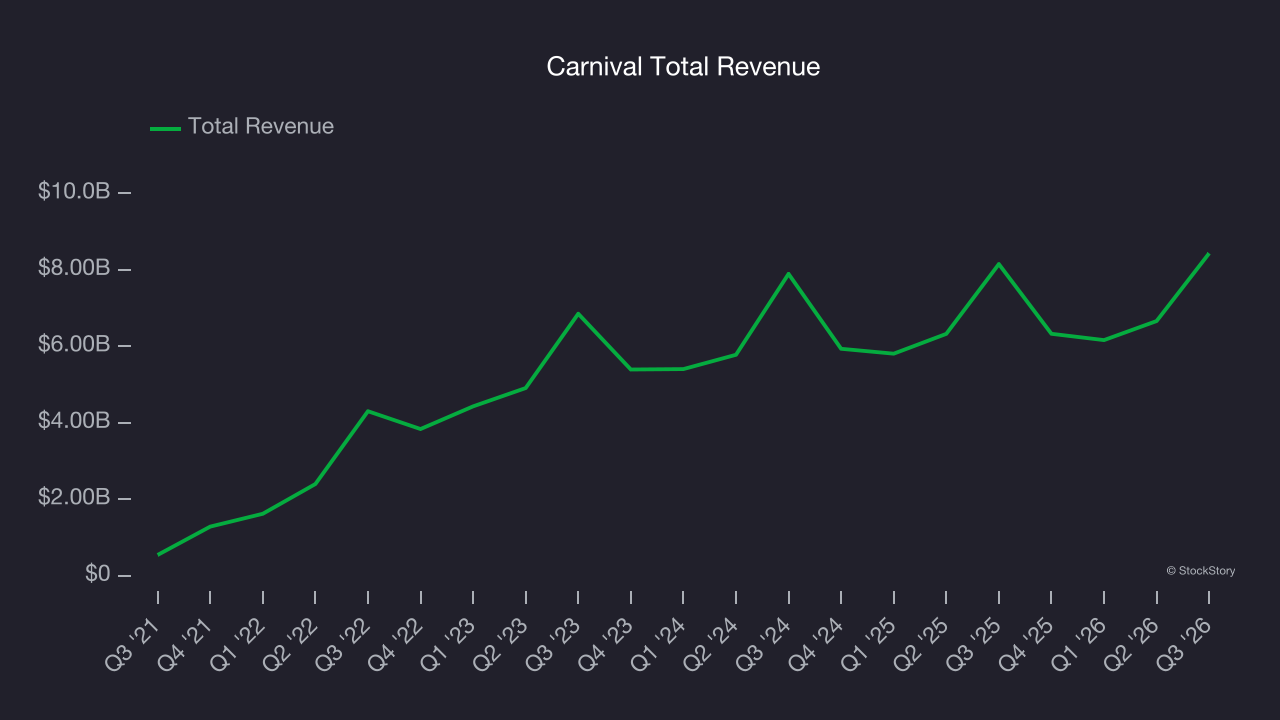
The market seems happy with the results as the stock is up 19.2% since reporting. It currently trades at $26.40.
Is now the time to buy Carnival? Access our full analysis of the earnings results here, it’s free.
Weakest Q3: Scholastic (NASDAQ: SCHL)
Creator of the legendary Scholastic Book Fair, Scholastic (NASDAQ: SCHL) is an international company specializing in children's publishing, education, and media services.
Scholastic reported revenues of $216.8 million, down 3.9% year on year, falling short of analysts’ expectations by 3.5%. It was a slower quarter as it posted a significant miss of analysts’ EPS estimates.
Scholastic delivered the weakest performance against analyst estimates of the whole group. Interestingly, the stock is up 10.9% since the results and currently trades at $38.63.
Read our full analysis of Scholastic’s results here.
Nike (NYSE: NKE)
Originally selling Japanese Onitsuka Tiger sneakers as Blue Ribbon Sports, Nike (NYSE: NKE) is a global titan in athletic footwear, apparel, equipment, and accessories.
Nike reported revenues of $11.21 billion, down 4.3% year on year. This number came in 1% below analysts’ expectations. All in all, it was a mixed quarter for the company.
Nike had the slowest revenue growth among its peers. The stock is up 5.8% since reporting and currently trades at $37.18.
Read our full, actionable report on Nike here, it’s free.
Delta (NYSE: DAL)
One of the ‘Big Four’ airlines in the US, Delta Air Lines (NYSE: DAL) is a major global air carrier that serves both business and leisure travelers through its domestic and international flights.
Delta reported revenues of $20.19 billion, up 21.1% year on year. This result topped analysts’ expectations by 4.2%. Zooming out, it was a slower quarter as it produced a significant miss of analysts’ EPS estimates and EPS guidance for next quarter missing analysts’ expectations.
Delta scored the biggest analyst estimate beat and fastest revenue growth in the group. The stock is down 5.1% since reporting and currently trades at $77.91.
Read our full, actionable report on Delta here, it’s free.
Market Update
Over the past year, investors have been forced to repeatedly answer the same question: what is the market’s biggest risk? The answer has changed several times, and each shift has reshaped market leadership.
Late in 2025 and early 2026, artificial intelligence became the market’s primary uncertainty. Investors questioned whether AI would erode software pricing power and weaken competitive moats as AI made it easier to replicate once-differentiated products.
By the spring, technology took a back seat to geopolitics. The U.S. conflict with Iran briefly became the market’s dominant narrative, raising concerns about oil prices, inflation, and global growth. But as energy markets remained orderly and fears of a prolonged supply disruption faded, investors quickly turned their focus back to fundamentals.
Want to invest in winners with rock-solid fundamentals? Check out our Top 5 Quality Compounder Stocks and add them to your watchlist. These companies are poised for growth regardless of the political or macroeconomic climate.