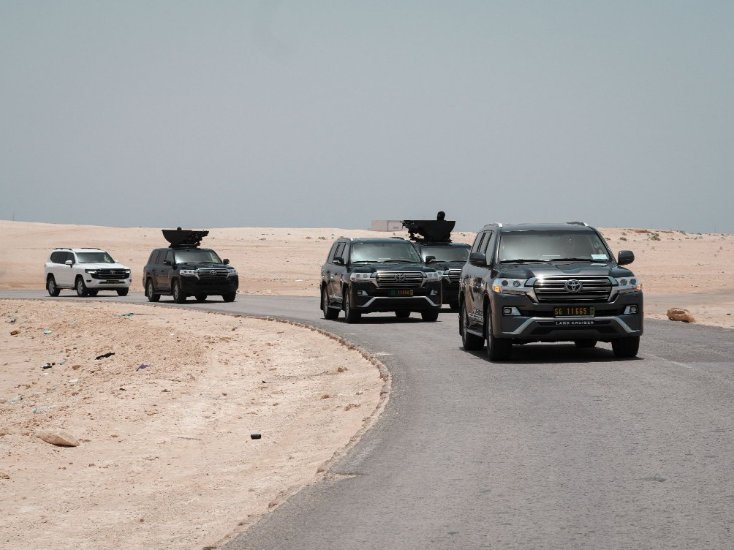
Modern corporate security requires a proactive approach to mitigate risks associated with executive transport and operational logistics. In regions with elevated threat levels, deploying standard passenger vehicles exposes personnel and sensitive assets to unacceptable vulnerabilities. Upgrading a corporate fleet with certified ballistic protection is no longer a luxury but a critical component of comprehensive corporate risk management. The objective is to achieve a seamless integration of security measures that deter attacks while maintaining the discreet appearance and operational efficiency of the vehicles.
Selecting the appropriate ballistic defense requires precision engineering and high-grade materials. When evaluating premium security solutions for company vehicles, relying on specialized integrators such as Armor Corp provides the technical assurance needed to withstand targeted ballistic threats. Proper fleet protection demands an analytical evaluation of threat landscapes, vehicle specifications, and long-term operational costs to ensure the investment yields maximum security and performance without degrading systemic mobility.
Understanding Armor Levels for Corporate Vehicles
The European standard (CEN 1063) is the most widely adopted metric for classifying vehicle armor globally. Each level corresponds to specific kinetic energy resistance, dictating the composite materials used and the gross weight added to the chassis.
Low to Medium Threat Environments (Levels B3 - B4)
Designed for urban environments with potential street crime, carjacking, or random acts of violence. B4 armor typically utilizes aramid fibers (such as Kevlar) combined with specialized ballistic glass.
- Threat Resistance: .357 Magnum and .44 Magnum handguns.
- Weight Addition: Approximately 130 kg to 250 kg.
- Vehicle Impact: Minimal modifications required to factory suspension and braking systems, preserving OEM acceleration.
High Threat Environments (Levels B5 - B6)
Level B6 is the standard benchmark for corporate fleets operating in volatile regions facing threats from organized crime or terrorism. This level incorporates hardened ballistic steel, composite spall liners, and multi-layered glass-polycarbonate matrices.
- Threat Resistance: 5.56x45mm (AR-15) and 7.62x51mm (AK-47) assault rifles.
- Weight Addition: Ranges from 400 kg to 800 kg depending on the SUV or sedan model footprint.
- Vehicle Impact: Mandates heavy-duty suspension upgrades, structural pillar reinforcement, and high-performance brake rotor installations to handle thermal loads.
Extreme Threat Environments (Level B7)
Reserved for exceptional circumstances, head of state transport, or sensitive asset transit applications. B7 armor utilizes ceramic composites and ultra-hard armor steel to defeat armor-piercing rounds.
- Threat Resistance: 7.62x51mm armor-piercing (AP) rifle ammunition.
- Weight Addition: Can easily exceed 1,000 kg.
- Vehicle Impact: Necessitates heavy ladder-frame chassis vehicles, highly reinforced hinges, and proprietary drivetrain modifications to maintain forward momentum under fire.
Crucial Investment Considerations for Fleet Armoring
Armoring a corporate fleet is a capital-intensive initiative. Beyond the initial procurement cost of the ballistic package, fleet managers must analyze several operational and financial metrics to ensure a sustainable, high-ROI deployment.
- Chassis Suitability: Not all vehicles can support heavy armor integrations. Ladder-frame SUVs are heavily prioritized over unibody sedans for B6 and B7 levels due to superior lateral load-bearing capacities.
- Total Cost of Ownership (TCO): Armored vehicles consume up to 25% more fuel and accelerate tire and brake pad wear due to sheer mass. Predictive maintenance budgets must be adjusted accordingly.
- Material Technology: Investing in advanced lightweight composites (like Ultra-High-Molecular-Weight Polyethylene) increases the upfront armoring cost by 20-30% but drastically reduces gross vehicle weight, extending the mechanical lifecycle of the fleet components.
- Opaque vs. Transparent Armor Costs: The glass (transparent armor) is often the most expensive and structurally complex component, requiring exact thickness engineering (e.g., 39mm to 43mm for B6) to maintain optical clarity without delamination while stopping high-velocity projectiles.
- Insurance and Depreciation: Certified armored fleets may qualify for reduced executive liability insurance premiums in high-risk regions. However, the secondary resale market requires specialized vehicle brokers to ensure maximum asset value recovery.
Frequently Asked Questions (FAQ)
How does armoring affect the lifespan and maintenance schedule of a corporate vehicle?
Armoring significantly alters a vehicle's mechanical dynamics by adding hundreds of kilograms of unsprung and sprung weight. This added mass increases the continuous thermal and physical strain on the engine, transmission, suspension, and braking systems. Consequently, the corporate maintenance schedule must be aggressively accelerated. Oil changes, transmission fluid flushes, and critical brake inspections should be performed at intervals 30% to 50% shorter than standard OEM recommendations. Furthermore, specialized components unique to armored units, such as heavy-duty shocks, run-flat tire inserts, and reinforced door hinges, require rigorous torque verification and lubrication. While the overall engine lifecycle may be slightly reduced due to continuous heavy-load operation, strict adherence to an armor-specific preventative maintenance protocol ensures the vehicle remains a reliable and fully operational asset throughout its intended corporate deployment.