
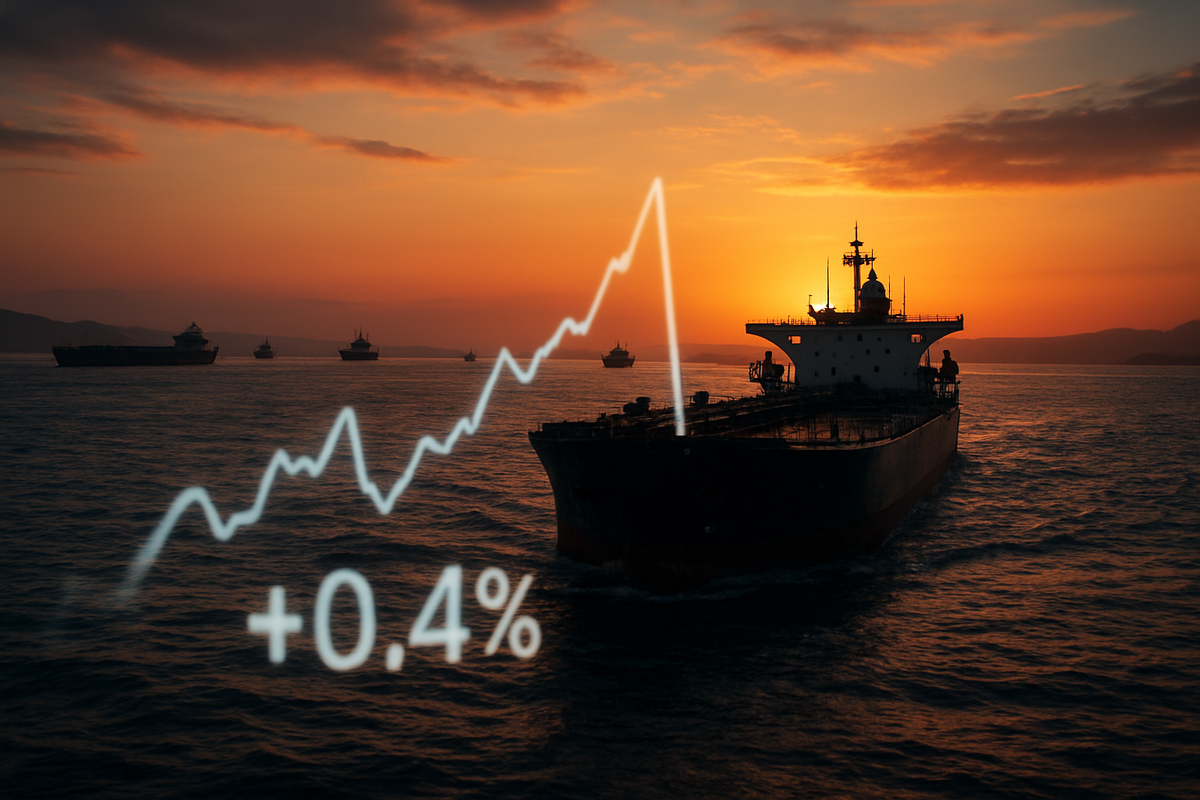
On Tuesday, March 10, 2026, the energy sector finally took a breather after a period of intense volatility, with the Energy Select Sector SPDR Fund (XLE) falling 0.4% by the closing bell. The retreat marks a significant shift in market sentiment as global crude prices began to cool from their recent "war premium" highs, fueled by emerging reports that the military conflict involving Iran may be shorter and less disruptive to global supply chains than previously feared.
This downward move represents a sharp reversal of the trend established over the previous week, where energy was the sole bright spot in an otherwise tepid broader market. While other sectors struggled with inflationary fears and geopolitical uncertainty, energy stocks had been buoyed by a violent surge in crude prices that saw West Texas Intermediate (WTI) briefly touch $120 per barrel just 24 hours earlier. Today’s minor contraction suggests that investors are beginning to price in a de-escalation scenario, shifting focus back toward the underlying fundamental oversupply that characterized the market at the start of the year.
Cooling Crude: The "War Premium" Begins to Evaporate
The immediate catalyst for Tuesday’s 0.4% slide was a significant softening in the geopolitical risk profile that has dominated headlines since late February. The conflict, which escalated dramatically following U.S. and Israeli strikes on Iranian infrastructure on February 28, 2026, had initially triggered a panic-driven buying spree. As of March 10, however, diplomatic backchannels and reports of a potential "stabilization phase" have led traders to reconsider the long-term impact on the Strait of Hormuz—a critical maritime chokepoint that handles approximately 20% of the world’s oil and LNG flows.
The timeline leading to this retreat was rapid. After Brent crude surged from $70 to nearly $114 in a matter of days, the peak appeared to hit on March 9. By the morning of March 10, news surfaced that international mediators were making headway in preventing a total blockade of the Strait. This "Hormuz Factor," which had added as much as $40 to the price of a barrel in pure risk premium, began to deflate as the likelihood of a multi-year regional war decreased.
Market participants responded with a controlled sell-off. While the 0.4% drop in the XLE is modest compared to the double-digit gains seen over the past ten days, it signals a psychological "topping out" of the energy trade. Traders who had used energy as a hedge against geopolitical catastrophe began taking profits, rotating capital back into growth sectors as the "worst-case" energy crisis scenarios were taken off the table.
Winners and Losers: Big Oil vs. Pure-Play Producers
The retreat in the XLE was felt most acutely by the heavily weighted integrated majors and pure-play exploration and production (E&P) firms. ExxonMobil (NYSE: XOM), which holds a dominant 23% weighting in the XLE, saw its shares consolidate after hitting a 52-week high near $130 earlier in the week. As an integrated giant, ExxonMobil often benefits from the initial spike in upstream prices, but its diversified portfolio—including massive refining and chemical segments—typically provides a buffer when crude prices begin to normalize.
Similarly, Chevron (NYSE: CVX) experienced a slight pullback as the "war premium" compressed. Analysts noted that while these integrated majors remain highly profitable at $80+ oil, the momentum that drove them to outperform the S&P 500 during the first week of March has clearly stalled. Conversely, companies like ConocoPhillips (NYSE: COP), which operate as pure-play upstream producers, are more sensitive to the raw price of oil. Because ConocoPhillips lacks the refining margins that can expand when crude input costs fall, its stock is often the first to feel the sting of a geopolitical de-escalation.
On the other side of the ledger, the cooling of energy prices may provide a sigh of relief for the transportation and consumer discretionary sectors. If the retreat in the XLE continues, airlines and logistics firms that were bracing for $150 oil may find their margins protected. However, for the energy sector itself, the winners of the coming weeks will likely be those with the most robust balance sheets and the lowest "break-even" production costs, as the market prepares for a return to the "bearish glut" narrative that existed before the Iran conflict began.
Wider Significance: Reconciling Conflict with a Global Surplus
The 0.4% dip on March 10 is more than just a daily fluctuation; it is a confrontation between short-term geopolitical shocks and long-term industry trends. Before the February 28 strikes, the International Energy Agency (IEA) and other global bodies had projected a massive global oil surplus of roughly 3.2 million barrels per day for 2026. This surplus was driven by surging production from non-OPEC+ sources and a structural cap on gasoline demand as electric vehicle (EV) adoption reached over 50% of new car sales in major markets like China.
The Iran conflict essentially "masked" this underlying oversupply by physically threatening the delivery of oil. By March 10, the market’s realization that the conflict might be "shorter" suggests a return to the reality of 2026: the world is currently producing more oil than it needs for long-term consumption. This event mirrors historical precedents like the 1990 Gulf War or the 2022 Russia-Ukraine shock, where initial price spikes were eventually followed by mean reversion as the market adjusted to new supply realities.
Furthermore, the policy implications are significant. The brief spike to $120 oil has likely accelerated government initiatives in Europe and Asia to further decouple their economies from fossil fuel volatility. Even if the Iran conflict ends quickly, the "scare" of March 2026 may serve as a catalyst for even more aggressive renewable energy subsidies, potentially shortening the "peak oil" horizon for the very companies currently making up the XLE.
What Comes Next: The Return to Fundamentals?
Looking ahead, the energy sector faces two distinct scenarios. In the short term, if diplomatic talks fail and the Strait of Hormuz is partially blocked, the XLE’s 0.4% retreat will be viewed as a mere "bull flag" before a march to new all-time highs. However, if the current hopes for a shorter conflict materialize, the "risk premium" could continue to evaporate at a rate of $2 to $5 per barrel per week, potentially dragging the XLE back to its January 2026 levels.
Energy companies will likely need to pivot their strategies toward capital discipline and shareholder returns rather than aggressive production growth. In a world where $60 crude could become the norm again by late 2026, the "war-time" profits of early March will be seen as a windfall to be used for debt reduction or stock buybacks. Investors should prepare for increased volatility as the market transitions from a "fear-based" trade to one based on the traditional supply-and-demand fundamentals of a decelerating global oil era.
The emergence of "shorter conflict" rumors also suggests that the U.S. and its allies are highly motivated to keep energy prices stable to prevent a global recession. Strategic Petroleum Reserve (SPR) releases or coordinated pressure on other OPEC members to increase output could be the next steps if prices don't continue their downward trajectory on their own.
The Wrap-Up: Navigating the New Energy Landscape
The 0.4% retreat in the energy sector on March 10, 2026, marks the end of a frantic week where the XLE was the only sanctuary for investors seeking to profit from geopolitical chaos. The summary of today's market action is one of cautious normalization; while oil prices remain high relative to historic averages, the "panic peak" appears to be behind us. The market is now shifting its gaze from the frontline of the Iran conflict back to the balance sheets of the companies that must navigate a complex, oversupplied global market.
Moving forward, the energy sector will likely remain the most watched area of the market. Investors should keep a close eye on "Big Oil" earnings calls in the coming quarter to see how these companies are pricing in the risk of future Middle Eastern disruptions versus the reality of the 2026 supply glut. The lasting impact of this week will not be the 0.4% drop itself, but the reminder that in the modern energy market, even a major conflict can struggle to sustain high prices in the face of shifting global demand.
For the next several months, the key indicators will be the status of the Strait of Hormuz and the pace of EV adoption in emerging markets. If the de-escalation holds, the "bright spot" of the energy sector may fade, requiring investors to look elsewhere for growth as the industry returns to its long-term trend of consolidation and transition.
This content is intended for informational purposes only and is not financial advice.