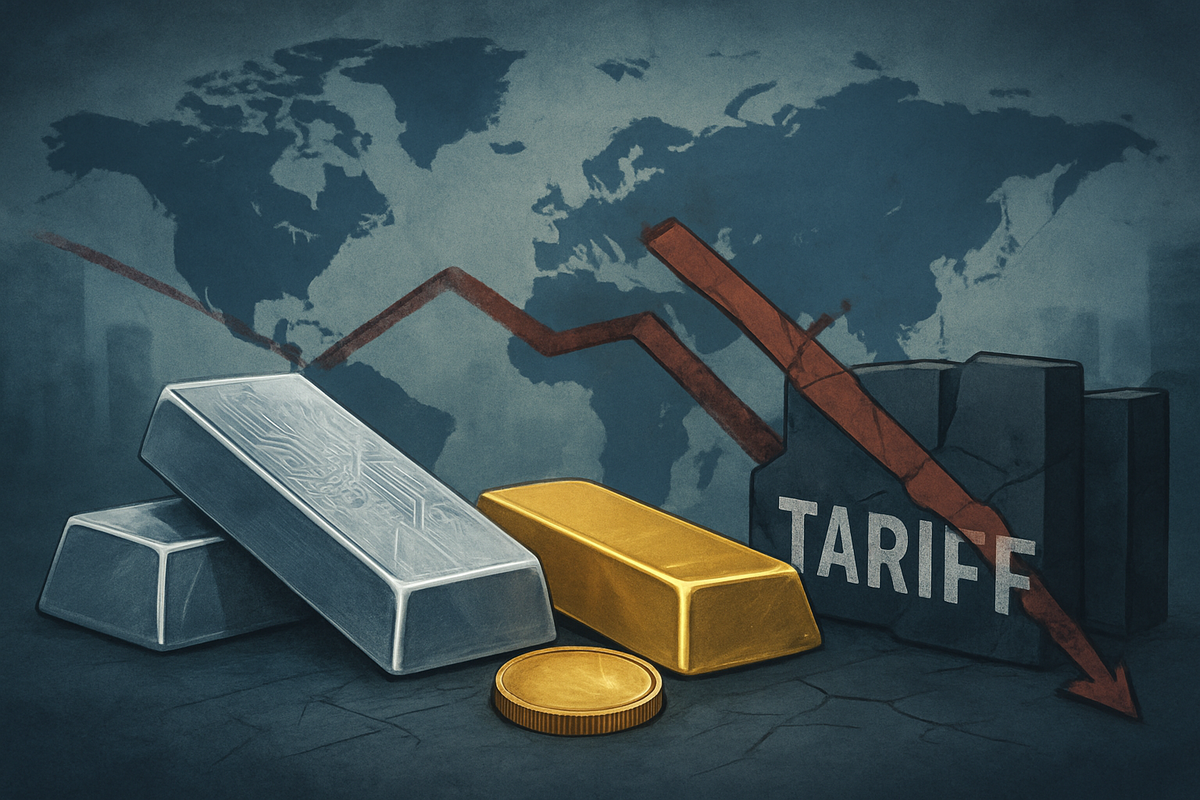
The global financial landscape is once again bracing for the far-reaching implications of renewed tariff threats and trade policy uncertainties. As of late 2025, the re-emergence of aggressive protectionist measures, particularly from the United States, coupled with strategic responses from major economic powers like China, is sending ripples through international markets. These looming tariffs are poised to significantly impact commodity prices, with precious metals like silver and gold emerging as focal points for investors navigating a volatile economic environment.
Silver, in particular, finds itself at a critical juncture. Its dual role as both a monetary metal and a vital industrial commodity makes it uniquely susceptible to the complex interplay of trade restrictions, supply chain disruptions, and heightened safe-haven demand. The ongoing discussions, including a pivotal US Supreme Court ruling on tariff legality expected in early 2026, and the recent designation of silver as a critical mineral, underscore a period of profound re-evaluation for its market dynamics and strategic importance.
The Looming Specter of Trade Wars and Their Immediate Market Tremors
The current wave of trade protectionism is largely characterized by the reintroduction of assertive tariff policies, spearheaded by the United States. Following their reintroduction in early 2025, tariffs from the US have included a 25% levy on imports from Canada and Mexico, alongside a 10% tariff on goods originating from China. While initial considerations suggested exemptions for gold and silver imports due to their status as monetary metals, subsequent clarifications in early 2025 indicated that no such exceptions were made for bullion and monetary metals. Throughout 2025, proposed tariff rates on Chinese goods have seen significant fluctuations, at times ranging from 104% to 245%, reflecting the ongoing and often tense negotiation landscape.
A critical legal development on the horizon is a US Supreme Court ruling, anticipated in early 2026, regarding the legality of the President's use of the International Economic Emergency Powers Act (IEEPA) to impose broad tariffs. A ruling against the administration could fundamentally reshape the tariff landscape, potentially revoking the authority to collect duties or even mandating the return of previously collected revenues, injecting a layer of profound uncertainty into future trade policy. Beyond broad tariffs, the US administration has signaled intentions for substantial sector-specific tariffs, notably on pharmaceuticals, potentially reaching 200% by mid-to-late 2026. Furthermore, by June 30, 2026, the US Secretary of Commerce is slated to update the domestic copper market assessment, potentially leading to universal duties on refined copper (15% from 2027 and 30% from 2028), a move that could set a precedent for other industrial metals.
China, a central player in global trade, has responded strategically. In October 2025, a temporary trade truce between the US and China saw Beijing suspend retaliatory tariffs from earlier in the year and lift export controls on rare earth elements and other critical minerals. However, China is simultaneously intensifying efforts to dominate critical mineral value chains through accelerated exploration and expanded capacity in battery and rare earth minerals, alongside implementing its own protectionist measures. Elsewhere, India has also faced significant tariff escalations on its exports to the US, with discussions in December 2025 pointing to potential new tariffs on Indian rice, highlighting continued turbulence in agricultural trade. The World Trade Organization (WTO) has noted that while global goods trade performed better than expected in the first half of 2025, the full impact of US tariffs is projected to be felt more acutely in 2026, leading to a downgraded forecast for trade volume growth. The WTO's dysfunctional dispute settlement mechanism further exacerbates policy uncertainty, as challenges to these tariffs are unlikely to yield enforceable outcomes.
The immediate implications for silver and other precious metals are already becoming apparent. The renewed threat of trade wars, global economic uncertainty, and inflationary concerns are significantly enhancing the appeal of precious metals as safe-haven assets, driving increased investment demand. Silver's unique dual nature, serving as both an investment vehicle and a crucial industrial commodity, makes it particularly sensitive. Tariffs can disrupt supply chains, leading to supply limitations and surging demand, a phenomenon observed in late 2025. Elevated Exchange for Physical (EFP) premiums for silver in 2025 signaled that institutional buyers were willing to pay substantial amounts to secure physical delivery, indicating tightness in the physical market. Traders, refiners, and industrial users front-loaded shipments to the US in anticipation of tariffs, effectively removing supply from the global pool and creating "geographic bottlenecks." A pivotal policy shift in 2025 was the designation of silver as a critical mineral in the US. This status implies potential for similar tariff treatment as copper, formal recognition of silver's strategic importance for national security, and increased government focus on securing domestic supply chains, laying a legal groundwork for potential trade restrictions. Silver has shown impressive price performance in 2025, significantly outpacing gold and broader market indices, supported by structural supply deficits and these macro tailwinds, though volatility is expected to remain high as countries negotiate tariff rates and markets price in geopolitical risks. Furthermore, tariffs have contributed to a weakening US dollar, making dollar-denominated precious metals more attractive to foreign investors, while higher trade costs are expected to push inflation up, generally benefiting precious metals as an inflation hedge.
Companies Navigating the Tariff Tightrope: Winners and Losers in the Precious Metals Sector
The intricate web of global tariffs, supply chain vulnerabilities, and heightened economic uncertainty casts a dual shadow over precious metals mining companies, presenting both significant challenges and unparalleled opportunities. Major players in the gold and silver sector are navigating this complex environment, with their fortunes largely tied to their operational resilience and the prevailing market sentiment for safe-haven assets.
Among the prominent gold producers, companies like Newmont (NYSE: NEM), Barrick Gold (NYSE: GOLD), and Agnico Eagle Mines (NYSE: AEM) stand as bellwethers. For these giants, increased geopolitical tensions and economic instability, often exacerbated by tariffs, tend to drive up the price of gold, directly boosting their revenues and profit margins. Gold mining equities have historically been observed to outperform physical gold during periods of trade tensions, reflecting the operational leverage these companies possess. However, they are not immune to the negative impacts. Tariffs on imported mining equipment, chemicals, and energy can significantly inflate operational costs. For instance, some reports indicate a 25% jump in machinery costs for items imported from the U.S. Supply chain bottlenecks can also delay expansion projects or essential maintenance, potentially curbing production. Companies with diversified global operations, like Barrick Gold, are actively seeking to re-optimize their supply chains to mitigate these pressures and capitalize on shifts in trade flows.
Silver mining companies, such as Pan American Silver Corp. (NASDAQ: PAAS), Hecla Mining Company (NYSE: HL), Coeur Mining, Inc. (NYSE: CDE), and First Majestic Silver Corp. (NYSE: AG), face a more nuanced situation due to silver's dual role as both a monetary and industrial metal. While they benefit immensely from increased safe-haven demand pushing silver prices higher—silver has seen impressive performance in 2025, at times outpacing gold—their industrial exposure makes them vulnerable to global economic slowdowns potentially triggered by tariffs. If tariffs stifle manufacturing and industrial output, demand for silver in electronics, solar panels, and other industrial applications could soften, partially offsetting gains from investment demand. However, the designation of silver as a critical mineral in the US in 2025 could also lead to government support for domestic supply chains, potentially benefiting North American producers. Streaming companies like Wheaton Precious Metals Corp. (NYSE: WPM), which provide upfront payments to miners in exchange for future production, are less exposed to direct operational cost increases from tariffs but benefit directly from rising metal prices.
Overall, while tariffs introduce operational headwinds through increased costs and supply chain disruptions, the overriding factor for many precious metals miners is the surge in gold and silver prices driven by safe-haven demand. Companies with robust balance sheets, diversified asset portfolios, and effective supply chain management strategies are better positioned to weather the storm of rising input costs and capitalize on the elevated metal prices, leading to enhanced profitability and potentially stronger stock performance. However, vigilance regarding the balance between safe-haven and industrial demand, especially for silver, remains crucial for assessing long-term company prospects.
The Wider Significance: Protectionism, Supply Chains, and Strategic Silver
The recent designation of silver as a "critical mineral" by the United States on November 6, 2025, coupled with ongoing tariff discussions, marks a profound shift in global trade dynamics for precious metals. This move transcends mere economic policy; it is a clear manifestation of broader industry trends, including heightened protectionism, aggressive supply chain restructuring, and a surge in resource nationalism. By classifying silver as essential for its economy and defense, vulnerable to supply disruptions, and vital for manufacturing across technology, energy, healthcare, and agriculture, the U.S. is fundamentally re-evaluating silver's role from primarily a precious metal to a strategic industrial asset.
This strategic reclassification has immediate implications for tariffs, as critical minerals can be reviewed under Section 232 of the Trade Expansion Act, potentially leading to tariffs on imports deemed vital for national security. While gold and silver have historically enjoyed exemptions as monetary instruments, silver's new status makes it more susceptible to such levies. This development aligns perfectly with the global trend of protectionism, where governments increasingly employ tariffs and strategic designations to safeguard domestic industries and national interests. It also directly contributes to supply chain restructuring, as the U.S. aims to lessen its reliance on foreign, often concentrated, sources for critical minerals. With Mexico supplying nearly a quarter of the world's silver and the U.S. importing about two-thirds of its silver, the designation acts as a hedge against potential disruptions. Furthermore, it underscores resource nationalism, a growing trend where nations assert greater control over their natural resources, ranging from restricting foreign mining authorizations to imposing additional taxes or royalties on foreign-controlled entities.
The ripple effects of these policies are poised to cascade across various silver-dependent industries. The electronics industry, which accounts for approximately 35% of industrial silver consumption, faces increased production costs due to potential tariffs on silver imports or components. This could compel manufacturers to reduce output, delay expansion, or actively seek alternative materials, ultimately impacting silver demand. Similarly, the rapidly expanding solar industry (photovoltaics), where silver constitutes about 12% of PV module costs, is vulnerable. Tariffs, especially on Chinese solar products which could reach as high as 60%, introduce significant uncertainty. Surging silver prices due to these policies exacerbate cost pressures on solar manufacturers, potentially driving them to reduce silver usage per module or accelerate research into more cost-effective alternatives like copper. The jewelry industry also faces substantial tariffs on silver jewelry imports, with reported rates ranging from 32% to 40.5% from countries like India. These duties translate directly to higher retail prices, potentially dampening consumer demand for discretionary items and forcing businesses to re-evaluate sourcing or absorb costs.
Beyond direct tariffs, the critical mineral designation for silver brings several other significant regulatory and policy implications. It is intended to boost domestic silver mining and processing by providing access to faster permitting processes, coordinated agency reviews, federal funding, subsidies, and tax incentives for U.S. projects, thereby strengthening the domestic supply chain. The designation could also unlock government strategic stockpiling of silver, further solidifying its role as a strategic industrial asset and creating a structural demand layer. There's also a growing emphasis on enhanced supply chain traceability, with emerging technologies aimed at providing molecular-level identity tracking from extraction to manufacturing to combat market manipulation and meet regulatory demands. Furthermore, the expansive use of national security justifications for imposing tariffs, via acts like Section 232 or IEEPA, raises critical legal and constitutional questions regarding the scope of presidential authority in trade policy versus congressional oversight, potentially setting precedents for future economic disputes across various industrial sectors.
Historically, the impact of tariffs on commodity markets, including precious metals, offers relevant comparisons. The Smoot-Hawley Tariff Act of 1930, widely believed to have exacerbated the Great Depression by severely restricting international trade, serves as a stark warning. Analysts suggest that today's more import-dependent global economy could experience even more severe disruptions from similar protectionist measures. More recently, the Trump-era tariffs (2018-2019) on goods from China triggered retaliatory measures and heightened market volatility, during which gold prices rose over 30%, with silver following closely, as investors sought protection against inflation and economic uncertainty. Similarly, historical gold tariffs in countries like India and Vietnam have led to artificial price distortions, high premiums, increased smuggling, and difficulties for domestic jewelers. These precedents suggest that tariffs on silver could create similar chaotic and inefficient market conditions, underscoring the potential for both market disruption and a flight to safe-haven assets.
What Comes Next: Navigating a Volatile and Transformative Landscape
The trajectory of silver and other precious metals markets in the coming months and years will be profoundly shaped by the intricate interplay of looming tariffs, critical mineral designations, and the evolving landscape of global trade. While gold is largely anticipated to maintain its traditional role as a safe-haven asset, benefiting from uncertainty, silver's dual nature as both a precious and industrial metal positions it for a more dynamic and potentially volatile journey.
In the short-term, gold prices are expected to continue their upward trend, buoyed by persistent economic uncertainty and geopolitical tensions exacerbated by tariffs. Gold has already demonstrated this resilience in 2025, surging by nearly 20% in less than three months earlier in the year amidst escalating trade wars. A weaker US dollar and inflation fears, often associated with protectionist measures, will continue to make gold an attractive investment. Silver, however, might experience more dramatic swings due to its industrial demand component, making it more susceptible to initial negative impacts from tariff announcements and concerns over a global trade slowdown.
The long-term outlook for silver, however, is increasingly bullish. The official designation of silver as a critical mineral by the US Geological Survey (USGS) in November 2025 is a game-changer. This reclassification acknowledges silver's indispensable role in critical technologies such as renewable energy (photovoltaic cells), electric vehicles (EVs), semiconductors, and advanced electronics. This status is expected to unlock policy mechanisms aimed at securing domestic supply chains, including expedited permitting, tax incentives, and potential federal purchasing or stockpiling programs, which could create price premiums for domestically sourced silver. Coupled with robust industrial demand from green technologies and persistent supply deficits—silver is currently experiencing its fifth consecutive year of supply deficits—the structural tightness in supply is a major bullish factor. Market analysts have revised forecasts upwards, with some predicting silver could reach $36-$38 per ounce in 2025, and potentially topping $70 by early 2026 if current demand and supply trends hold.
For mining companies, strategic pivots are essential. This includes a dual focus on expanding domestic mining and processing capabilities for critical minerals while also securing overseas supply through strategic investments and partnerships. Navigating resource nationalism in mineral-rich nations, which are increasingly asserting control over their resources, will require forging stronger local partnerships or accepting revised operational terms. Mergers and acquisitions are expected to remain robust, particularly in critical minerals, as companies consolidate assets. A risk-averse approach favoring phased and brownfield developments over large-scale capital projects will also be prevalent. Industrial users, on the other hand, must prioritize supply chain resilience and diversification, exploring multiple sourcing options and reducing reliance on concentrated regions. Strategic stockpiling, potentially supported by government programs for critical minerals, will become a key tactic to buffer against supply disruptions and price volatility. Innovation and substitution efforts will also be crucial if tariff-driven price increases make certain metals too expensive.
Market opportunities will arise from increased investment in both gold as a safe haven and silver as a critical industrial commodity. Growth in domestic mining and processing, spurred by government initiatives, will also present opportunities. Conversely, market challenges include heightened volatility, persistent supply chain disruptions and bottlenecks, and inflationary pressures from tariffs. Resource nationalism and intense geopolitical competition for critical minerals will continue to pose significant operational risks.
The upcoming US Supreme Court ruling on IEEPA tariffs in early 2026 presents a pivotal moment. If the Court rules these tariffs unlawful, it could lead to the administration losing authority to collect duties and potentially refunding billions in collected revenues, causing a major economic shock and likely sending gold prices to new records. Even if IEEPA tariffs are struck down, high tariffs might persist through other legal mechanisms like Section 232 or Section 301, leading to prolonged uncertainty and varying impacts on trade partners. In the realm of global trade negotiations, a de-escalation of disputes could shift investor capital from safe havens to riskier equities, potentially dampening gold prices but bolstering silver's industrial demand. Conversely, continued protectionism and escalation would likely favor gold's safe-haven properties and could further tighten global silver supplies, driving prices higher due to scarcity. China's continued dominance in critical mineral value chains and the EU's Carbon Border Adjustment Mechanism (CBAM) set for 2026 will add further layers of complexity to global trade flows.
Comprehensive Wrap-up: A New Dawn for Strategic Silver Amidst Tariff Storms
The global financial landscape is undergoing a profound transformation, with looming tariffs and the pivotal designation of silver as a critical mineral fundamentally reshaping the dynamics of precious metals markets. This confluence of policy changes, intertwined with fluctuating safe-haven and industrial demands, and persistent supply chain vulnerabilities, presents a complex yet compelling outlook for investors and industries alike.
A key takeaway is the reintroduction of aggressive tariff policies, notably from the Trump administration in 2025, which has injected considerable uncertainty into the global economy. These measures, including significant levies on imports from Canada, Mexico, and China, have directly fueled demand for safe-haven assets, with gold prices surging amidst escalating trade wars and a dampened global trade outlook. Tariffs also contribute to a weakening U.S. dollar, further enhancing the appeal of precious metals as alternative stores of value and hedges against inflation. For silver, while geopolitical instability generally boosts both gold and silver as safe havens, the anticipation of tariffs, particularly following its critical mineral designation, has led to a rush to move physical silver into U.S. warehouses, contributing to tighter global supply and record high prices.
The landmark decision in November 2025 to officially designate silver as a "critical mineral" by the U.S. government is perhaps the most significant development. This reclassification fundamentally alters silver's market identity, elevating it from primarily a precious metal to a vital industrial asset crucial for national security and economic stability. The designation is expected to trigger a suite of policy interventions, including government stockpiling initiatives, tax incentives, investment support for producers, and streamlined permitting for new mines, all aimed at bolstering domestic supply chains and reducing import reliance. This strategic shift is anticipated to create price premiums for domestically sourced silver and attract investment from funds focused on resource security. Crucially, this could cause silver's price drivers to increasingly diverge from those of other precious metals, reducing its historical correlation with gold due to its enhanced strategic industrial profile.
Moving forward, gold is projected to maintain its enduring safe-haven role, performing robustly during economic downturns and market crises, with institutional investors increasing allocations irrespective of price amidst geopolitical uncertainty and currency devaluation risks. Silver's market dynamics, however, are poised for a paradigm shift due to its critical mineral status. Anticipated increased demand stems from government stockpiling and heightened industrial recognition in burgeoning sectors such as solar energy, electric vehicles (EVs), and advanced electronics. This robust demand, however, confronts a structurally inelastic supply, as approximately 70-80% of global silver output is a byproduct of mining other metals like copper, lead, and zinc. This inherent inelasticity means silver supply struggles to respond quickly to demand surges, contributing to a persistent global supply deficit—2025 marks the fifth consecutive year of significant shortages. This supply-demand imbalance, coupled with tariff-driven market dislocations and broader macroeconomic tailwinds, is expected to exert upward pressure on prices and heighten volatility. Silver prices have already reached multi-year highs, with some analysts noting that its current valuation may not yet fully reflect its irreplaceable role in strategic technologies.
The lasting impact of these developments is a profound redefinition of silver's role, cementing its status as an asset vital for national interest, particularly in the clean energy transition and advanced manufacturing. This strategic reclassification is expected to set a precedent for sustained government involvement in silver markets. Globally, industrial policies, such as those in the EU and US, will be key to securing critical minerals in 2026, focusing on expanding domestic mining and processing while also securing overseas supply through strategic partnerships. Monetary policy, global liquidity dynamics, and ongoing geopolitical tensions will continue to provide a supportive backdrop for hard assets, with central banks actively buying gold as a hedge against currency devaluation and economic uncertainty.
For investors, navigating the evolving precious metals market requires a keen eye on several key factors in the coming months. It is crucial to monitor tariff developments and trade policies, as the progression of negotiations and the potential for new tariffs will significantly influence market sentiment and price volatility. Keep a close watch on U.S. monetary policy, as decisions by the Federal Reserve on interest rates and the broader global monetary easing cycle will impact the attractiveness of precious metals. Assessing supply chain resilience and the concrete implementation of policies aimed at boosting domestic silver production and diversifying critical mineral supply chains will also be vital. Investors should carefully evaluate industrial demand trends, particularly the growth trajectory of sectors heavily reliant on silver like solar energy and electric vehicles. Observing the geopolitical landscape and its impact on safe-haven demand for both gold and silver will remain paramount. Finally, consider silver's recalibrated valuation; with its critical mineral designation, its market valuation may begin to reflect its strategic importance more accurately, potentially reducing its historical discount relative to gold. While silver mining equities may offer outsized returns due to new financial incentives and broadened demand, investors should be mindful of the inherent volatility and cyclical nature of mining. Diversifying portfolios with precious metals can offer a robust hedge against inflation and currency risk during these uncertain times.
This content is intended for informational purposes only and is not financial advice