As of April 3, 2026, Tesla, Inc. (NASDAQ: TSLA) finds itself at the most critical juncture in its 23-year history. Once the undisputed king of the electric vehicle (EV) revolution, the Austin-based titan has spent the last 24 months navigating a grueling "valuation reset." The narrative around Tesla has shifted from a story of exponential automotive growth to a high-stakes gamble on physical artificial intelligence, autonomous transport, and humanoid robotics.
In the wake of a 2025 fiscal year that saw the company’s first-ever annual revenue contraction, investors are divided. Bulls point to the imminent launch of the "Cybercab" and the scaling of the "Optimus" robot as the dawn of a multi-trillion-dollar AI era. Bears, however, highlight the loss of global delivery leadership to BYD Company (OTC: BYDDF) and the persistent margin erosion caused by a hyper-competitive global landscape. This feature explores whether Tesla is a maturing automaker facing an identity crisis or a technology powerhouse on the verge of a second, even larger, renaissance.
Historical Background
Founded in 2003 by Martin Eberhard and Marc Tarpenning—and famously steered into the stratosphere by Elon Musk—Tesla's journey is a blueprint for industry disruption. The 2008 launch of the Roadster proved EVs could be desirable; the 2012 Model S proved they could be superior to internal combustion engines (ICE).
The company’s most pivotal era occurred between 2017 and 2021. During this "production hell" period for the Model 3, Tesla teetered on the edge of bankruptcy before achieving unprecedented scale. By 2021, Tesla was the first automaker to cross a $1 trillion market capitalization, fueled by the global success of the Model 3 and Model Y. However, 2024 and 2025 marked a "mid-life transition." As the existing lineup aged, Tesla was forced to slash prices to maintain volume, leading to the strategic pivot we see today: the transition from a car company to a "Physical AI" enterprise.
Business Model
Tesla’s business model is a vertically integrated ecosystem that spans three primary pillars:
- Automotive: The core revenue driver, consisting of the Model 3, Y, S, X, and the Cybertruck. Tesla utilizes a direct-to-consumer sales model, bypassing traditional dealerships. Revenue is generated through vehicle sales, regulatory credits, and after-sales services.
- Energy Generation and Storage: This segment designs, manufactures, and installs solar energy systems and battery storage products (Powerwall and Megapack). In 2025, this became the company's highest-margin segment, providing a crucial hedge against automotive volatility.
- Services and AI Software: This includes Full Self-Driving (FSD) subscriptions, Supercharging revenue, and insurance. Since February 2026, Tesla has moved FSD to a subscription-only model ($99/month), aiming to build a high-margin recurring revenue stream.
Stock Performance Overview
Tesla’s stock performance has been a study in volatility.
- 10-Year Horizon: Investors who held through the last decade have seen astronomical returns, outperforming the S&P 500 by over 1,200% despite recent drawdowns.
- 5-Year Horizon: The performance is more nuanced, reflecting the massive run-up of 2020-2021 followed by the "lost years" of 2024-2025.
- 1-Year Horizon: Over the past 12 months, the stock has traded in a wide, volatile range. It hit a multi-year low in late 2025 following weak Q3 earnings but has seen a 22% recovery in early 2026 as excitement builds for the "Cybercab" unveiling and the progress of the next-generation "Project Redwood" platform.
Financial Performance
The FY 2025 financial results reflected the pain of a transition year.
- Revenue: $94.8 billion, a 3% decline year-over-year, marking the first such drop in Tesla's public history.
- Profitability: Net income fell 46% to $3.79 billion. Automotive gross margins (excluding credits) stabilized at roughly 17%, a far cry from the 30% peaks of 2022.
- Cash Position: Tesla maintains a "fortress balance sheet" with over $30 billion in cash and equivalents. This liquidity is being aggressively deployed into AI training (Dojo) and the scale-up of Optimus production lines.
- Valuation: Despite the earnings dip, Tesla continues to trade at a significant premium compared to traditional OEMs, with a forward P/E ratio exceeding 60x, reflecting the market’s pricing of its future AI potential rather than current car sales.
Leadership and Management
Elon Musk remains the central figure and primary risk factor for Tesla. His leadership style, characterized by "hardcore" engineering focus and aggressive timelines, has been instrumental in Tesla's success. However, his divided attention—spanning X (formerly Twitter), SpaceX, xAI, and Neuralink—continues to draw criticism from institutional investors.
The leadership team has seen significant evolution. Following the departure of several long-time executives in 2024, a new guard of AI-focused engineers has risen within the ranks. The board of directors remains under scrutiny regarding independent oversight, particularly concerning Musk’s 2024 compensation package disputes, though it remains staunchly supportive of his long-term "Robotics First" strategy.
Products, Services, and Innovations
Tesla’s product pipeline is currently focused on three disruptive frontiers:
- The Cybercab: Scheduled for production start in April 2026 at Giga Texas, this dedicated robotaxi has no steering wheel or pedals, designed specifically for a Tesla-owned autonomous ride-hailing network.
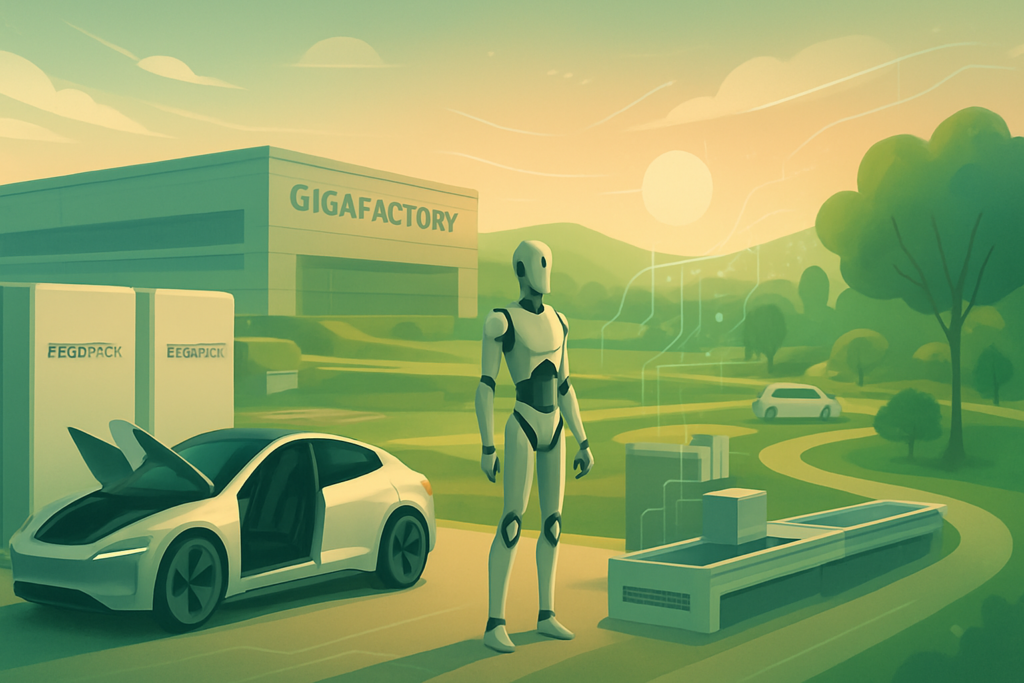
- Optimus Gen 3: Tesla has converted portions of its Fremont facility to produce the third generation of its humanoid robot. Musk has stated that Optimus will eventually be "more valuable than the car business combined."
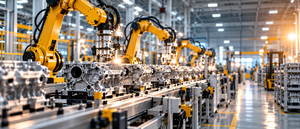
- The "Unboxed" Process: A revolutionary manufacturing technique for the upcoming $25,000 "Model 2" (Project Redwood). By building car modules in parallel and assembling them only at the final stage, Tesla aims to reduce production costs and factory footprint by 50%.
Competitive Landscape
Tesla no longer operates in a vacuum.
- The China Threat: BYD has officially overtaken Tesla as the world's leading BEV producer by volume. Competitors like Xiaomi Corporation (HKG: 1810) have also entered the fray with high-performance EVs at aggressive price points.
- European Resurgence: Volkswagen Group (XETRA: VOW3) has reclaimed the top EV spot in several European markets, leveraging its vast dealer networks and localized supply chains.
- The "Unboxed" Edge: Tesla’s primary competitive advantage remains its software-defined architecture and manufacturing efficiency. While rivals struggle with software bugs and legacy costs, Tesla’s "blank sheet" approach to the next-gen platform remains a significant moat.
Industry and Market Trends
The EV industry is shifting from early adopters to the mass market. This "chasm" has proven difficult to cross, with consumer concerns about charging infrastructure and high interest rates slowing demand in 2024-2025.
However, the Energy Storage segment is bucking this trend. Global demand for grid-scale batteries (like Tesla’s Megapack) is surging as nations transition to renewable energy. Tesla’s Energy deployments reached a record 46.7 GWh in 2025, growing 49% year-over-year, suggesting that the "energy transition" may be a more stable growth driver than passenger vehicles in the near term.
Risks and Challenges
- Execution Risk: The "Unboxed" manufacturing process and Optimus production are unproven at scale. Any delays in the 2026 rollout could lead to further valuation compression.
- Regulatory Scrutiny: Tesla's FSD software remains under intense investigation by NHTSA in the U.S., while European regulators (UNECE) continue to limit the software’s capabilities.
- Key Person Risk: The company’s valuation is inextricably linked to Elon Musk. Any change in his status or focus would likely result in a significant "Musk discount" being applied to the stock.
Opportunities and Catalysts
- FSD Licensing: Tesla is in active discussions with several major OEMs to license its FSD software. A signed deal would transform Tesla into a high-margin software provider overnight.
- The Megablock Launch: The late-2025 launch of "Megablock"—a 20 MWh pre-integrated storage system—allows for faster deployment of GWh-scale projects, positioning Tesla to dominate the utility-scale battery market.
- Robotaxi Revenue: If Tesla achieves Level 4/5 autonomy in 2026, the transition to a high-margin service revenue model (taking a cut of every autonomous mile) would fundamentally re-rate the stock.
Investor Sentiment and Analyst Coverage
Wall Street is currently a house divided.
- The Bulls (e.g., Wedbush): Maintain that Tesla is an AI company disguised as an automaker. They focus on the FSD take-rate (1.1 million subscribers) and the potential for Optimus to disrupt the global labor market.
- The Bears (e.g., JPMorgan): Argue that Tesla is a "cyclical car company" with a tech valuation. They point to the 2025 delivery decline and the rising capital expenditure ($10B+) as signs of a deteriorating risk-reward profile.
- Retail Sentiment: Tesla remains the "ultimate retail stock," with a fiercely loyal shareholder base that often ignores traditional financial metrics in favor of the long-term vision.
Regulatory, Policy, and Geopolitical Factors
Geopolitics are a major headwind for TSLA.
- China Data Laws: Tesla’s FSD rollout in China has been delayed by stringent data-security requirements. Tesla is currently building local data centers to satisfy Beijing's "data stay-at-home" mandate.
- Tariffs: Increasing trade tensions between the West and China have complicated Tesla's supply chain, particularly regarding battery materials and the export of Giga Shanghai-made vehicles to Europe.
- U.S. Policy: The outcome of recent regulatory shifts has placed more emphasis on domestic manufacturing, a trend Tesla is well-positioned for given its massive investment in Giga Texas and Nevada.
Conclusion
As of April 2026, Tesla is a company in the midst of a metamorphosis. The "easy growth" of the Model 3 and Model Y era has ended, replaced by the complex, capital-intensive pursuit of autonomous intelligence.
For investors, the thesis is now binary: if you believe Tesla can solve generalized autonomy and mass-produce humanoid robots, the current valuation may be a generational entry point. However, if you view Tesla through the lens of a traditional automaker, the 2025 earnings slump and rising competition suggest a challenging road ahead. The next 12 months—specifically the success of the Cybercab and the "Unboxed" manufacturing ramp—will determine whether Tesla remains the vanguard of the future or a pioneer that paved the way for others to lead.
This content is intended for informational purposes only and is not financial advice.