
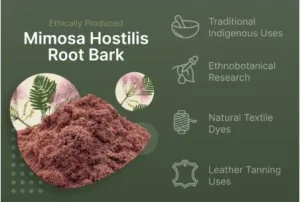
The demand for botanical products in the United States has grown steadily, and mimosa hostilis root bark has become one of the most sought-after natural materials. Known for its versatility and traditional applications, this product is widely used in dyeing, research, and natural formulations. If you’re considering purchasing natural mimosa hostilis root bark 1kg, understanding quality, uses, and sourcing is essential.
What Is Mimosa Hostilis Root Bark?
Mimosa hostilis, also known as Mimosa tenuiflora, is a tree native to parts of South America and Mexico. Its root bark is valued for its rich natural compounds and deep pigmentation.
Key Characteristics
- Dark reddish-purple inner bark
- Available in shredded or powdered form
- Naturally rich in tannins and plant-based compounds
- Long shelf life when stored properly
In the U.S. market, it is typically sold in bulk quantities such as 1kg for convenience and cost efficiency.
Common Uses of Mimosa Hostilis Root Bark
1. Natural Dyeing
One of the most popular uses of mimosa hostilis root bark is as a natural dye. It produces vibrant shades ranging from purple to deep burgundy, making it ideal for textiles and leather.
2. Botanical Research
Researchers and enthusiasts often purchase this bark for educational and analytical purposes due to its unique chemical profile.
3. Skincare and Traditional Applications
In traditional practices, the bark has been used in natural skincare preparations. Its tannin content makes it appealing for certain topical formulations.
How to Identify High-Quality Root Bark
When buying natural mimosa hostilis root bark 1kg, quality should be your top priority. Not all products on the market meet the same standards.
Look for Inner Root Bark (IRB)
Inner root bark is more refined and contains higher concentrations of beneficial compounds compared to outer bark.
Check Color and Texture
- Rich purple or reddish color indicates freshness
- Finely shredded or powdered consistency ensures better usability
Verify Purity
Choose suppliers who provide:
- No additives or fillers
- Clear sourcing information
- Proper packaging to preserve freshness
Buying Tips for U.S. Customers
Choose Reputable Vendors
Reliable suppliers in the U.S. often provide detailed product descriptions, lab testing (if applicable), and verified customer reviews.
Understand Pricing
While prices vary, extremely low-cost options may indicate poor quality or mixed materials. Focus on value rather than just affordability.
Consider Form: Powder vs. Shredded
- Powder: Easy to use, slightly more expensive
- Shredded bark: More affordable, but requires preparation
Check Shipping and Availability
Domestic suppliers typically offer faster delivery and fewer complications compared to international shipping.
Storage and Shelf Life
To maintain the quality of mimosa hostilis root bark, proper storage is essential.
- Store in a cool, dry place
- Use airtight containers to prevent moisture exposure
- Keep away from direct sunlight
When stored correctly, the bark can retain its quality for up to 1–2 years.
Sustainability and Ethical Sourcing
As demand increases, responsible sourcing has become more important. Look for suppliers that practice sustainable harvesting methods to protect natural ecosystems and ensure long-term availability.
FAQs
1. What is included in a 1kg package of mimosa hostilis root bark?
A 1kg package typically contains either shredded or powdered inner root bark, depending on the product type.
2. Is powdered bark better than shredded bark?
Powder is more convenient for immediate use, while shredded bark is more economical and versatile.
3. How do I know if the product is high quality?
Check for deep color, fine texture, and transparency from the supplier regarding sourcing and purity.
4. Can I store mimosa hostilis root bark for a long time?
Yes, when stored properly in a dry, airtight container, it can last up to two years.
5. Where can I buy natural mimosa hostilis root bark 1kg in the USA?
You can find it through reputable online botanical suppliers that specialize in natural plant materials.
Final Thoughts
Purchasing natural mimosa hostilis root bark 1kg requires careful consideration of quality, sourcing, and intended use. With the right knowledge, U.S. buyers can confidently choose a product that meets their needs while ensuring value and consistency. Whether for dyeing, research, or traditional applications, selecting high-quality mimosa hostilis root bark makes all the difference in achieving the best results.