Activism Already Moved the Stock
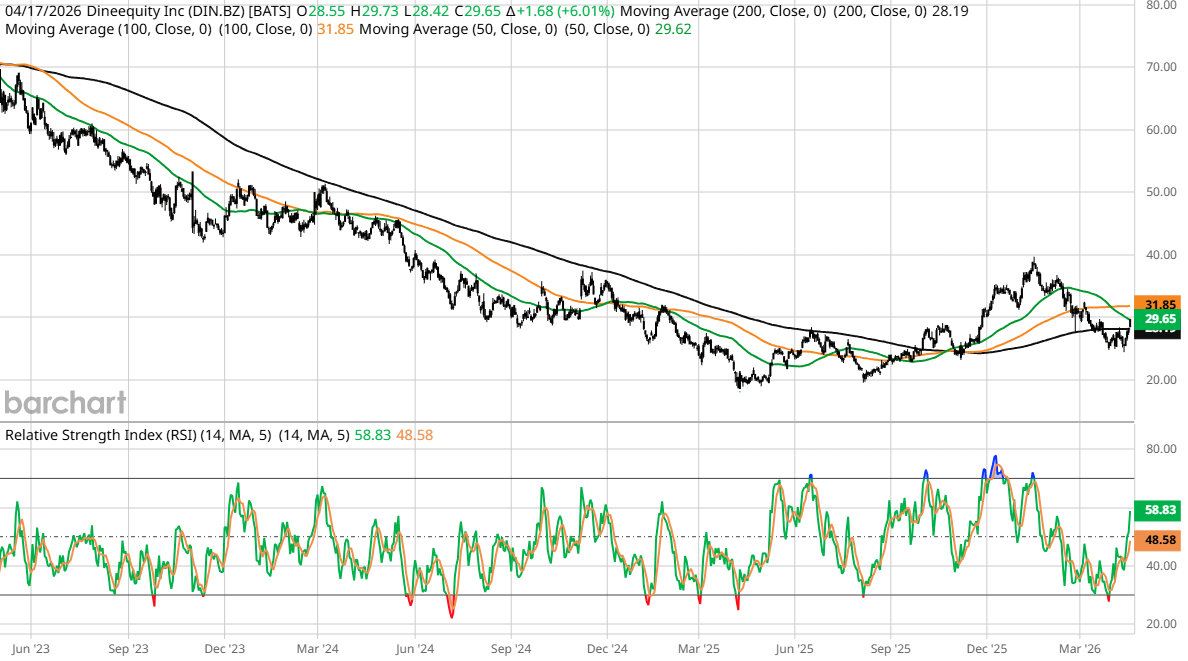
Applebee’s and IHOP Owner, (DIN) has already proven one thing to the market: shareholder pressure creates value. When my firm, The Edge Group, disclosed an activist position of roughly 1% in the company last year, the stock was being treated like another tired restaurant name with too much leverage, stale governance, and two aging brands slowly losing relevance. Shares traded near the low $20s when our campaign became public. Since then, the stock has rebounded sharply. That move was the market realizing governance mattered more than it had priced in. I should disclose that The Edge Group remains an activist shareholder in (DIN). We pushed for what should have happened years earlier: tighter governance, smarter capital allocation, and operating urgency, because we believed the market was pricing the company far below its true strategic value. That belief has not changed. If anything, the recent rally has only confirmed that investors were never dealing with a broken asset. They were dealing with a poorly governed one.
The First Bounce Is Usually Misread
I have seen many stocks rally on promises. Boards rarely act, leading to fewer rallies. Investors often mistake the first bounce for full value realization. In momentum names, that can be true. It is rarely true in restructuring stories where change comes in stages. What Dine has experienced so far looks less like the end of a rerating and more like the first installment. The dividend was cut, freeing capital for buybacks. New directors with relevant experience were added. Management began speaking more directly about shareholder returns. Those are not final outcomes. They are opening moves. Markets often rerate companies twice: first when governance improves, then when earnings power improves.
Why Private Equity Sees Something Different
Wall Street prices headlines. Public investors focus on next quarter’s traffic. Sponsors focus on what earnings can look like after repairs. They care about normalized cash flow and what better ownership can unlock. Public investors often see Applebee’s and IHOP as mature brands with uneven momentum. A sponsor may see two household names generating royalty streams, carrying significant brand awareness, and sitting inside a structure where costs, incentives, and capital allocation can still be improved.
Dine now seems like the kind of asset sponsors quietly start calling about.
The Asset-Light Model Still Has Appeal
Dine’s business is largely franchise-based, which means lower capital intensity and recurring fee income. That alone gets private buyers interested. Sponsors love businesses that throw off cash without needing endless reinvestment. It also owns brands that almost every American recognizes. Applebee’s remains deeply embedded in suburban America. IHOP still has a meaningful position in breakfast dining and also carries international potential. Familiarity matters because rebuilding an existing brand is often cheaper than creating a new one from scratch.
Two Brands, One Discounted Stock
Another reason (DIN) is interesting is that it owns two separate concepts under one public company umbrella. Public investors usually hate stories that require explanation. Mixed businesses often trade at lower valuations for that reason. Private buyers think differently. They look for assets that may be worth more separately, or worth more under a cleaner ownership structure. Applebee’s and IHOP each have different customer bases, different daypart strengths, and different strategic options. Yet today they are packaged together in one stock, still carrying skepticism. That is where sponsors usually make their money.
Applebee’s May Be More Valuable Than Sentiment Suggests
Casual dining does not disappear because analysts lose interest in it. It disappears when leadership allows it to drift. We have seen brands written off before only to recover once execution improves and value messaging sharpens. Applebee’s still has scale, awareness, and relevance. What it has lacked is urgency. Better menu discipline, sharper value positioning, and stronger franchisee alignment could matter more than many investors assume. IHOP, meanwhile, remains one of the strongest breakfast brands in the country. Combined, the market has often valued these brands as if they were both liabilities. Under the right ownership, they may look more like underused assets.
Why The Stock Could Still Have More To Go
The first move higher likely reflected governance finally mattering. The next move, if it comes, would reflect strategic value. Those are completely unique catalysts.
Stocks can rise because investors believe management will stop destroying value. It can rise much more when buyers begin assessing what the assets are worth in stronger hands. Dine may now be approaching that second phase. Even after the rebound, the market may still be valuing (DIN) as a challenged operator rather than a strategic platform.
Casual Dining Is Separating Fast
The broader restaurant backdrop also supports the idea. Casual dining is splitting into winners, laggards, and targets. Strong operators with clear value propositions are taking share. Weak operators are facing exposure. In the middle sit companies with fixable economics, recognized brands, and public valuations that no longer reflect private market potential. Those are precisely the names sponsors screen for. I wrote previously that private equity was coming for casual dining. That trend was never about nostalgia. It was about mispriced assets. One of the least appreciated sources of upside inside (DIN) is optionality. Dual-branded Applebee’s and IHOP locations have shown encouraging economics by using the same box across multiple dayparts. That creates a path to better unit productivity and incremental growth without requiring a revolutionary concept. Public markets often ignore optionality until it appears in reported numbers. Private buyers frequently underwrite it earlier.
Risks Still Matter
There are real risks here. Consumers are stretched, franchisees need healthy unit economics, and leverage always reduces room for error. That is precisely why the stock was cheap to begin with. If franchisees weaken or leverage tightens flexibility, upside takes longer to emerge. Not every cheap stock gets bought. But investing has never been about eliminating risk. It is about finding situations where risk is obvious, priced in, and potentially outweighed by overlooked upside. That is where (DIN) still looks intriguing.
What Happens Next
The most important lesson from the last year is simple. Once pressure was applied, value began to surface. That tells you the issue was never that Applebee’s and IHOP had no worth. The issue was that the market had lost faith in those entrusted to unlock it. If management continues improving execution, shareholders can still win. If progress stalls, private equity may decide it can do the job faster. Investors do not need perfection here. They only need value to continue surfacing. That is why (DIN) remains one of the more compelling special situations in consumer stocks today. The market has already rewarded pressure once. It may reward a second catalyst if a buyer decides these brands are worth more than public investors do.
On the date of publication, Jim Osman had a position in: DIN . All information and data in this article is solely for informational purposes. For more information please view the Barchart Disclosure Policy here.
More news from Barchart
- Applebee’s and IHOP Owner Dine Brands Looks Ripe For A Buyout
- Tesla Earnings, Hormuz and Other Key Things to Watch this Week
- As NetApp Expands Its Relationship With Google Cloud, Should You Buy, Sell, or Hold NTAP Stock?
- Alibaba Just Launched New AI Models for Video Games. Does That Make BABA Stock a Buy?