

The way businesses move data has changed dramatically over the past decade. What once relied on email attachments and basic FTP servers has evolved into highly sophisticated systems designed for speed, compliance, and global collaboration. As companies generate larger volumes of data—high-resolution videos, engineering blueprints, financial records, AI training datasets—the demand for smarter file management solutions continues to rise. This shift has given birth to EFSS, a model that combines enterprise-grade security with cloud flexibility.
In today’s digital-first environment, file sharing is no longer a simple task—it is a strategic operation. Organizations must ensure that their file transfer systems are not only fast but also compliant with regulatory standards and resistant to cyber threats. That is why understanding the future of secure enterprise large file transfers has become essential for IT leaders and decision-makers.
What EFSS Really Means for Modern Enterprises
EFSS, or Enterprise File Sync and Share, refers to platforms that allow organizations to securely sync, store, and share files across teams, departments, and global offices. Unlike consumer cloud storage tools, enterprise systems focus on centralized management, strict access controls, and audit capabilities.
When integrated properly, an Enterprise large file transfer solution ensures that even massive files can be transmitted across continents without compromising performance or data integrity. These systems enable collaboration without sacrificing control. From remote teams to distributed supply chains, enterprises rely on these technologies to maintain operational continuity and data governance.
The Growing Need for Large File Transfer Solutions
As industries embrace digital transformation, file sizes continue to grow exponentially. Media companies deal with 8K video content, healthcare institutions manage high-resolution imaging files, and manufacturing firms exchange CAD designs that can exceed multiple gigabytes. Traditional transfer methods simply cannot handle these demands efficiently.
Slow uploads, failed transfers, and security vulnerabilities can cost organizations time and money. Modern enterprises require scalable infrastructure capable of handling terabytes of data while ensuring end-to-end encryption. A high-performance Enterprise large file transfer solution is no longer optional—it is foundational to maintaining productivity and competitiveness in global markets.
Security as the Core Foundation
Security is the primary driver behind the adoption of enterprise-grade file sharing systems. Cyber threats have become more sophisticated, targeting data in transit and at rest. Enterprises must protect sensitive intellectual property, financial records, and customer information from breaches and unauthorized access.
Advanced encryption standards, role-based access controls, multi-factor authentication, and detailed activity logs are now essential features. These capabilities ensure that only authorized users can access specific files while providing administrators with full visibility. By prioritizing data protection, organizations reduce risk exposure and strengthen trust with clients and partners.
Compliance and Regulatory Alignment
Many industries operate under strict regulatory frameworks that govern how data must be stored and transmitted. Healthcare organizations comply with medical privacy regulations, financial institutions follow strict data governance laws, and multinational corporations adhere to regional data protection policies.
Modern enterprise file systems are designed to align with these regulations by offering audit trails, automated retention policies, and secure storage zones. This ensures that enterprises can confidently move sensitive information across borders without violating compliance requirements. Proper governance transforms file transfer systems into reliable compliance assets rather than liabilities.
Speed and Performance in a Global Economy
In a globally connected business landscape, speed matters more than ever. Delayed transfers can disrupt production schedules, postpone marketing campaigns, or stall client approvals. High-performance transfer technologies leverage optimized protocols, bandwidth acceleration, and distributed networks to maximize efficiency.
By eliminating bottlenecks, organizations can transfer multi-gigabyte files in a fraction of the time previously required. Faster transfers not only increase productivity but also enhance collaboration between geographically dispersed teams. Performance optimization becomes a competitive advantage in industries where time-to-market determines success.
Centralized Control and Visibility
One of the defining characteristics of advanced enterprise file systems is centralized management. IT administrators need full oversight of who is accessing what data and when. Central dashboards provide visibility into user activity, sharing permissions, and transfer history.
This level of control reduces shadow IT practices, where employees use unauthorized tools to share files. With centralized governance, enterprises maintain consistent security policies across departments and locations. Real-time monitoring also enables rapid response to suspicious activity, minimizing potential threats.
Scalability for Future Growth
Enterprises rarely remain static. As organizations expand into new markets or adopt new technologies, their data transfer requirements grow accordingly. A scalable file sharing infrastructure ensures that performance remains stable even as data volumes increase.
Cloud-based architectures allow enterprises to adjust storage capacity and transfer bandwidth dynamically. This flexibility prevents costly infrastructure overhauls and supports long-term digital strategies. Scalable systems future-proof operations, ensuring that businesses can adapt without disruption.
Collaboration Without Compromise
Modern enterprises depend on collaboration between internal teams, external partners, and clients. Seamless file sharing is critical to maintaining efficient workflows. Advanced systems allow real-time synchronization across devices while preserving version control and access restrictions.
Employees can work remotely without losing connection to centralized resources. External stakeholders can receive secure access to specific files without exposing entire repositories. This balance between accessibility and control enables collaboration without increasing security risks.
The Role of Automation and Integration
Automation plays an increasingly important role in enterprise file management. Automated workflows can trigger file transfers based on predefined rules, reducing manual effort and human error. For example, completed design files can automatically sync to marketing departments or archival systems.
Integration with enterprise software ecosystems—such as project management tools, CRM platforms, and ERP systems—creates seamless data pipelines. When file transfer systems operate as part of a unified infrastructure, organizations gain efficiency and operational transparency.
Cloud, Hybrid, and On-Premise Flexibility
Enterprises have diverse infrastructure needs. Some prefer fully cloud-based solutions, while others require hybrid or on-premise deployments due to regulatory or operational constraints. Modern file sharing platforms offer deployment flexibility to accommodate these varying requirements.
Hybrid models combine local storage with cloud acceleration, delivering both control and scalability. This adaptability ensures that enterprises can align their file transfer strategy with their broader IT architecture and security policies.
Reducing Costs While Increasing Efficiency
Although advanced systems require investment, they often reduce overall operational costs. Eliminating failed transfers, minimizing downtime, and preventing data breaches can save organizations substantial resources.
Efficient file transfer systems also decrease reliance on physical storage devices and courier services. By digitizing and accelerating data movement, enterprises streamline workflows and reduce logistical complexity. Long-term cost savings become evident as productivity increases and risks decrease.
Raysync and the Next Generation of File Transfer Technology
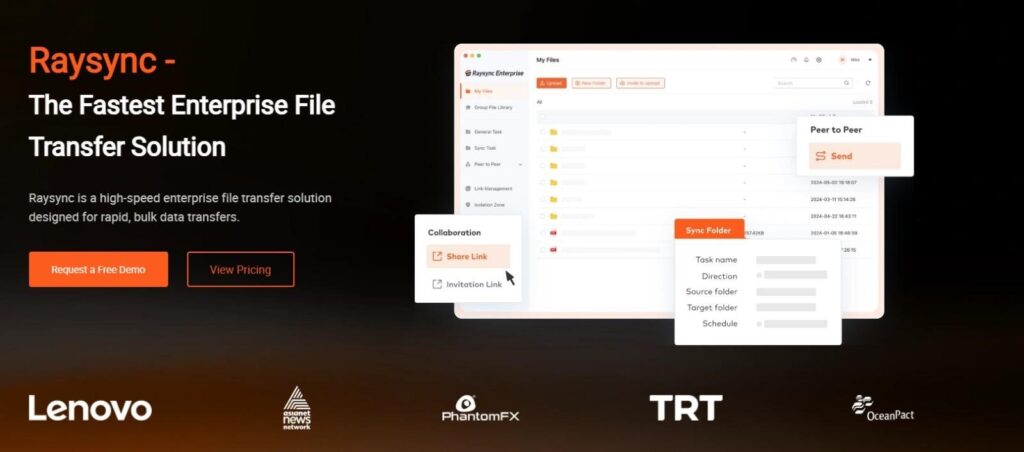
As the demand for secure, high-speed file transfers continues to grow, innovative solutions are emerging to meet enterprise expectations. Raysync stands out by focusing on accelerated data transmission combined with enterprise-grade security. By leveraging advanced transport protocols and intelligent bandwidth utilization, Raysync helps organizations move massive files efficiently across global networks.
Solutions like Raysync demonstrate how the industry is evolving beyond traditional FTP and cloud storage models. Enterprises seeking reliable and scalable performance are turning to next-generation platforms that emphasize both speed and protection.
The Future Landscape of Secure File Transfers
Looking ahead, the future of enterprise file management will likely integrate artificial intelligence and predictive analytics. AI-driven monitoring can identify unusual transfer patterns and prevent potential security incidents before they escalate. Intelligent optimization may also dynamically adjust bandwidth usage based on network conditions.
As remote work continues to expand and data volumes surge, the need for advanced EFSS platforms will intensify. Businesses that adopt forward-thinking strategies today will be better prepared to navigate tomorrow’s digital challenges.
Building a Resilient Digital Infrastructure
Secure file transfer systems are no longer standalone tools—they are integral components of enterprise digital ecosystems. By investing in scalable, secure, and high-performance solutions, organizations build resilience against cyber threats and operational disruptions.
A robust Enterprise large file transfer solution supports innovation, accelerates collaboration, and ensures regulatory compliance. Companies that prioritize secure data movement gain a strategic advantage in increasingly competitive markets.
Final Thoughts on the Future of Enterprise File Sharing
The digital transformation journey requires more than cloud adoption or remote collaboration tools—it demands secure and efficient data mobility. EFSS platforms represent the convergence of speed, control, and security in enterprise file sharing.
As file sizes grow and regulatory expectations tighten, enterprises must rethink how they manage and transfer critical data. By adopting modern technologies and partnering with forward-thinking providers like Raysync, organizations position themselves for sustainable growth.