TAIPEI, Taiwan — In a definitive move to cement its dominance over the global AI supply chain, Taiwan Semiconductor Manufacturing Company (NYSE: TSM) has officially entered a "capex supercycle," announcing a staggering $52 billion to $56 billion capital expenditure budget for 2026. The announcement, delivered during the company's January 15 earnings call, signals the end of the "Great AI Hardware Bottleneck" that has plagued the industry for the better part of three years. By scaling its proprietary CoWoS (Chip-on-Wafer-on-Substrate) advanced packaging capacity to a projected 130,000—and potentially 150,000—wafers per month by late 2026, TSMC is effectively industrializing the production of next-generation AI accelerators.
This massive expansion is largely a response to "insane" demand from NVIDIA (NASDAQ: NVDA), which has reportedly secured over 60% of TSMC’s 2026 packaging capacity to support the launch of its Rubin architecture. As AI models grow in complexity, the industry is shifting away from monolithic chips toward "chiplets," making advanced packaging—once a niche back-end process—the most critical frontier in semiconductor manufacturing. TSMC’s strategic pivot treats packaging not as an afterthought, but as a primary revenue driver that is now fundamentally inseparable from the fabrication of the world’s most advanced 2nm and A16 nodes.
Breaking the Reticle Limit: The Rise of CoWoS-L
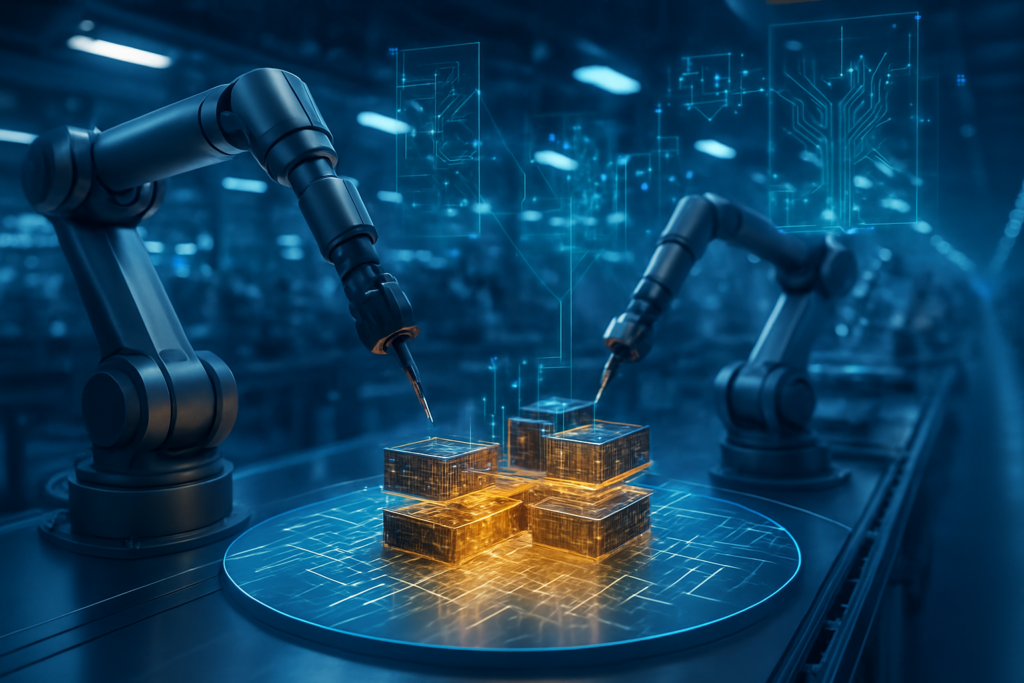
The technical centerpiece of this expansion is CoWoS-L (Local Silicon Interconnect), a sophisticated packaging technology designed to bypass the physical limitations of traditional silicon manufacturing. In standard chipmaking, the "reticle limit" defines the maximum size of a single chip (roughly 858mm²). However, NVIDIA’s upcoming Rubin (R100) GPUs and the current Blackwell Ultra (B300) series require a surface area far larger than any single piece of silicon can provide. CoWoS-L solves this by using small silicon "bridges" embedded in an organic layer to interconnect multiple compute dies and High Bandwidth Memory (HBM) stacks.
Unlike the older CoWoS-S, which used a solid silicon interposer and was limited in size and yield, CoWoS-L allows for massive "Superchips" that can be up to six times the standard reticle size. This enables NVIDIA to "stitch" together its GPU dies with 12 or even 16 stacks of next-generation HBM4 memory, providing the terabytes of bandwidth required for trillion-parameter AI models. Industry experts note that the transition to CoWoS-L is technically demanding; during a recent media tour of TSMC’s new Chiayi AP7 facility on January 22, engineers highlighted that the alignment precision required for these silicon bridges is measured in nanometers, representing a quantum leap over the packaging standards of just two years ago.
The "Compute Moat": Consolidating the AI Hierarchy
TSMC’s capacity expansion creates a strategic "compute moat" for its largest customers, most notably NVIDIA. By pre-booking the lion's share of the 130,000 monthly wafers, NVIDIA has effectively throttled the ability of competitors like AMD (NASDAQ: AMD) and Intel (NASDAQ: INTC) to scale their own high-end AI offerings. While AMD’s Instinct MI400 series is expected to utilize similar packaging techniques, the sheer volume of TSMC’s commitment to NVIDIA suggests that "Team Green" will maintain its lead in time-to-market for the Rubin R100, which is slated for full production in late 2026.
This expansion also benefits "hyperscale" custom silicon designers. Companies like Broadcom (NASDAQ: AVGO) and Marvell (NASDAQ: MRVL), which design bespoke AI chips for Google (NASDAQ: GOOGL) and Amazon (NASDAQ: AMZN), are also vying for a slice of the CoWoS-L pie. However, the $56 billion capex plan underscores a shift in power: TSMC is no longer just a "dumb pipe" for wafer fabrication; it is the gatekeeper of AI performance. Startups and smaller chip designers may find themselves pushed toward Outsourced Semiconductor Assembly and Test (OSAT) partners like Amkor Technology (NASDAQ: AMKR), as TSMC prioritizes high-margin, high-complexity orders from the "Big Three" of AI.
The Geopolitics of the Chiplet Era
The broader significance of TSMC’s 2026 roadmap lies in the realization that the "Chiplet Era" is officially here. We are witnessing a fundamental change in the semiconductor landscape where performance gains are coming from how chips are assembled, rather than just how small their transistors are. This shift has profound implications for global supply chain stability. By concentrating its advanced packaging facilities in sites like Chiayi and Taichung, TSMC is centralizing the world’s AI "brain" production. While this provides unprecedented efficiency, it also heightens the stakes for geopolitical stability in the Taiwan Strait.
Furthermore, the easing of the CoWoS bottleneck marks a transition from a "supply-constrained" AI market to a "demand-validated" one. For the past two years, AI growth was limited by how many GPUs could be built; by 2026, the limit will be how much power data centers can draw and how efficiently developers can utilize the massive compute pools being deployed. The transition to HBM4, which requires the complex interfaces provided by CoWoS-L, will be the true test of this new infrastructure, potentially leading to a 3x increase in memory bandwidth for LLM (Large Language Model) training compared to 2024 levels.
The Horizon: Panel-Level Packaging and Beyond
Looking beyond the 130,000 wafer-per-month milestone, the industry is already eyeing the next frontier: Panel-Level Packaging (PLP). TSMC has begun pilot-testing rectangular "Panel" substrates, which offer three to four times the usable surface area of a traditional 300mm circular wafer. If successful, this could further reduce costs and increase the output of AI chips in 2027 and 2028. Additionally, the integration of "Glass Substrates" is on the long-term roadmap, promising even higher thermal stability and interconnect density for the post-Rubin era.
Challenges remain, particularly in power delivery and heat dissipation. As CoWoS-L allows for larger and hotter chip clusters, TSMC and its partners are heavily investing in liquid cooling and "on-chip" power management solutions. Analysts predict that by late 2026, the focus of the AI hardware race will shift from "packaging capacity" to "thermal management efficiency," as the industry struggles to keep these multi-thousand-watt monsters from melting.
Summary and Outlook
TSMC’s $56 billion capex and its 130,000-wafer CoWoS target represent a watershed moment for the AI industry. It is a massive bet on the longevity of the AI boom and a vote of confidence in NVIDIA’s Rubin roadmap. The move effectively ends the era of hardware scarcity, potentially lowering the barrier to entry for large-scale AI deployment while simultaneously concentrating power in the hands of the few companies that can afford TSMC’s premium services.
As we move through 2026, the key metrics to watch will be the yield rates of the new Chiayi AP7 facility and the first real-world performance benchmarks of HBM4-equipped Rubin GPUs. For now, the message from Taipei is clear: the bottleneck is breaking, and the next phase of the AI revolution will be manufactured at a scale never before seen in human history.
This content is intended for informational purposes only and represents analysis of current AI developments.
TokenRing AI delivers enterprise-grade solutions for multi-agent AI workflow orchestration, AI-powered development tools, and seamless remote collaboration platforms.
For more information, visit https://www.tokenring.ai/.