On December 18, 2025, Anthropic announced the launch of "Agent Skills," a groundbreaking open standard designed to transform artificial intelligence from conversational chatbots into specialized, autonomous experts. By introducing a modular framework for packaging procedural knowledge and instructions, Anthropic aims to solve one of the most persistent hurdles in the AI industry: the lack of interoperability and the high "context cost" of multi-step workflows.
This development marks a significant shift in the AI landscape, moving beyond the raw reasoning capabilities of large language models (LLMs) toward a standardized "operating manual" for agents. With the backing of industry heavyweights and a strategic donation to the Agentic AI Foundation (AAIF), Anthropic is positioning itself as the architect of a new, collaborative ecosystem where AI agents can seamlessly transition between complex tasks—from managing corporate finances to orchestrating global software development cycles.
The Architecture of Expertise: Understanding SKILL.md
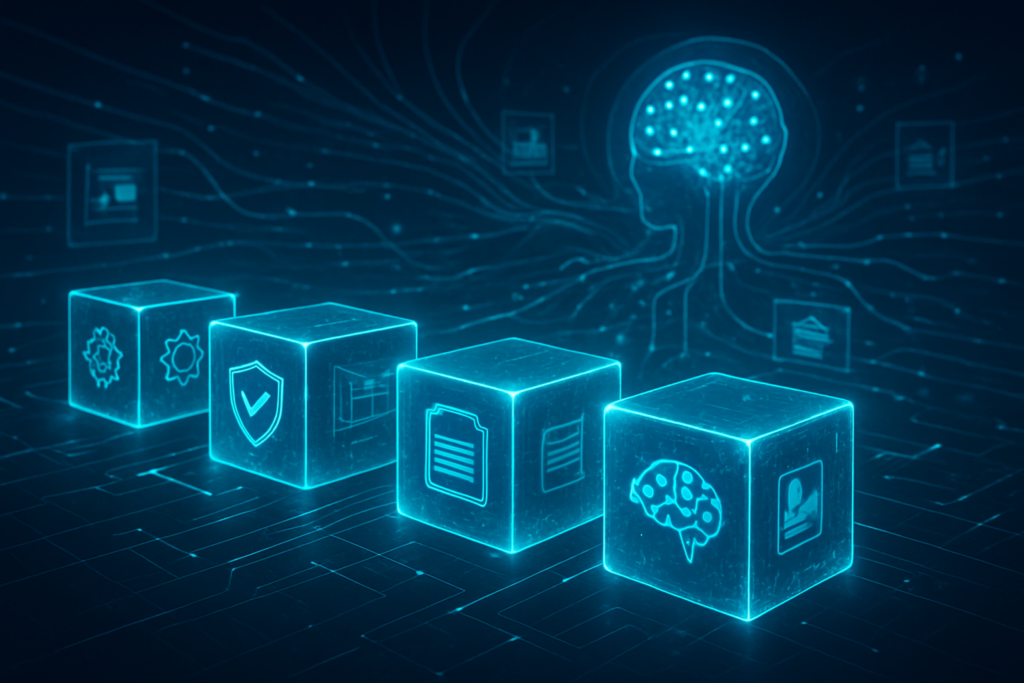
At the heart of the Agent Skills standard is a deceptively simple file format known as SKILL.md. Unlike previous attempts to define agent behavior through complex, proprietary codebases, SKILL.md uses a combination of YAML frontmatter for machine-readable metadata and Markdown for human-readable instructions. This "folder-based" approach allows developers to package a "skill" as a directory containing the primary instruction file, executable scripts (in Python, JavaScript, or Bash), and reference assets like templates or documentation.
The technical brilliance of the standard lies in its "Progressive Disclosure" mechanism. To prevent the "context window bloat" that often degrades the performance of models like Claude or GPT-4, the standard uses a three-tier loading system. Initially, only the skill’s name and a brief 1,024-character description are loaded. If the AI determines a skill is relevant to a user’s request, it dynamically "reads" the full instructions. Only when a specific sub-task requires it does the agent access deeply nested resources or execute code. This ensures that agents remain fast and focused, even when equipped with hundreds of potential capabilities.
This standard complements Anthropic’s previously released Model Context Protocol (MCP). While MCP acts as the "plumbing"—defining how an agent connects to a database or an API—Agent Skills serves as the "manual," teaching the agent exactly how to navigate those connections to achieve a specific goal. Industry experts have noted that this modularity makes AI development feel less like "prompt engineering" and more like onboarding a new employee with a clear set of standard operating procedures (SOPs).
Partnerships and the Pivot to Ecosystem Wars
The launch of Agent Skills is bolstered by a formidable roster of enterprise partners, most notably Atlassian Corporation (NASDAQ: TEAM) and Stripe. Atlassian has contributed skills that allow agents to manage Jira tickets, search Confluence documentation, and orchestrate sprints using natural language. Similarly, Stripe has integrated workflows for financial operations, enabling agents to autonomously handle customer profiles, process refunds, and audit transaction logs. Other partners include Canva, Figma, Notion, and Zapier, providing a "day-one" library of utility that spans design, productivity, and automation.
This move signals a strategic pivot from the "Model Wars"—where companies like Alphabet Inc. (NASDAQ: GOOGL) and Microsoft Corporation (NASDAQ: MSFT) competed primarily on the size and "intelligence" of their LLMs—to the "Ecosystem Wars." By open-sourcing the protocol and donating it to the AAIF, Anthropic is attempting to create a "lingua franca" for agents. A skill written for Anthropic’s Claude 3.5 or 4.0 can, in theory, be executed by Microsoft Copilot or OpenAI’s latest models. This interoperability creates a powerful network effect: the more developers write for the Agent Skills standard, the more indispensable the standard becomes, regardless of which underlying model is being used.
For tech giants and startups alike, the implications are profound. Startups can now build highly specialized "skill modules" rather than entire agent platforms, potentially lowering the barrier to entry for AI entrepreneurship. Conversely, established players like Amazon.com, Inc. (NASDAQ: AMZN), a major backer of Anthropic, stand to benefit from a more robust and capable AI ecosystem that drives higher utilization of cloud computing resources.
A Standardized Future: The Wider Significance
The introduction of Agent Skills is being compared to the early days of the internet, where protocols like HTTP and HTML defined how information would be shared across disparate systems. By standardizing "procedural knowledge," Anthropic is laying the groundwork for what many are calling the "Agentic Web"—a future where AI agents from different companies can collaborate on behalf of a user without manual intervention.
However, the move is not without its concerns. Security experts have raised alarms regarding the "Trojan horse" potential of third-party skills. Since a skill can include executable code designed to run in sandboxed environments, there is a risk that malicious actors could distribute skills that appear helpful but perform unauthorized data exfiltration or system manipulation. The industry consensus is that while the standard is a leap forward, it will necessitate a new generation of "AI auditing" tools and strict "trust but verify" policies for enterprise skill libraries.
Furthermore, this standard challenges the walled-garden approach favored by some competitors. If the Agentic AI Foundation succeeds in making skills truly portable, it could diminish the competitive advantage of proprietary agent frameworks. It forces a shift toward a world where the value lies not in owning the agent, but in owning the most effective, verified, and secure skills that the agent can employ.
The Horizon: What’s Next for Agentic AI?
In the near term, we can expect the emergence of "Skill Marketplaces," where developers can monetize highly specialized workflows—such as a "Tax Compliance Skill" or a "Cloud Infrastructure Migration Skill." As these libraries grow, the dream of the "Autonomous Enterprise" moves closer to reality, with agents handling the bulk of repetitive, multi-step administrative and technical tasks.
Looking further ahead, the challenge will be refinement and governance. As agents become more capable of executing complex scripts, the need for robust "human-in-the-loop" checkpoints will become critical. Experts predict that the next phase of development will focus on "Multi-Skill Orchestration," where a primary coordinator agent can dynamically recruit and manage a "team" of specialized skills to solve open-ended problems that were previously thought to require human oversight.
A New Chapter in AI Development
Anthropic’s Agent Skills open standard represents a maturation of the AI industry. It acknowledges that intelligence alone is not enough; for AI to be truly useful in a professional context, it must be able to follow complex, standardized procedures across a variety of tools and platforms. By prioritizing modularity, interoperability, and human-readable instructions, Anthropic has provided a blueprint for the next generation of AI autonomy.
As we move into 2026, the success of this standard will depend on its adoption by the broader developer community and the ability of the Agentic AI Foundation to maintain its vendor-neutral status. For now, the launch of Agent Skills marks a pivotal moment where the focus of AI development has shifted from what an AI knows to what an AI can do.
This content is intended for informational purposes only and represents analysis of current AI developments.
TokenRing AI delivers enterprise-grade solutions for multi-agent AI workflow orchestration, AI-powered development tools, and seamless remote collaboration platforms.
For more information, visit https://www.tokenring.ai/.