
As the craze of earnings season draws to a close, here’s a look back at some of the most exciting (and some less so) results from Q2. Today, we are looking at grocery store stocks, starting with Grocery Outlet (NASDAQ: GO).
Grocery stores are non-discretionary because they sell food, an essential staple for life (maybe not that ice cream?). Selling food, however, is a notoriously tough business as grocers must deal with the costs of procuring and transporting oftentimes perishable products. Plus, the costs of operating stores to sell everything from raw meat to ice cream and fresh fruit are high. Competition is also fierce because grocers and other peers such as wholesale clubs tend to sell very similar brands and products. On the bright side, grocery is one of the least penetrated categories in e-commerce because customers prefer to buy their food in person. Still, the online threat exists and will likely increase over time rather than dwindle.
The 4 grocery store stocks we track reported a mixed Q2. As a group, revenues beat analysts’ consensus estimates by 0.7%.
While some grocery store stocks have fared somewhat better than others, they have collectively declined. On average, share prices are down 3.6% since the latest earnings results.
Best Q2: Grocery Outlet (NASDAQ: GO)
Due to its differentiated procurement and buying approach, Grocery Outlet (NASDAQ: GO) is a discount grocery store chain that offers substantial discounts on name-brand products.
Grocery Outlet reported revenues of $1.19 billion, up 1.1% year on year. This print exceeded analysts’ expectations by 2.1%. Overall, it was an exceptional quarter for the company with a beat of analysts’ EPS estimates and an impressive beat of analysts’ EBITDA estimates.
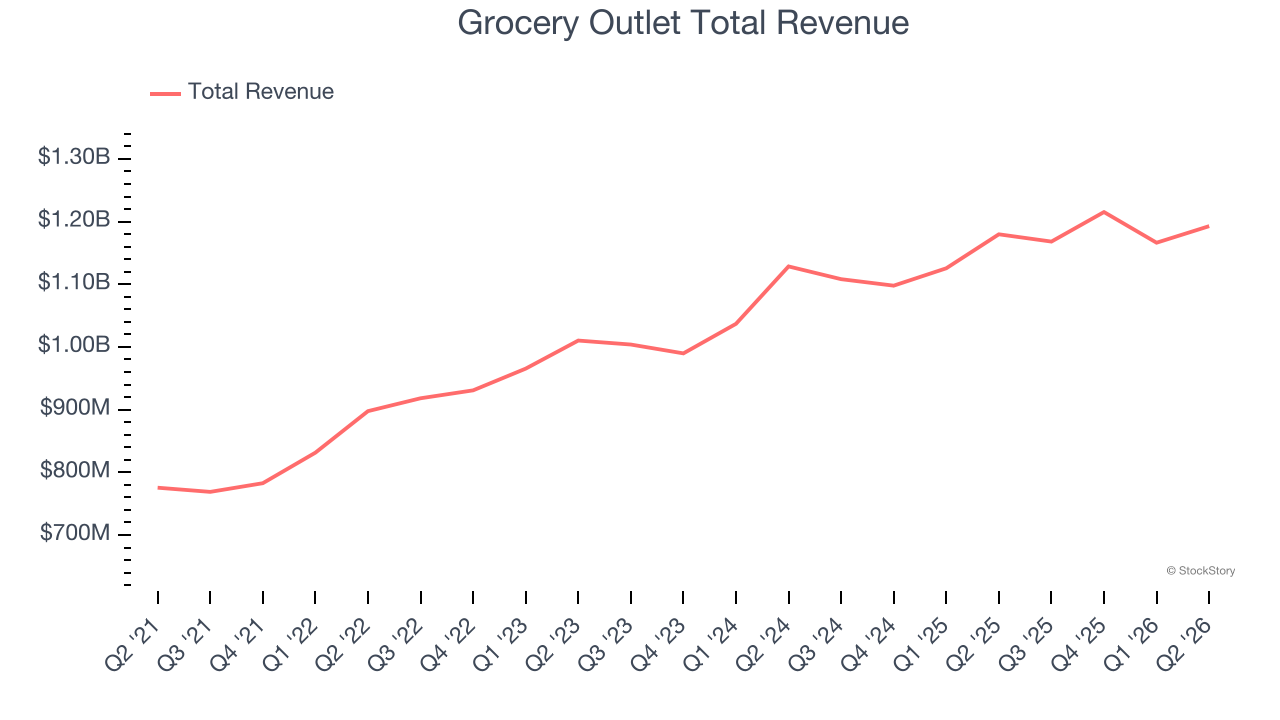
Grocery Outlet pulled off the biggest analyst estimate beat among its peers. Unsurprisingly, the stock is up 12.9% since reporting and currently trades at $11.48.
Is now the time to buy Grocery Outlet? Access our full analysis of the earnings results here, it’s free.
Kroger (NYSE: KR)
With a sprawling network of over 2,400 locations offering digital pickup services, Kroger (NYSE: KR) operates supermarkets, pharmacies, and fuel centers across 35 states, offering customers groceries, household items, and private-label products.
Kroger reported revenues of $34.62 billion, up 2% year on year, in line with analysts’ expectations. The business had a satisfactory quarter with full-year EPS guidance beating analysts’ expectations but a slight miss of analysts’ gross margin estimates.
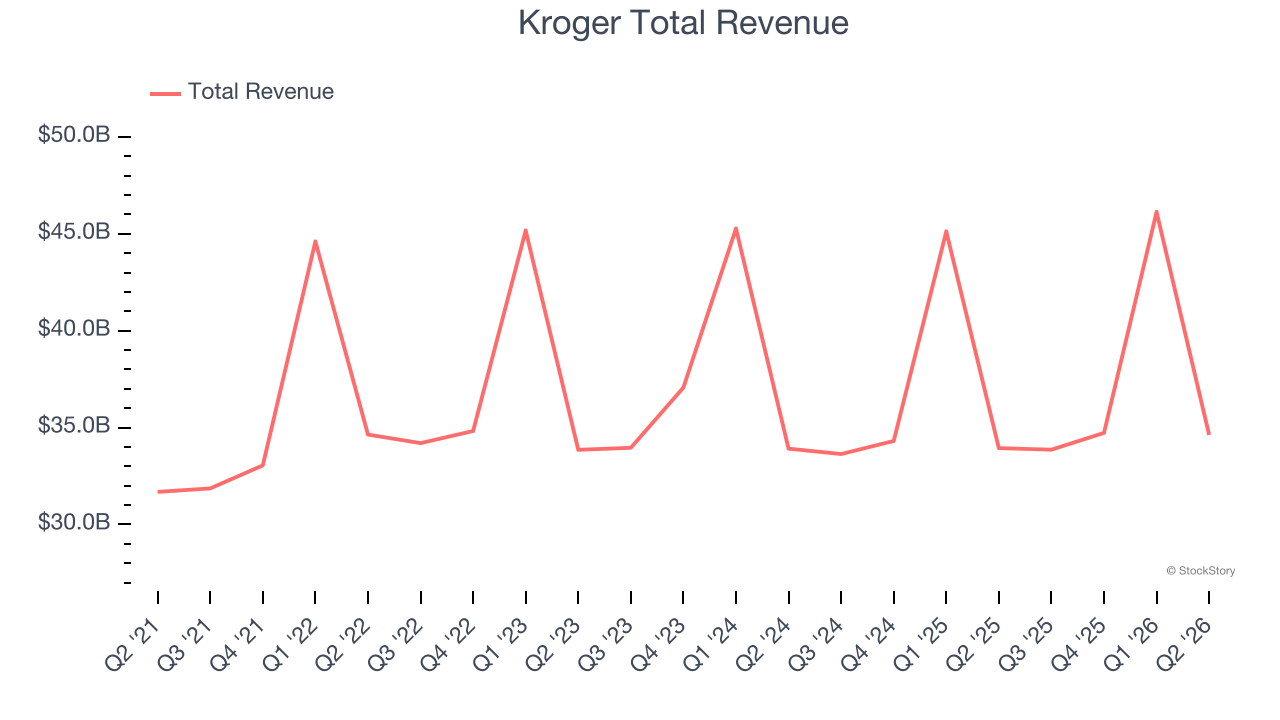
The market seems content with the results as the stock is up 3% since reporting. It currently trades at $58.67.
Is now the time to buy Kroger? Access our full analysis of the earnings results here, it’s free.
Weakest Q2: Albertsons (NYSE: ACI)
With over 20 well-known grocery banners spanning 34 states, Albertsons (NYSE: ACI) operates food and drug retail stores across the US, offering groceries, pharmacy services, and own-brand products under banners like Safeway, Jewel-Osco, and Vons.
Albertsons reported revenues of $24.94 billion, flat year on year, exceeding analysts’ expectations by 0.6%. Still, it was a softer quarter as it posted full-year EBITDA guidance missing analysts’ expectations significantly and a significant miss of analysts’ EBITDA estimates.
Albertsons delivered the slowest revenue growth in the group. As expected, the stock is down 17.3% since the results and currently trades at $12.08.
Read our full analysis of Albertsons’s results here.
Sprouts (NASDAQ: SFM)
Playing on the secular trend of healthier living, Sprouts Farmers Market (NASDAQ: SFM) is a grocery store chain emphasizing natural and organic products.
Sprouts reported revenues of $2.33 billion, up 4.7% year on year. This number was in line with analysts’ expectations. Zooming out, it was a slower quarter as it recorded EPS guidance for next quarter missing analysts’ expectations significantly and full-year EPS guidance missing analysts’ expectations.
Sprouts delivered the fastest revenue growth among its peers. The stock is down 13% since reporting and currently trades at $68.85.
Read our full, actionable report on Sprouts here, it’s free.
Market Update
Over the past year, investors have been forced to repeatedly answer the same question: what is the market’s biggest risk? The answer has changed several times, and each shift has reshaped market leadership.
Late in 2025 and early 2026, artificial intelligence became the market’s primary uncertainty. Investors questioned whether AI would erode software pricing power and weaken competitive moats as AI made it easier to replicate once-differentiated products.
By the spring, technology took a back seat to geopolitics. The U.S. conflict with Iran briefly became the market’s dominant narrative, raising concerns about oil prices, inflation, and global growth. But as energy markets remained orderly and fears of a prolonged supply disruption faded, investors quickly turned their focus back to fundamentals.
Want to invest in winners with rock-solid fundamentals? Check out our Top 5 Quality Compounder Stocks and add them to your watchlist. These companies are poised for growth regardless of the political or macroeconomic climate.