Fast-food chain Wendy’s (NASDAQ: WEN) reported revenue ahead of Wall Street’s expectations in Q2 CY2026, with sales up 1.7% year on year to $570.6 million. Its non-GAAP profit of $0.18 per share was 10.2% above analysts’ consensus estimates.
Is now the time to buy Wendy's? Find out by accessing our full research report, it’s free.
Wendy's (WEN) Q2 CY2026 Highlights:
- Revenue: $570.6 million vs analyst estimates of $559.3 million (1.7% year-on-year growth, 2% beat)
- Adjusted EPS: $0.18 vs analyst estimates of $0.16 (10.2% beat)
- Adjusted EBITDA: $124.1 million vs analyst estimates of $121.6 million (21.7% margin, 2.1% beat)
- Operating Margin: 13.9%, down from 18.6% in the same quarter last year
- Free Cash Flow Margin: 14.2%, up from 7% in the same quarter last year
- Same-Store Sales fell 6.3% year on year (-2.9% in the same quarter last year)
- Market Capitalization: $1.41 billion
Company Overview
Founded by Dave Thomas in 1969, Wendy’s (NASDAQ: WEN) is a renowned fast-food chain known for its fresh, never-frozen beef burgers, flavorful menu options, and commitment to quality.
Revenue Growth
Reviewing a company’s long-term sales performance reveals insights into its quality. Any business can put up a good quarter or two, but many enduring ones grow for years.
With $2.20 billion in revenue over the past 12 months, Wendy's is a mid-sized restaurant chain, which sometimes brings disadvantages compared to larger competitors benefiting from better brand awareness and economies of scale.
As you can see below, Wendy's grew its sales at a sluggish 4.3% compounded annual growth rate over the last seven years as it didn’t open many new restaurants.
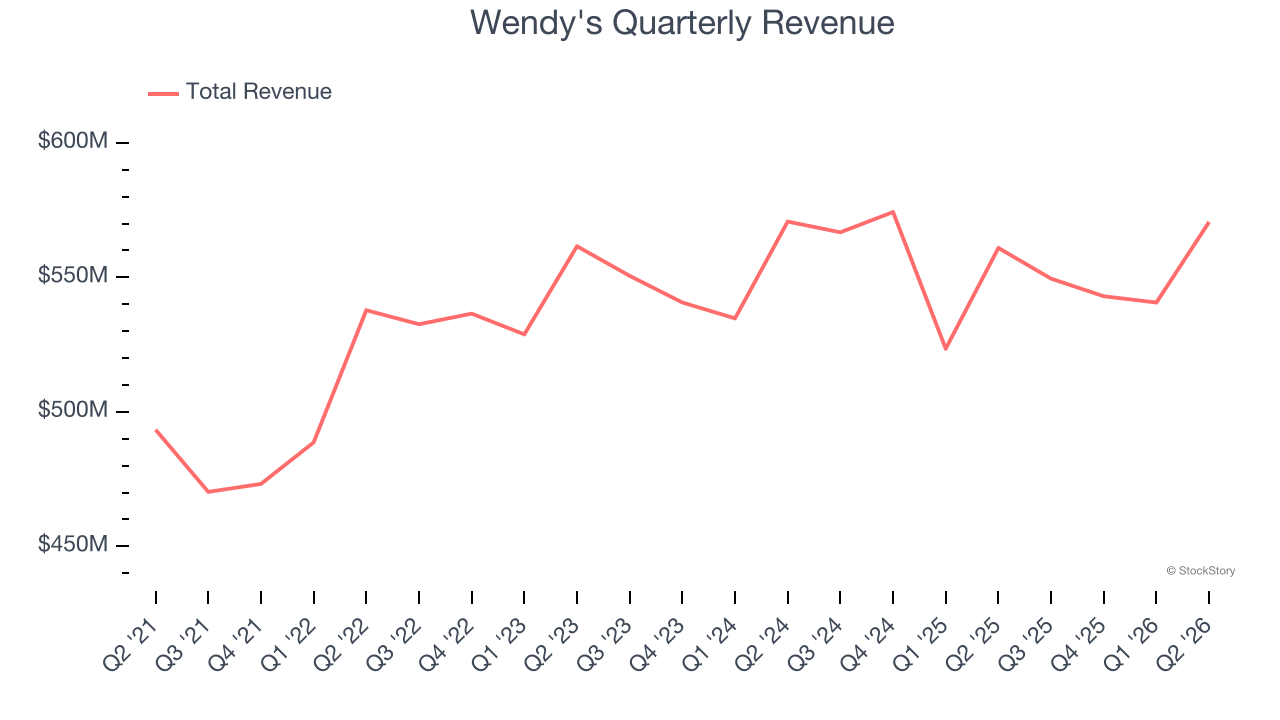
This quarter, Wendy's reported modest year-on-year revenue growth of 1.7% but beat Wall Street’s estimates by 2%.
Looking ahead, sell-side analysts expect revenue to grow 1.1% over the next 12 months, a deceleration versus the last seven years. This projection doesn’t excite us and indicates its menu offerings will face some demand challenges.
ONE MORE THING: 3 Hidden Platforms Growing 3X Faster than Amazon, Google, and PayPal. Amazon, Google, and Meta all followed the same playbook: Dominate an ignored market. Build an unbeatable moat. Scale until you’re unstoppable.
These three platforms are running that exact playbook right now. The early investors in Amazon made fortunes. The early investors in these could do the same. Get All 3 Stocks Here for FREE.
Restaurant Performance
Number of Restaurants
The number of dining locations a restaurant chain operates is a critical driver of how quickly company-level sales can grow.
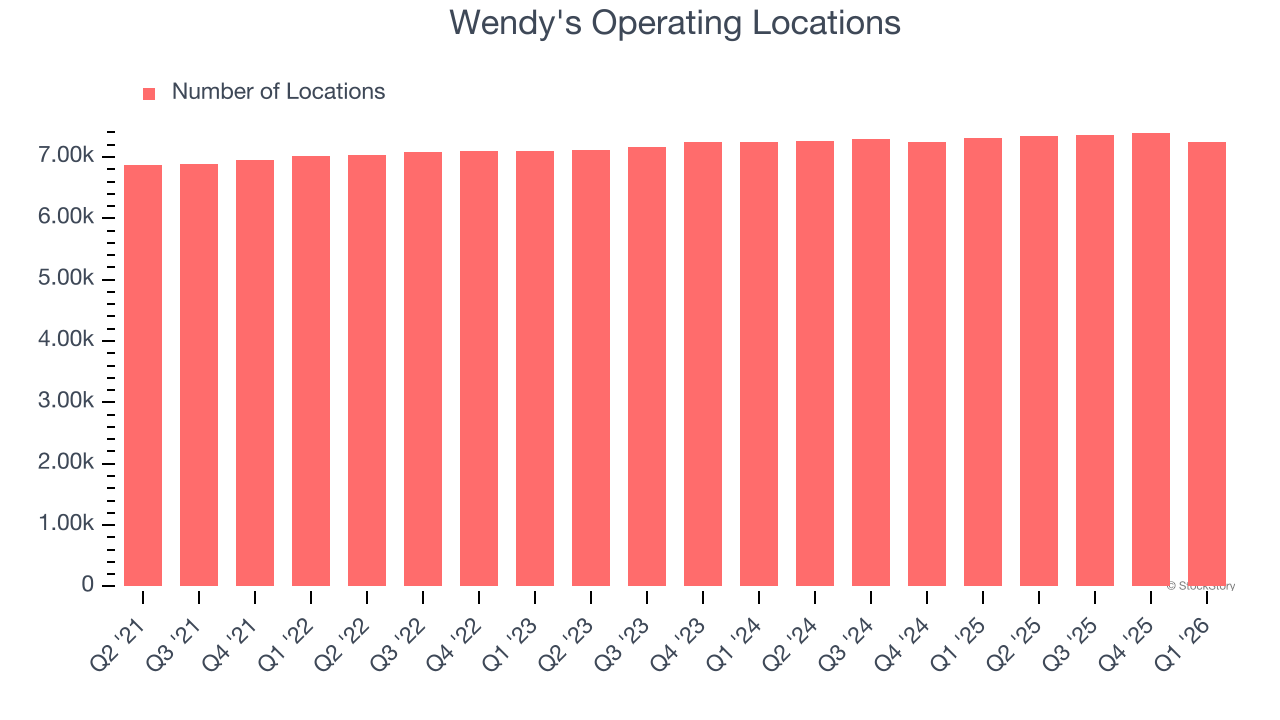
Over the last two years, Wendy's has kept its restaurant count flat while other restaurant businesses have opted for growth.
When a chain doesn’t open many new restaurants, it usually means there’s stable demand for its meals and it’s focused on improving operational efficiency to increase profitability.
Note that Wendy's reports its restaurant count intermittently, so some data points are missing in the chart below.
Same-Store Sales
A company’s restaurant base only paints one part of the picture. When demand is high, it makes sense to open more. But when demand is low, it’s prudent to close some locations and use the money in other ways. Same-store sales is an industry measure of whether revenue is growing at those existing restaurants and is driven by customer visits (often called traffic) and the average spending per customer (ticket).
Wendy’s demand has been shrinking over the last two years as its same-store sales have averaged 3.4% annual declines. This performance isn’t ideal, and we’d be concerned if Wendy's starts opening new restaurants to artificially boost revenue growth.
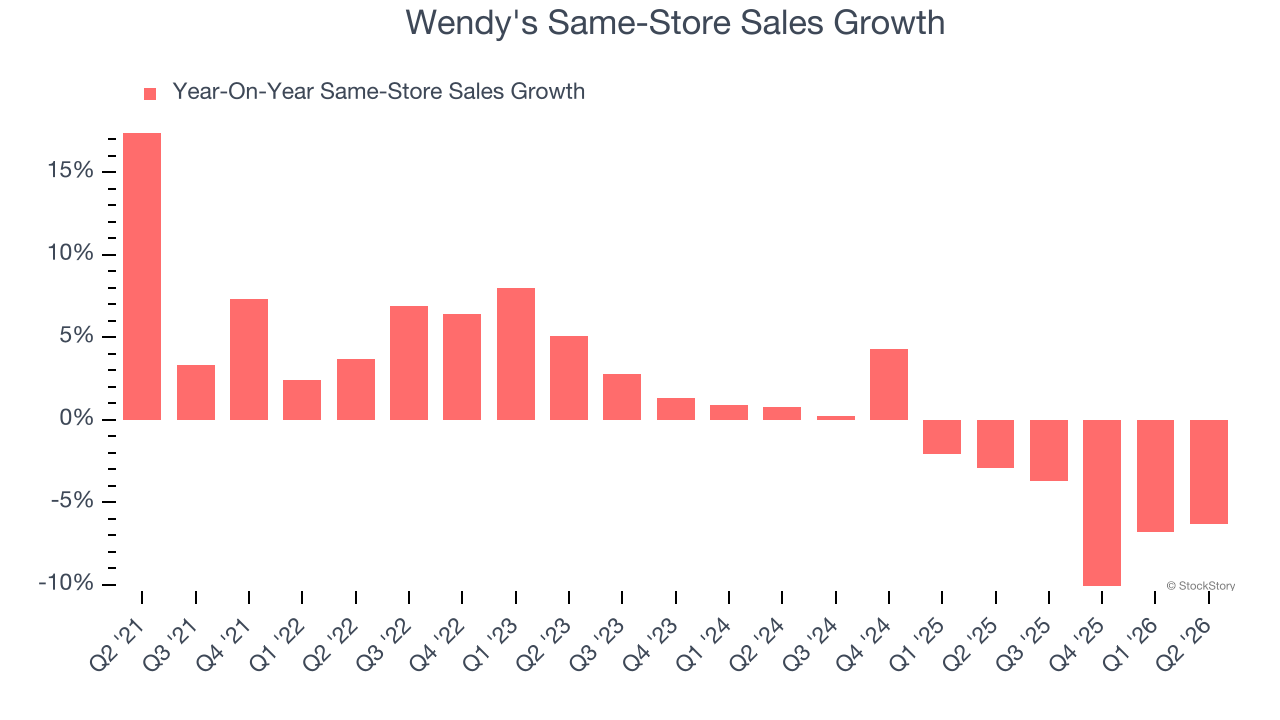
In the latest quarter, Wendy’s same-store sales fell by 6.3% year on year. This decrease represents a further deceleration from its historical levels. We hope the business can get back on track.
Key Takeaways from Wendy’s Q2 Results
We enjoyed seeing Wendy's beat analysts’ revenue expectations this quarter. We were also happy its EBITDA outperformed Wall Street’s estimates. On the other hand, its same-store sales missed. Overall, this print had some key positives. Investors were likely hoping for more, and shares traded down 3.4% to $7.18 immediately after reporting.
Is Wendy's an attractive investment opportunity at the current price? What happened in the latest quarter matters, but not as much as longer-term business quality and valuation, when deciding whether to invest in this stock. We cover that in our actionable full research report which you can read here (it’s free).