

As the Q1 earnings season wraps, let’s dig into this quarter’s best and worst performers in the electrical systems industry, including GE Vernova (NYSE: GEV) and its peers.
Like many equipment and component manufacturers, electrical systems companies are buoyed by secular trends such as connectivity and industrial automation. More specific pockets of strong demand include Internet of Things (IoT) connectivity and the 5G telecom upgrade cycle, which can benefit companies whose cables and conduits fit those needs. But like the broader industrials sector, these companies are also at the whim of economic cycles. Interest rates, for example, can greatly impact projects that drive demand for these products.
The 14 electrical systems stocks we track reported a satisfactory Q1. As a group, revenues beat analysts’ consensus estimates by 3.4% while next quarter’s revenue guidance was 3.3% below.
In light of this news, share prices of the companies have held steady as they are up 4.4% on average since the latest earnings results.
GE Vernova (NYSE: GEV)
Born from the energy business of industrial giant General Electric in a 2023 spin-off, GE Vernova (NYSE: GEV) designs, manufactures, and services power generation equipment and grid technologies to help customers build more reliable and sustainable electric systems.
GE Vernova reported revenues of $9.34 billion, up 16.3% year on year. This print exceeded analysts’ expectations by 0.8%. Overall, it was an exceptional quarter for the company with an impressive beat of analysts’ adjusted operating income and EPS estimates.
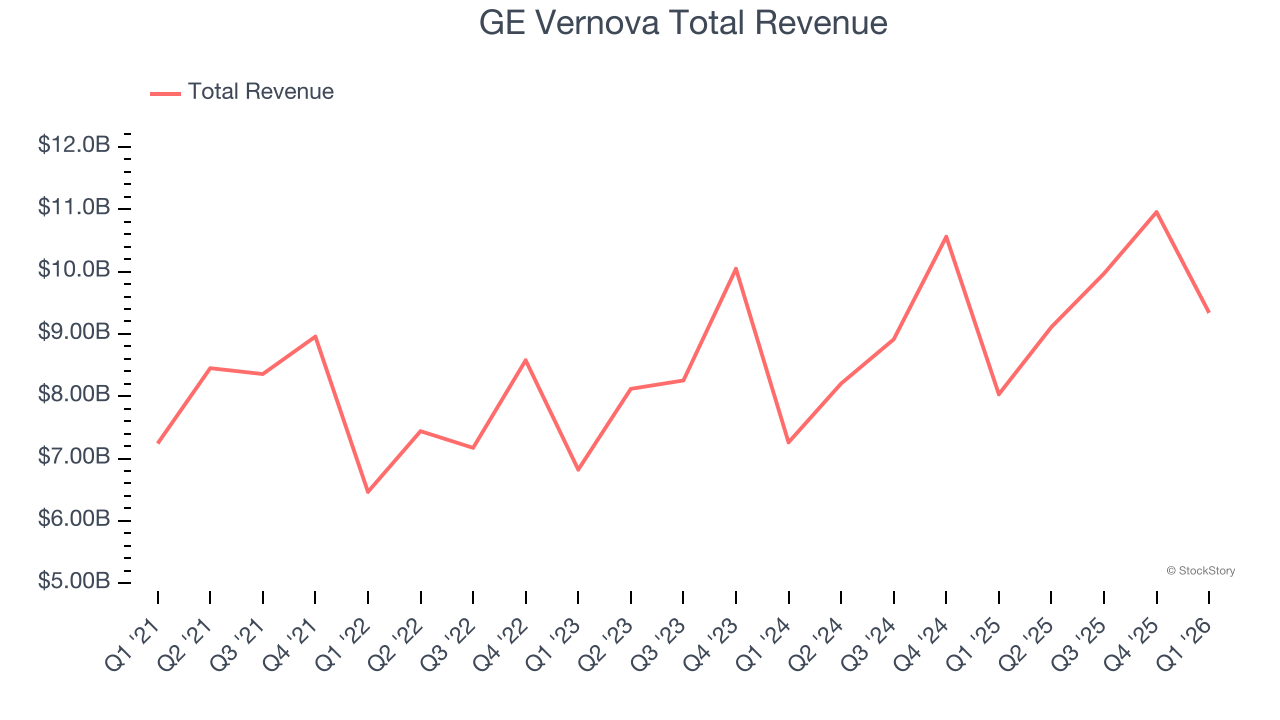
Interestingly, the stock is up 12.3% since reporting and currently trades at $1,113.
Is now the time to buy GE Vernova? Access our full analysis of the earnings results here, it’s free.
Best Q1: Garrett Motion (NASDAQ: GTX)
A key player in the transition to cleaner vehicles, Garrett Motion (NYSE: GTX) designs and manufactures turbochargers, air compressors, and electric motor technologies for vehicle manufacturers and industrial applications.
Garrett Motion reported revenues of $985 million, up 12.2% year on year, outperforming analysts’ expectations by 9.3%. The business had a stunning quarter with a solid beat of analysts’ EBITDA estimates.
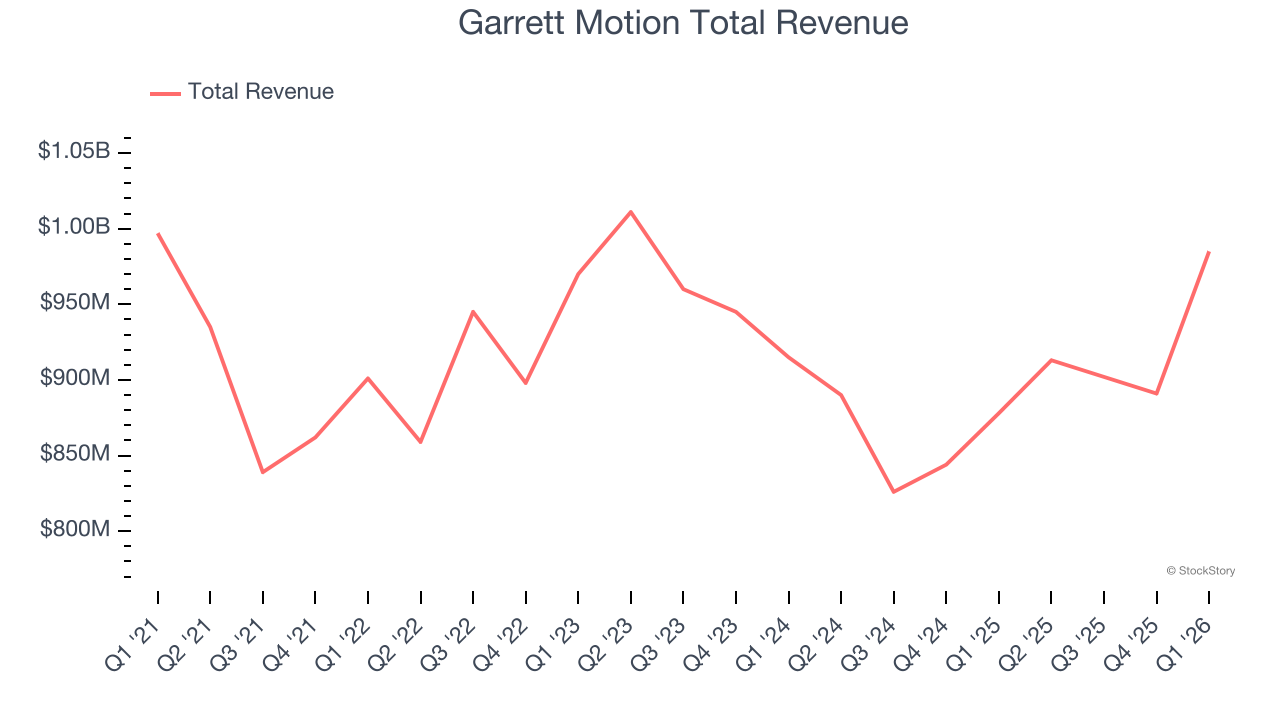
The market seems happy with the results as the stock is up 65.2% since reporting. It currently trades at $33.84.
Is now the time to buy Garrett Motion? Access our full analysis of the earnings results here, it’s free.
Weakest Q1: Whirlpool (NYSE: WHR)
Credited with introducing the first automatic washing machine, Whirlpool (NYSE: WHR) is a manufacturer of a variety of home appliances.
Whirlpool reported revenues of $3.27 billion, down 9.6% year on year, falling short of analysts’ expectations by 4.4%. It was a disappointing quarter as it posted full-year EPS guidance missing analysts’ expectations and a significant miss of analysts’ adjusted operating income estimates.
Whirlpool delivered the weakest performance against analyst estimates, slowest revenue growth, and weakest full-year guidance update in the group. As expected, the stock is down 28.6% since the results and currently trades at $39.09.
Read our full analysis of Whirlpool’s results here.
Powell (NASDAQ: POWL)
Originally a metal-working shop supporting local petrochemical facilities, Powell (NYSE: POWL) has grown from a small Houston manufacturer to a global provider of electrical systems.
Powell reported revenues of $296.6 million, up 6.5% year on year. This print missed analysts’ expectations by 0.8%. It was a disappointing quarter as it also recorded a significant miss of analysts’ adjusted operating income and EPS estimates.
The stock is up 11% since reporting and currently trades at $299.77.
Read our full, actionable report on Powell here, it’s free.
Hubbell (NYSE: HUBB)
A respected player in the electrical segment, Hubbell (NYSE: HUBB) manufactures electronic products for the construction, industrial, utility, and telecommunications markets.
Hubbell reported revenues of $1.52 billion, up 11.1% year on year. This result beat analysts’ expectations by 0.8%. It was a strong quarter as it also produced a solid beat of analysts’ adjusted operating income and organic revenue estimates.
The stock is down 4% since reporting and currently trades at $524.
Read our full, actionable report on Hubbell here, it’s free.
Market Update
Late in 2025 into early 2026, there was hand-wringing around artificial intelligence. For software companies, the fear was that AI would erode pricing power and compress margins as new tools made it easier to replicate what once required expensive enterprise platforms. Crypto investors had their own version of the same anxiety: if AI agents could trade, allocate capital, and manage wallets autonomously, what exactly was the long-term value of today’s crypto infrastructure?
These concerns triggered a noticeable rotation away from these sectors and into safer havens. But markets rarely dwell on one narrative for long. Spring 2026 came, and the focus shifted abruptly from technological disruption to geopolitical risk. The US’ conflict with Iran became the dominant driver of market psychology, and when geopolitics takes center stage, the script changes quickly. Investors stop debating growth rates and start worrying about oil supply, inflation, and global stability.
Want to invest in winners with rock-solid fundamentals? Check out our Hidden Gem Stocks and add them to your watchlist. These companies are poised for growth regardless of the political or macroeconomic climate.
StockStory’s analyst team — all seasoned professional investors — uses quantitative analysis and automation to deliver market-beating insights faster and with higher quality.