

Inclusive gym franchise company (NYSE: PLNT) beat Wall Street’s revenue expectations in Q3 2026, with revenue rising 9% year on year to $360 million. Its non-GAAP profit of $0.83 per share was 2.9% above analysts’ consensus estimates.
For more on Planet Fitness, read our full research report for free.
Planet Fitness (PLNT) Q3 2026 highlights:
- Revenue $360 million vs S&P analysts’ consensus estimates of $347.7 million (9% year-on-year growth, 3.5% beat)
- Adjusted EPS $0.83 vs S&P analysts’ consensus estimates of $0.81 (2.9% beat)
- Adjusted EBITDA $146.2 million vs analysts’ consensus estimates of $146.8 million (40.6% margin, in line)
- Operating margin 28.2%, down from 32.4% in the same quarter last year
- Free cash flow margin 84.4%, up from 23.2% in the same quarter last year
- Same-store sales rose 1.5% year on year (6.9% in the same quarter last year)
- Market capitalization $4.31 billion
"We delivered same club sales growth ahead of our expectations and adjusted EBITDA margins of approximately 41% while making meaningful progress on the initiatives designed to accelerate member growth, reinforce affordability, and generate long-term value during the third quarter," said Colleen Keating, Chief Executive Officer. "We are also energized by the international expansion opportunities available to us, most recently our acquisition of Be-Fit in Portugal, which marks our entry into a sixth international market and our second country in Europe. Be-Fit is a profitable collection of 25 clubs with an established national presence, and we see great potential to drive efficiencies and future growth as we convert these units to the Planet Fitness brand and implement our best practices."
Revenue growth
A company’s long-term performance is an indicator of its overall quality. Any business can deliver a good quarter or two, but the best consistently grow over the long haul. Over the last five years, Planet Fitness grew its revenue at a 21.8% compounded annual growth rate. Though this growth is acceptable on an absolute basis, revenue growth alone is not enough to assess the consumer discretionary sector, which can display significant earnings volatility. The bar for the sector is particularly high, reflecting the non-essential and hit-driven nature of the products and services offered. Additionally, the five-year growth rate starts around Covid, when revenue was depressed before rebounding.
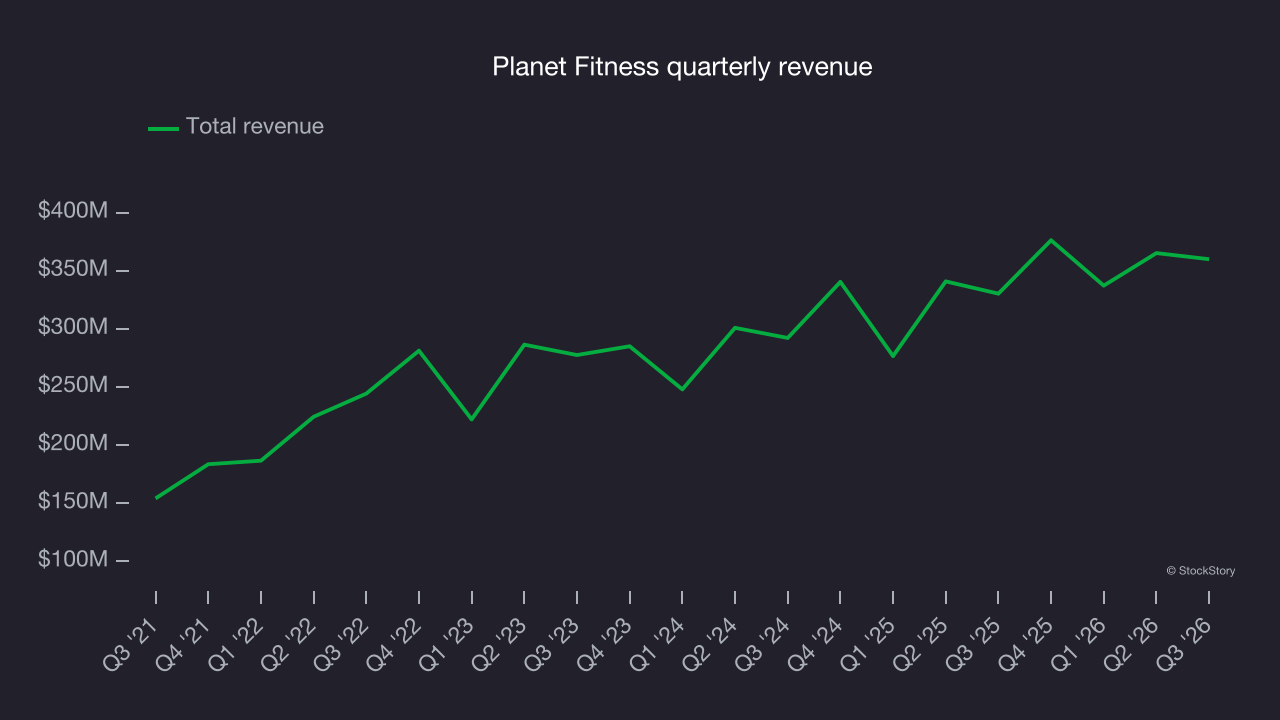
Long-term growth is the most important, but within consumer discretionary, product cycles are short and revenue can be hit-driven due to rapidly changing trends and consumer preferences. Planet Fitness’s recent performance shows its demand has slowed as its annualized revenue growth of 13% over the last two years was below its five-year trend. Decelerating revenue growth in the sector warrants caution, as it could signal changing consumer tastes, a risk compounded by low switching costs. Note that Covid hurt Planet Fitness’s business in 2020 and part of 2021, and it rebounded sharply thereafter. 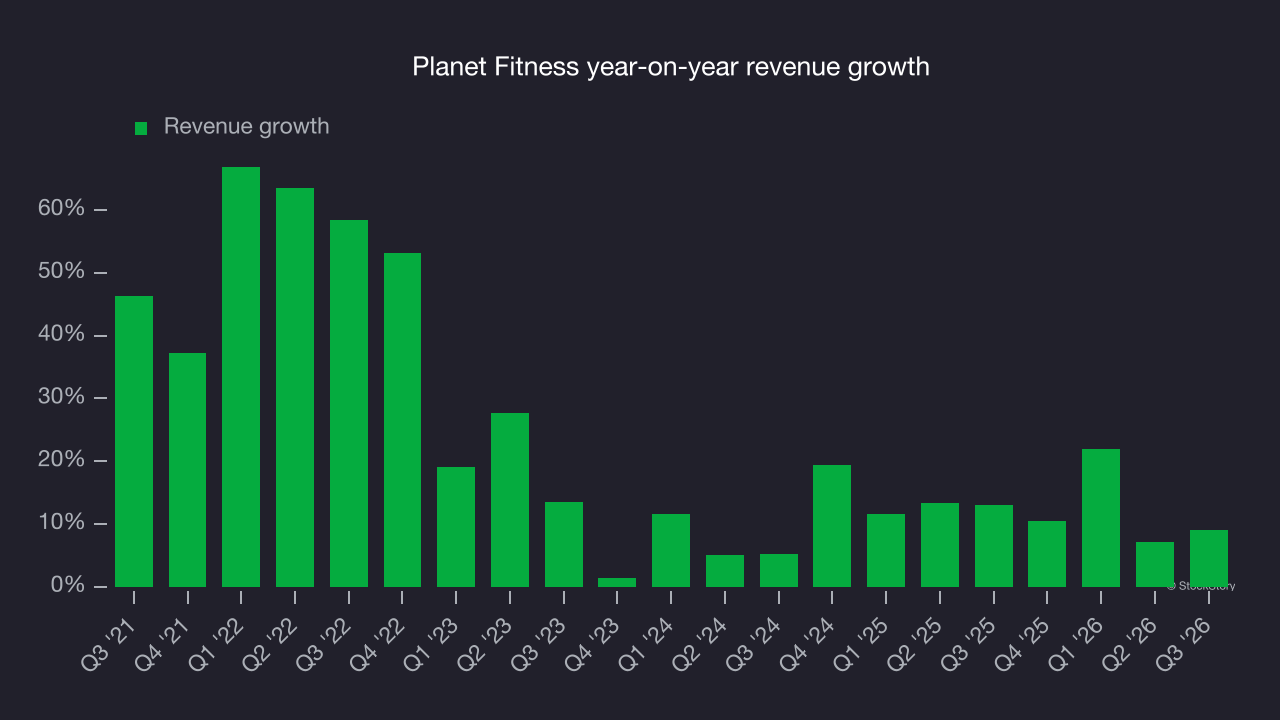
Planet Fitness also reports same-store sales, which show how much revenue its established locations generate. Over the last two years, Planet Fitness’s same-store sales averaged 4.9% year-on-year growth. Revenue growth outpaced this metric, indicating that new locations are boosting the company’s revenue growth. 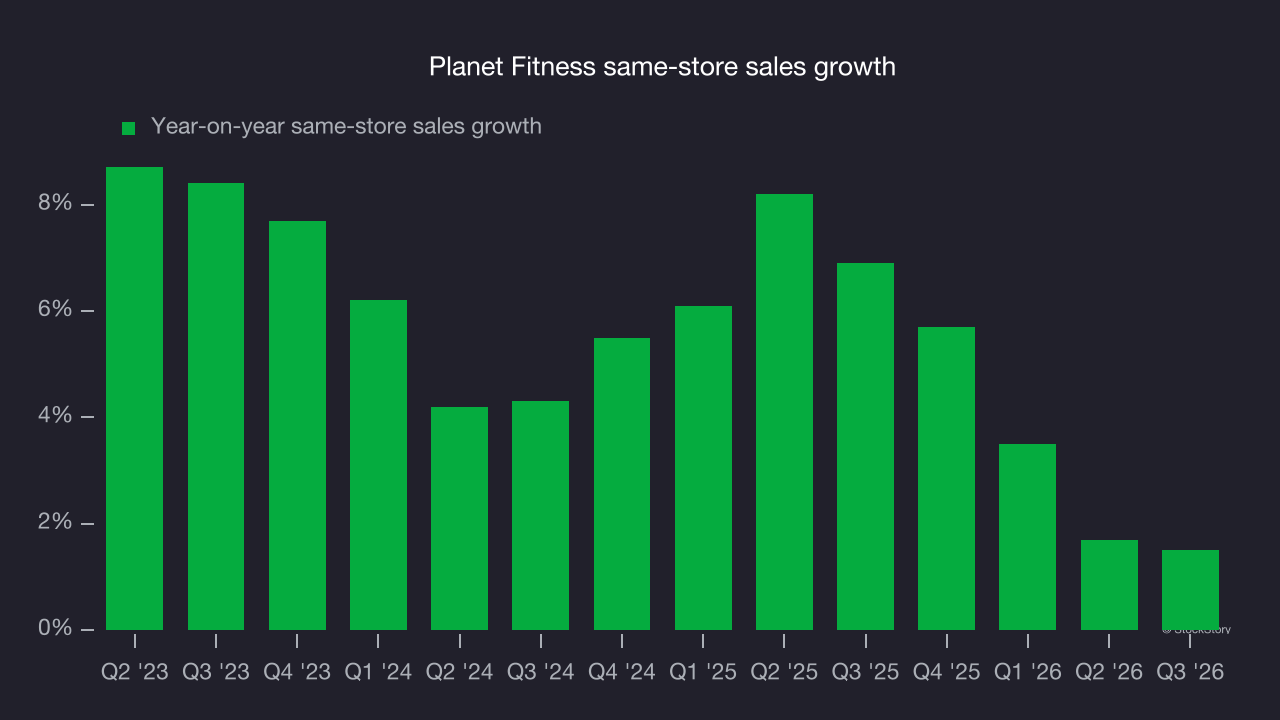
This quarter, Planet Fitness reported year-on-year revenue growth of 9%, and its $360 million of revenue exceeded Wall Street’s consensus estimates by 3.5%.
Looking ahead, sell-side analysts expect revenue to grow 4.8% over the next 12 months, according to S&P, a deceleration versus the last two years. This underwhelming projection indicates its products and services will see some demand headwinds.
Operating margin
Operating margin is a key measure of profitability. Think of it as net income, or the bottom line, excluding the impact of taxes and interest on debt, which are less connected to business fundamentals.
Planet Fitness’s operating margin has been largely unchanged over the last 12 months, but rising margins driven by economies of scale and cost efficiency over time would be preferable.
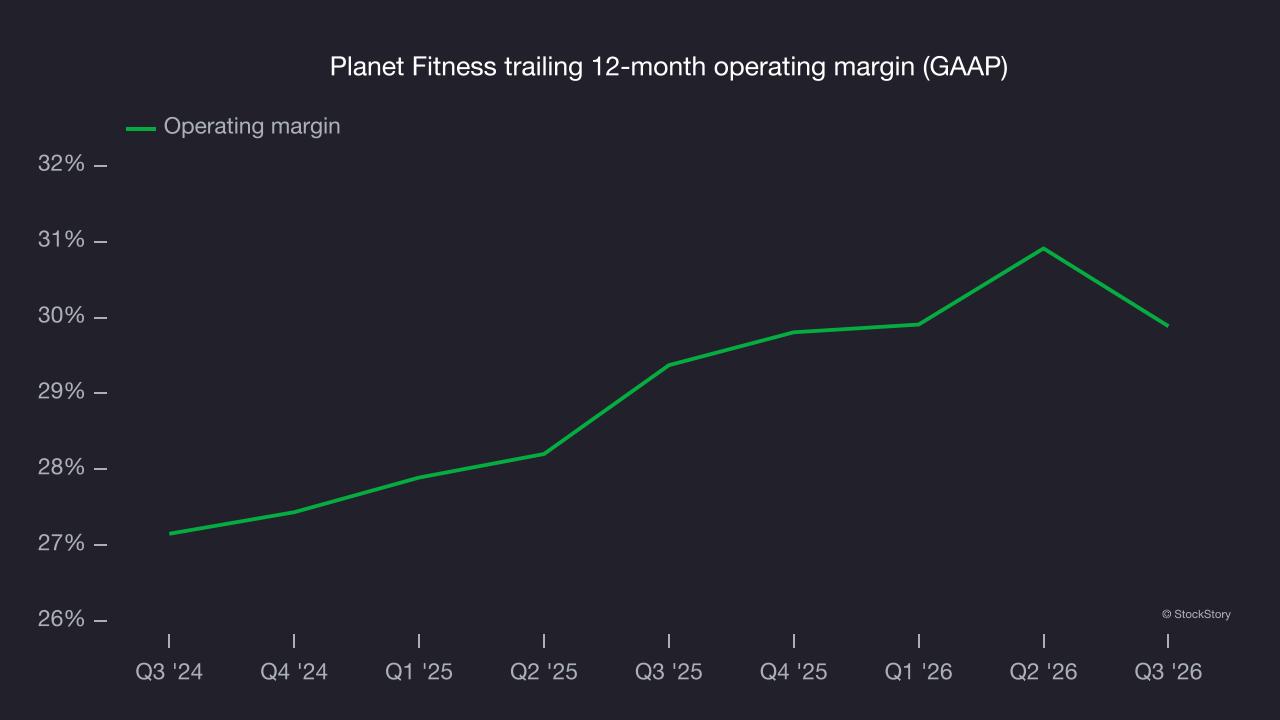
In Q3, Planet Fitness generated an operating margin of 28.2%, down 4.2 percentage points year on year. This contraction shows it was less efficient because its expenses grew faster than its revenue.
Earnings per share
Revenue trends explain a company’s historical growth, but the long-term change in earnings per share (EPS) points to the profitability of that growth. For example, a company could inflate its revenue through excessive spending on advertising and promotions.
Planet Fitness’s EPS grew at a 35.1% compounded annual growth rate over the last five years, higher than its 21.8% annualized revenue growth. However, this alone doesn’t tell us much about its business quality because its operating margin didn’t improve.
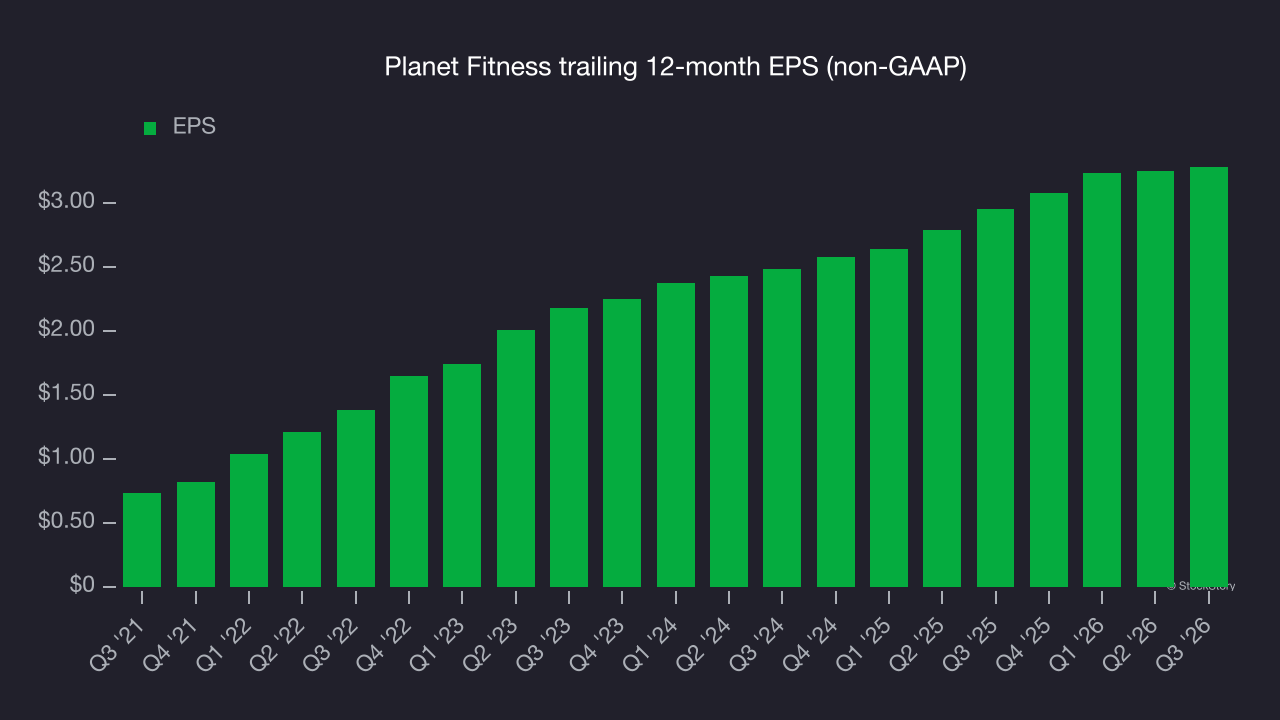
In Q3, Planet Fitness reported adjusted EPS of $0.83, up from $0.80 in the same quarter last year. This result beat analysts’ consensus estimates by 2.9%. Over the next 12 months, Wall Street expects Planet Fitness’s full-year EPS to grow 9.3% from $3.28 to $3.59, according to S&P.
Key takeaways from Planet Fitness’s Q3 results
Planet Fitness’s revenue beat analysts’ consensus estimates in Q3, a key positive in the quarter’s results. Shares edged higher 1.8% to $58.35 immediately after the release.
The latest quarter matters, but not nearly as much as longer-term fundamentals and valuation when deciding whether Planet Fitness stock is a buy. Read the full research report here (it’s free).