
Semiconductor manufacturer Vishay Intertechnology (NYSE: VSH) beat Wall Street’s revenue expectations in Q3 2026, with revenue up 23.8% year on year to $978.9 million. The company expects next quarter’s revenue to be around $990 million, close to analysts’ consensus estimates. Its non-GAAP profit of $0.37 per share was 31.4% above analysts’ consensus estimates.
For more on Vishay Intertechnology, read the full research report for free.
Vishay Intertechnology (VSH) Q3 2026 highlights:
- Revenue $978.9 million vs S&P analysts’ consensus estimates of $966.1 million (23.8% year-on-year growth, 1.3% beat)
- Adjusted EPS $0.37 vs S&P analysts’ consensus estimates of $0.28 (31.4% beat)
- Adjusted EBITDA $145.9 million vs analysts’ consensus estimates of $133.6 million (14.9% margin, 9.2% beat)
- Revenue guidance $990 million for Q4 2026, roughly in line with what analysts were expecting
- Operating margin 9.4%, up from 2.4% in the same quarter last year
- Free cash flow $98.48 million, up from -$24.69 million in the same quarter last year
- Inventory days outstanding 100, down from 103 in the previous quarter
- Market capitalization $4.17 billion
“Q3 revenue of $979 million marked the highest quarterly revenue ever in Vishay’s history and exceeded the top end of our guidance. With revenue growth of 24% over last year, we lifted our gross profit margin to 25.5%, 600 basis points higher. This significant gross margin improvement flowed through to earnings which surged to $0.37 per share. All technologies delivered strong results, demonstrating the value of Vishay as a hybrid supplier of discrete semiconductors and passive components,” said Joel Smejkal, president and CEO. “We remain intensely focused on execution under Vishay 3.0, delivering on our promise to our customers to be a reliable supplier with incremental capacity and maintain competitive lead times.”
Revenue growth
A company’s long-term revenue performance can indicate its overall quality. Any business can experience short-term success, but top-performing ones sustain growth for years. Over the last five years, Vishay Intertechnology grew its revenue at a tepid 2.7% compounded annual growth rate, falling short of our standards. Semiconductors are a cyclical industry, and long-term investors should be prepared for periods of high growth followed by periods of revenue contractions.
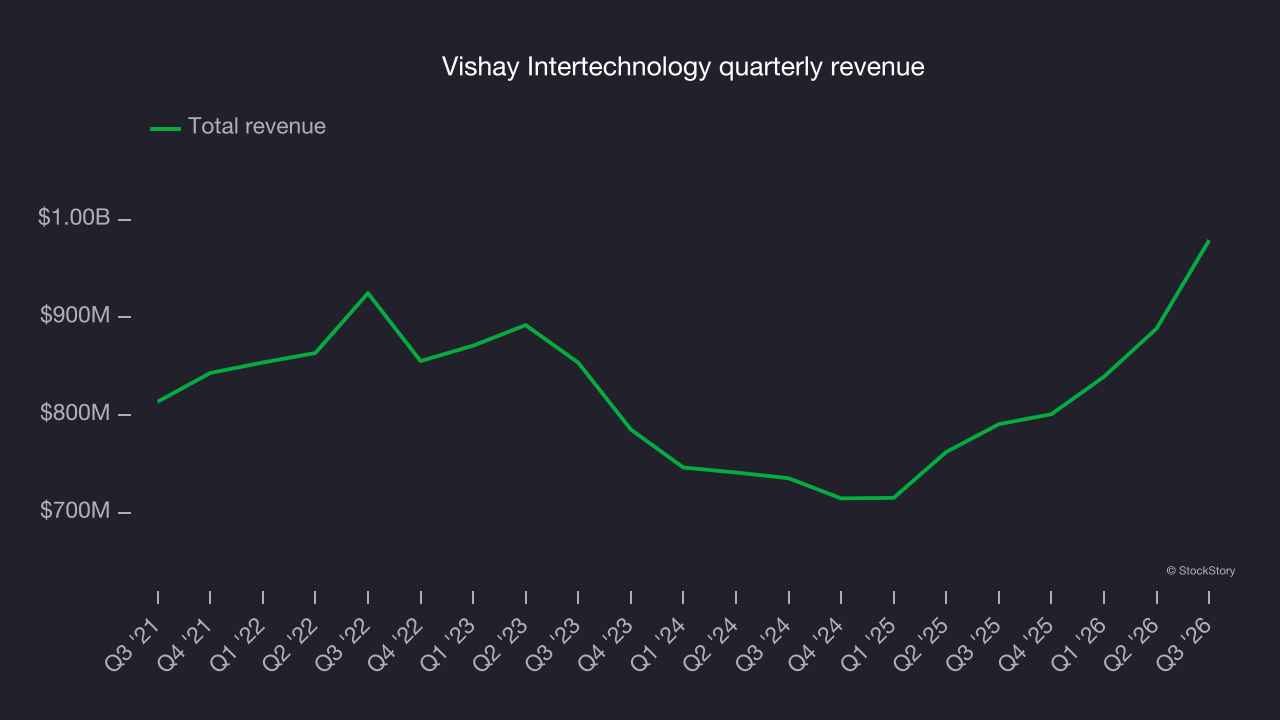
Long-term growth is the most important, but short-term results matter for semiconductors because the rapid pace of technological innovation (Moore’s Law) could make yesterday’s hit product obsolete today. Vishay Intertechnology’s annualized revenue growth of 8% over the last two years is above its five-year trend, which is encouraging.
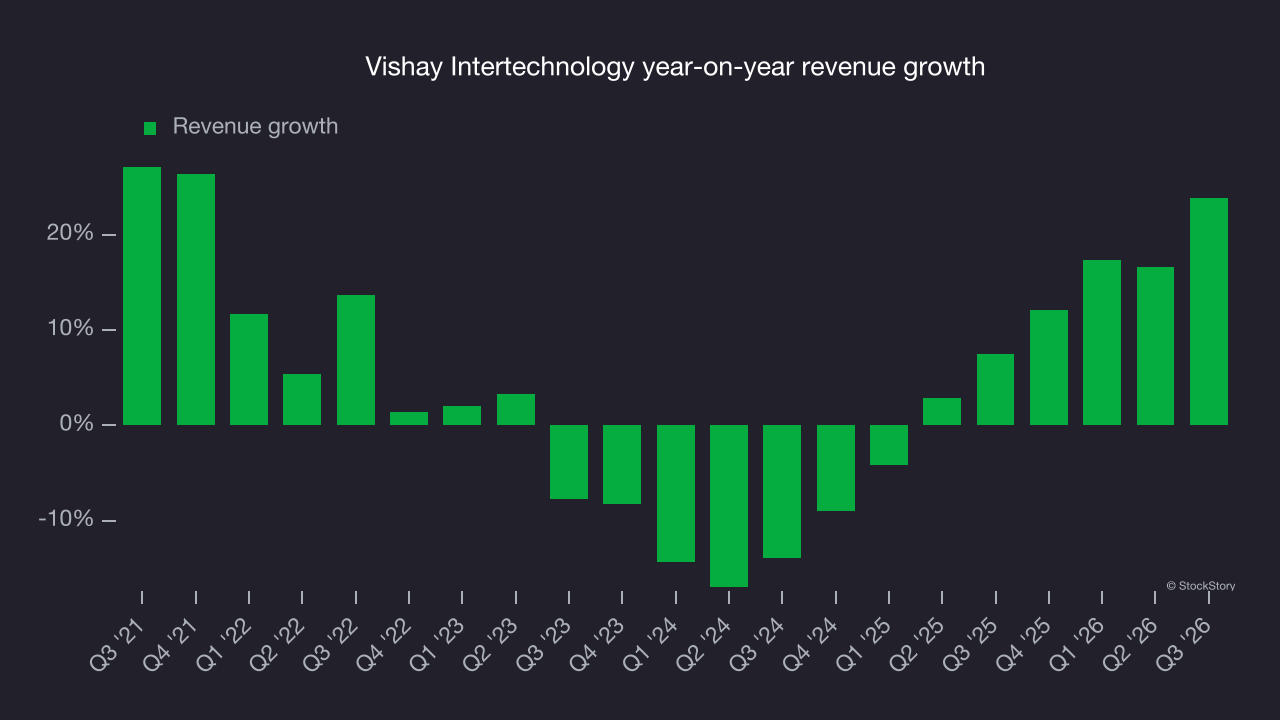
This quarter, Vishay Intertechnology reported year-on-year revenue growth of 23.8%, and its $978.9 million in revenue topped Wall Street’s consensus estimates by 1.3%. Beyond the beat, this marks 6 straight quarters of growth, showing that the current upcycle has been sustained. A typical upcycle lasts 8–10 quarters. Management is guiding for a 23.6% year-on-year increase in revenue next quarter.
Looking further ahead, sell-side analysts expect revenue to grow 19.2% over the next 12 months, according to S&P. Although this projection implies its newer products and services will spur better top-line performance, it is still below average for the sector.
Product demand & outstanding inventory
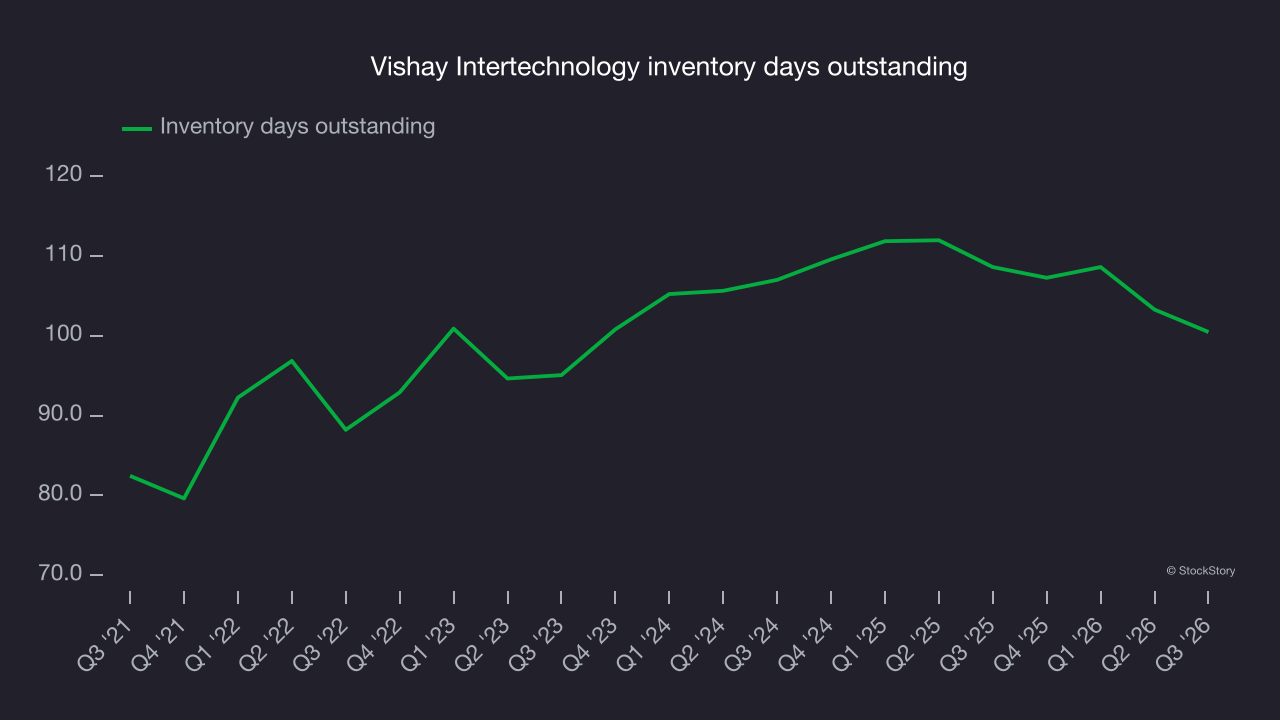
Days inventory outstanding, or DIO, is an important metric for chipmakers, as it reflects a business’s capital intensity and the cyclical nature of semiconductor supply and demand. In a tight supply environment, inventories tend to be stable, allowing chipmakers to exert pricing power. Steadily increasing DIO can be a warning sign that demand is weak, and if inventories continue to rise, the company may have to downsize production.
This quarter, Vishay Intertechnology’s DIO came in at 100, which is one day below its five-year average. These numbers show no indication of an unusual inventory buildup.
Key takeaways from Vishay Intertechnology’s Q3 results
Vishay Intertechnology delivered a strong Q3, beating analysts’ consensus estimates for EPS and topping Wall Street’s operating income estimates by a wide margin. Shares surged 7.4% to $29.26 immediately after the results.
Vishay Intertechnology had a solid quarter, but a buy decision also depends on the broader picture. Investors should consider valuation, business quality and the latest earnings. For more on those factors, read the full research report here (it’s free).