

Customer engagement platform Twilio (NYSE: TWLO) reported revenue ahead of Wall Street’s expectations in Q3 2026, with revenue rising 19.9% year on year to $1.56 billion. Guidance for next quarter’s revenue was better than expected at $1.6 billion at the midpoint, 1.2% above analysts’ consensus estimates. Its non-GAAP profit of $1.65 per share was 12.4% above analysts’ consensus estimates.
For more on Twilio, read our free full research report.
Twilio (TWLO) Q3 2026 highlights:
- Revenue $1.56 billion vs S&P analysts’ consensus estimates of $1.51 billion (19.9% year-on-year growth, 3% beat)
- Adjusted EPS $1.65 vs S&P analysts’ consensus estimates of $1.47 (12.4% beat)
- Adjusted operating income $325.7 million vs analysts’ consensus estimates of $290.2 million (20.9% margin, 12.3% beat)
- Revenue guidance $1.6 billion at the midpoint for Q4 2026, above analysts’ consensus estimates of $1.58 billion
- Adjusted EPS guidance $1.51 at the midpoint for Q4 2026, above analysts’ consensus estimates of $1.48
- Operating margin 9.5%, up from 3.1% in the same quarter last year
- Free cash flow margin 23.7%, similar to the previous quarter
- Net revenue retention rate 114%, down from 116% in the previous quarter
- Billings $1.56 billion at quarter end, up 19.2% year on year
- Market capitalization $38.97 billion
“Q3 was a great quarter for Twilio, driven by disciplined execution and broad-based strength across our product portfolio,” said Khozema Shipchandler, CEO of Twilio. “Consumer AI has accelerated AI development, and its adoption demands fast, reliable infrastructure built for AI speed. Twilio is well positioned to capitalize on this moment and meet this demand.”
Revenue growth
A company’s long-term revenue performance is one signal of its overall quality. Any business can experience short-term success, but top-performing ones sustain growth for years. Twilio’s revenue grew at a decent 18% compounded annual growth rate over the last five years. Its growth was slightly above the average software company and shows its offerings resonate with customers.
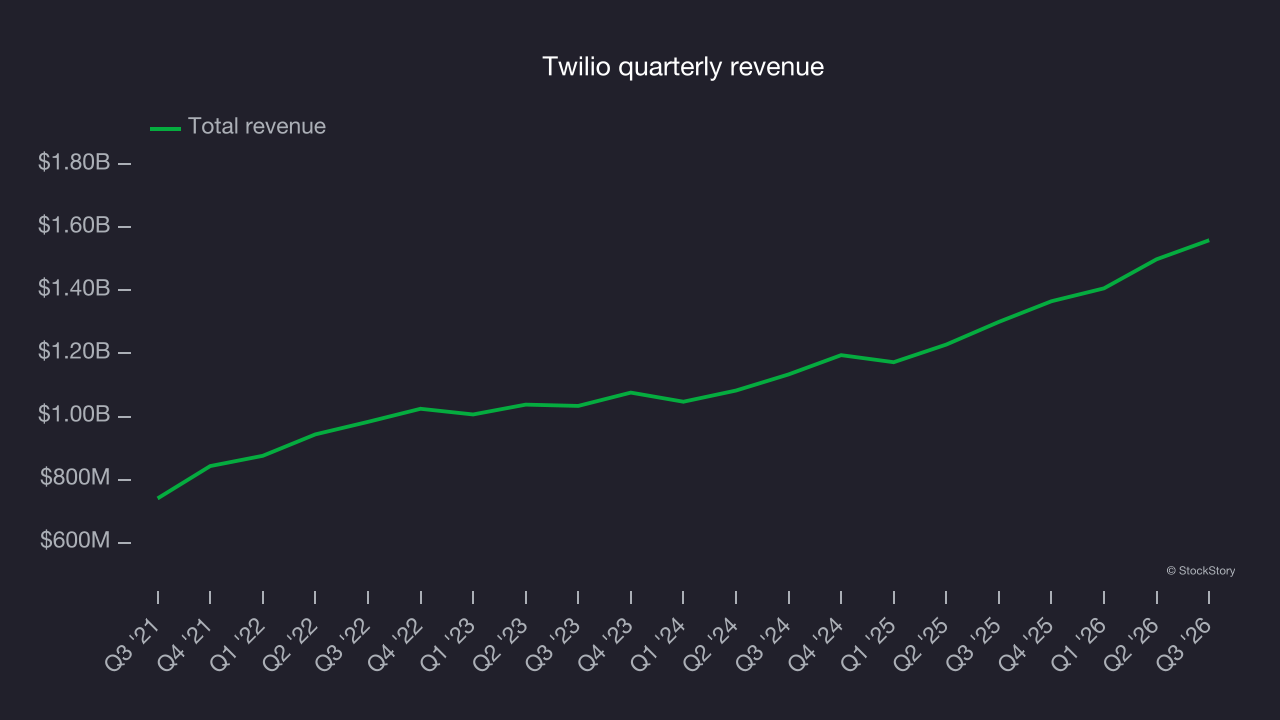
Long-term growth matters most, but within software, a half-decade historical view may miss recent innovations or disruptive industry trends. Twilio’s annualized revenue growth of 15.9% over the last two years is below its five-year trend, but the results were still respectable. 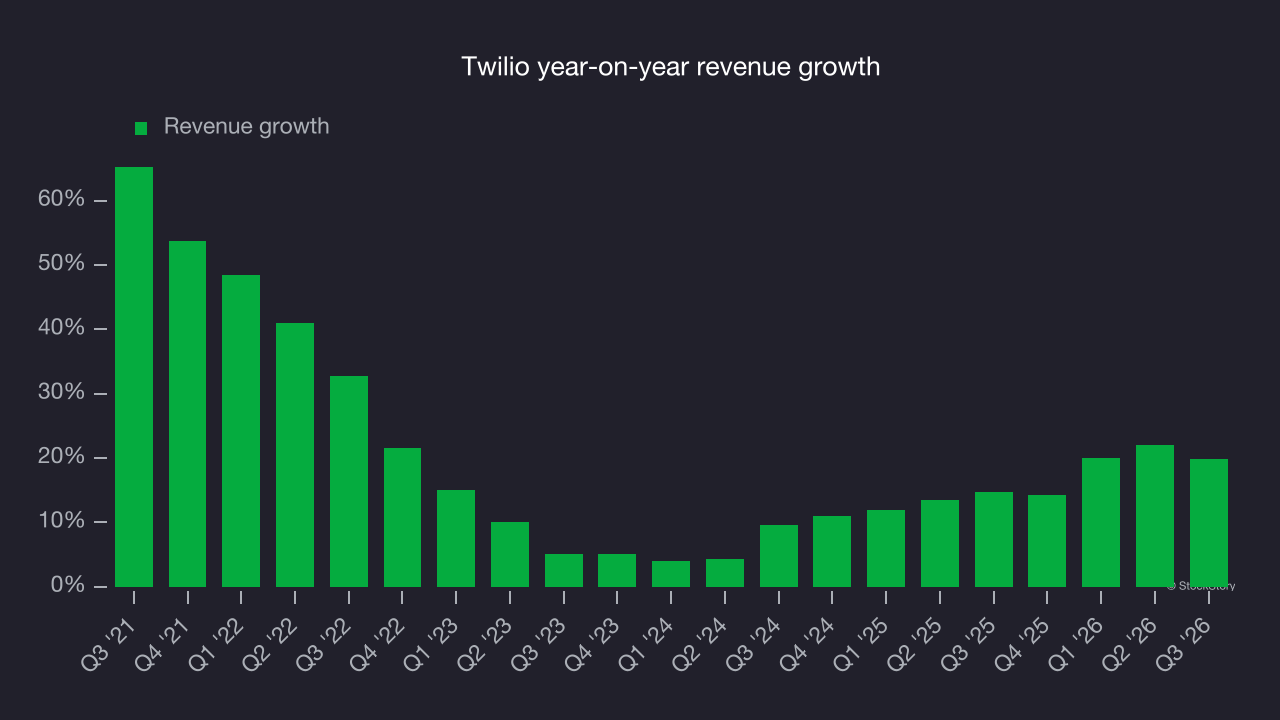
This quarter, Twilio reported year-on-year revenue growth of 19.9%, and its $1.56 billion of revenue exceeded Wall Street’s consensus estimates by 3%. Company management is currently guiding for a 17.1% year-on-year increase in revenue next quarter.
Looking further ahead, sell-side analysts expect revenue to grow 12% over the next 12 months, according to S&P, a deceleration versus the last two years. This underwhelming projection implies its products and services will face some demand challenges.
Billings
Billings is a non-GAAP metric that is often called “cash revenue” because it shows how much money the company has collected from customers in a certain period. This is different from revenue, which must be recognized in pieces over the length of a contract.
Twilio’s billings came in at $1.56 billion in Q3, and growth over the last four quarters was solid, averaging 18.6% year on year. This performance aligned with its total revenue growth, indicating healthy customer demand. The cash collected from customers also supports liquidity and capacity for future investment and growth. 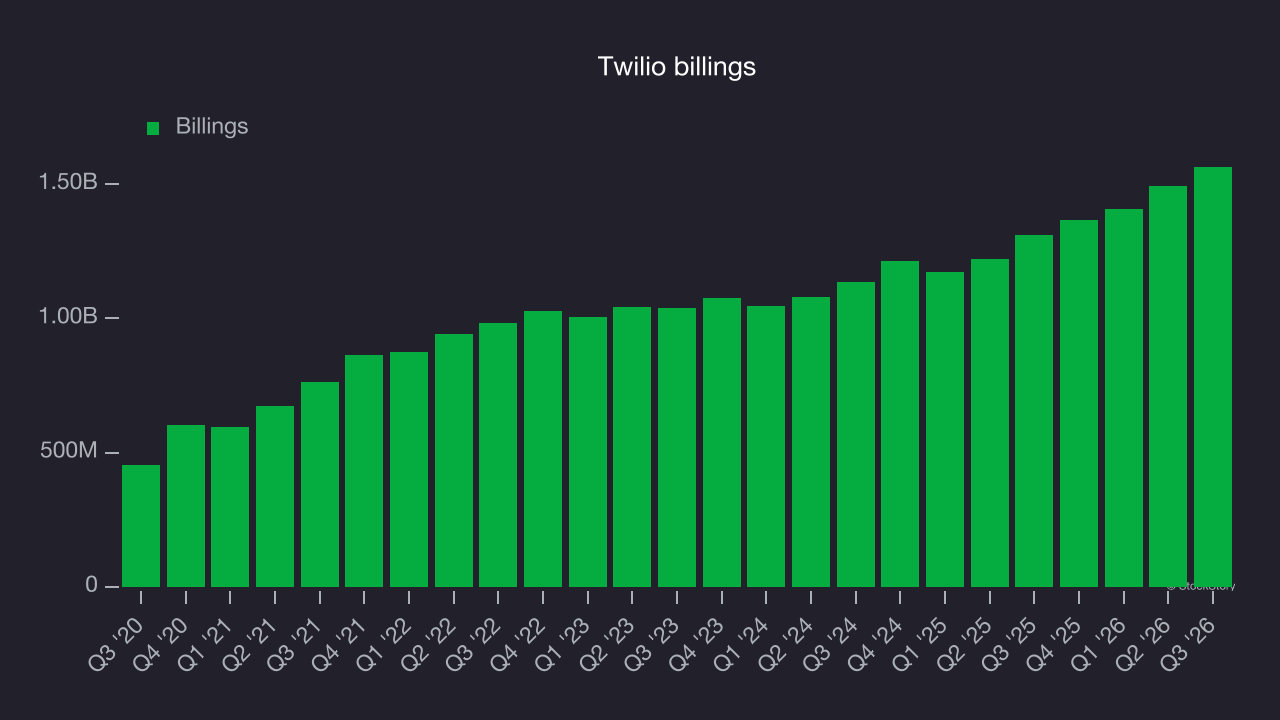
Customer retention
A key advantage of the software-as-a-service business model (and one reason software companies trade at high valuation multiples) is that customers typically spend more on a company’s products and services over time.
Twilio’s net revenue retention rate, a key performance metric measuring how much money existing customers from a year ago are spending today, was 114% in Q3. This means Twilio would’ve grown its revenue by 14% even if it didn’t win any new customers over the last 12 months.
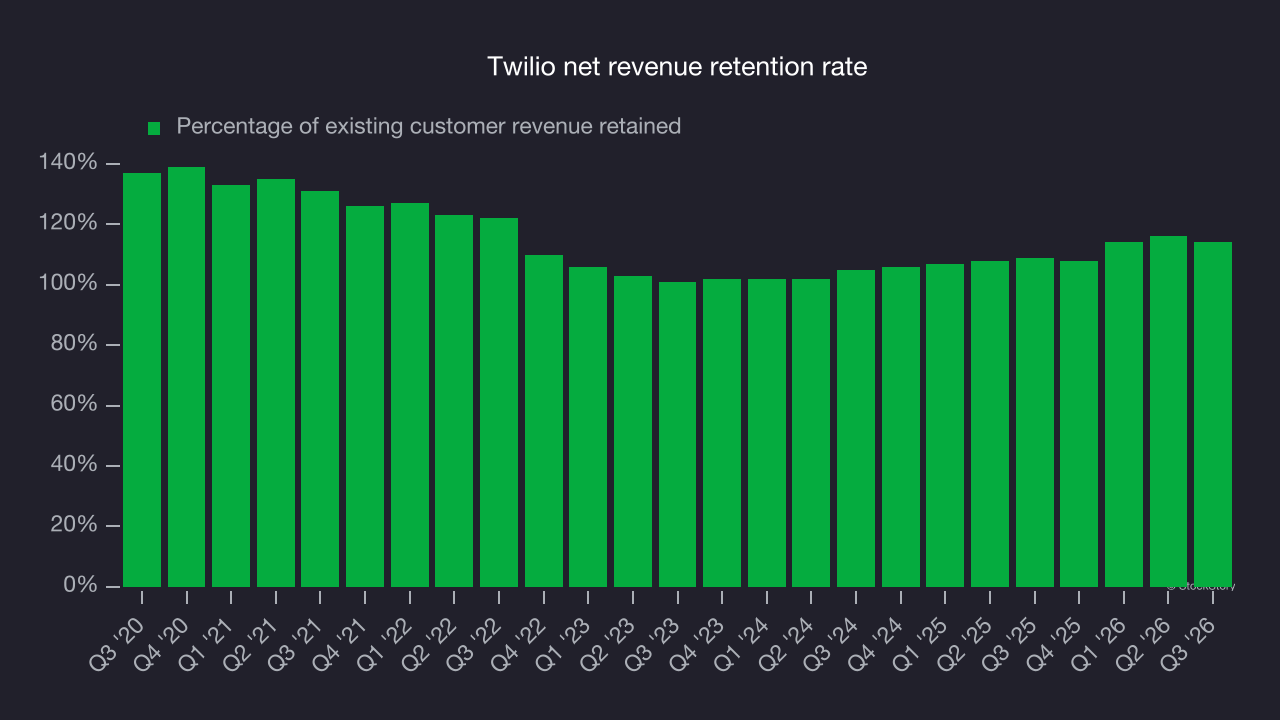
Up significantly from the previous quarter, Twilio’s net revenue retention rate was healthy, indicating that customers are satisfied with its software and getting more value from it over time.
Key takeaways from Twilio’s Q3 results
Twilio delivered a decent Q3, with adjusted operating income beating analysts’ consensus estimates by a wide margin and billings also topping Wall Street’s consensus. But net revenue retention declined. Investors were likely hoping for more, and shares plunged 14.3% to $207.08 immediately after the results.
For investors considering Twilio at its current price, what happened in the latest quarter matters, but not as much as longer-term business quality and valuation when deciding whether to invest. Read the full research report here for more on Twilio (it’s free).