

Medical device company DexCom (NASDAQ: DXCM) reported Q3 2026 results beating Wall Street’s revenue expectations, with revenue up 11.2% year on year to $1.34 billion. The company expects the full year’s revenue to be around $5.23 billion, close to analysts’ consensus estimates. Its non-GAAP profit of $0.73 per share was 8.3% above analysts’ consensus estimates.
For more on DexCom, read our free full research report.
DexCom (DXCM) Q3 2026 highlights:
- Revenue $1.34 billion vs S&P analysts’ consensus estimates of $1.33 billion (11.2% year-on-year growth, 1.2% beat)
- Adjusted EPS $0.73 vs S&P analysts’ consensus estimates of $0.67 (8.3% beat)
- Adjusted EBITDA $435.2 million vs analysts’ consensus estimates of $424 million (32.4% margin, 2.6% beat)
- Revenue guidance The company slightly lifted its revenue guidance for the full year to $5.23 billion at the midpoint from $5.22 billion
- Operating margin 24.3%, up from 20.1% in the same quarter last year
- Organic revenue rose 11% year on year (beat)
- Market capitalization $29.67 billion
“This quarter, we continued to build momentum across the business, delivering strong revenue growth and margin progression, strengthening our clinical evidence, and advancing key product and operational initiatives,” said Jake Leach, Dexcom’s president and CEO. “This performance enabled us to again raise our full-year revenue and operating margin guidance and reinforces our confidence in our ability to deliver on the long-term objectives we outlined at Investor Day.”
Revenue growth
A company’s long-term revenue performance can indicate its overall quality. Any business can deliver a good quarter or two, but the best consistently grow over the long haul. DexCom’s revenue grew at an impressive 17.1% compounded annual growth rate over the last five years. Its growth surpassed the average healthcare company and shows its offerings resonate with customers.
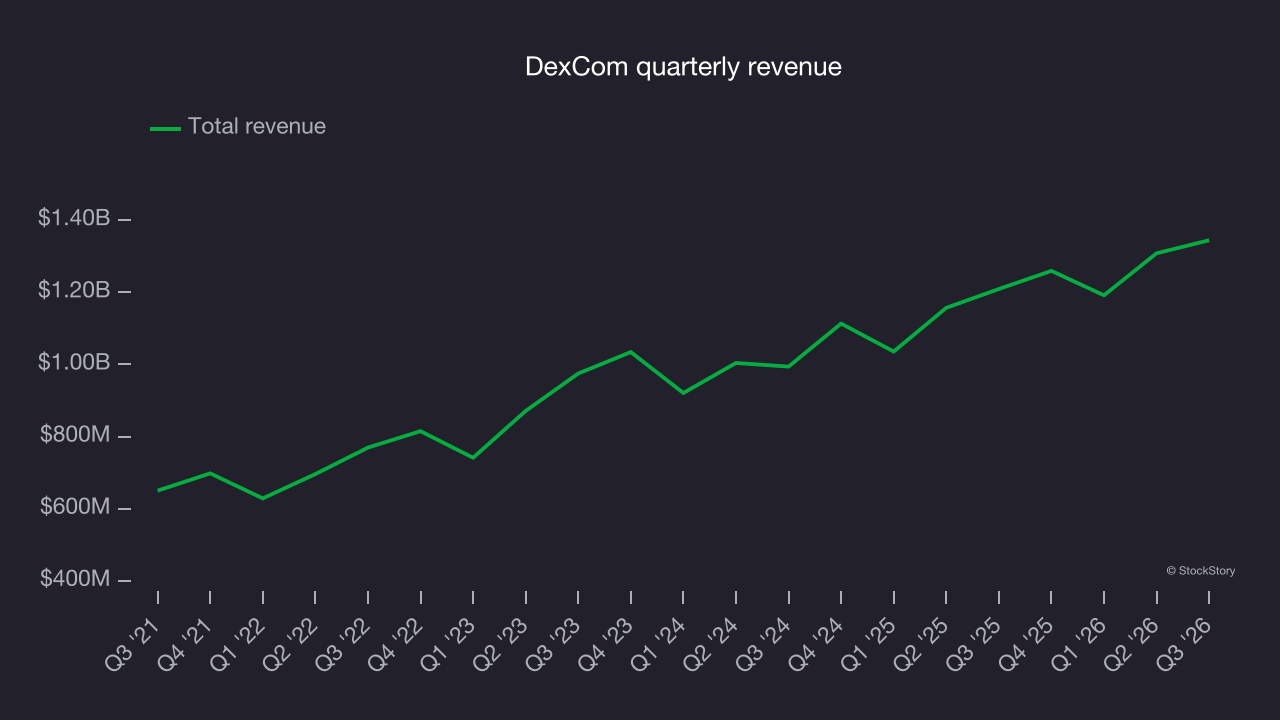
Long-term growth matters most, but within healthcare, a half-decade historical view may miss recent innovations or disruptive industry trends. DexCom’s annualized revenue growth of 13.6% over the last two years is below its five-year trend, but the results still suggest healthy demand. 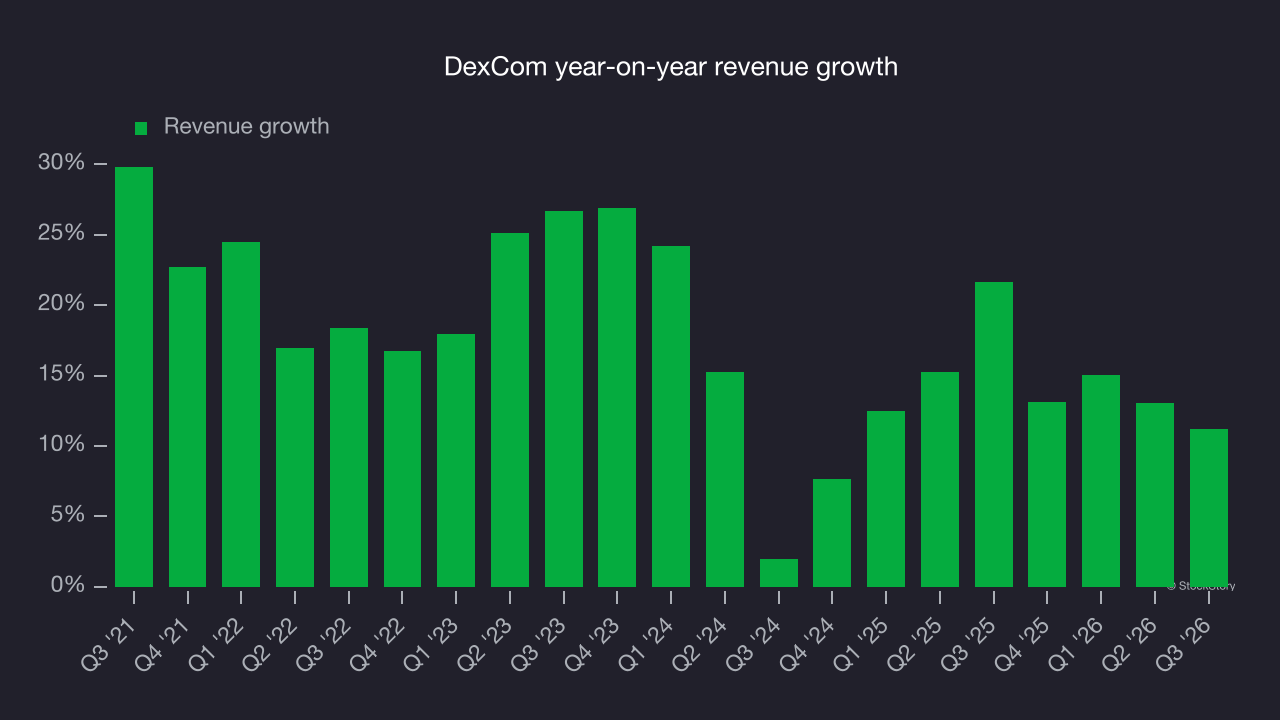
Organic revenue offers a closer look at the company’s revenue dynamics by stripping out one-time events like acquisitions and currency fluctuations that don’t accurately reflect its fundamentals. Over the last two years, DexCom’s organic revenue averaged 13% year-on-year growth. This was in line with its two-year revenue growth, indicating that core operations, rather than acquisitions and divestitures, drove most of its results. 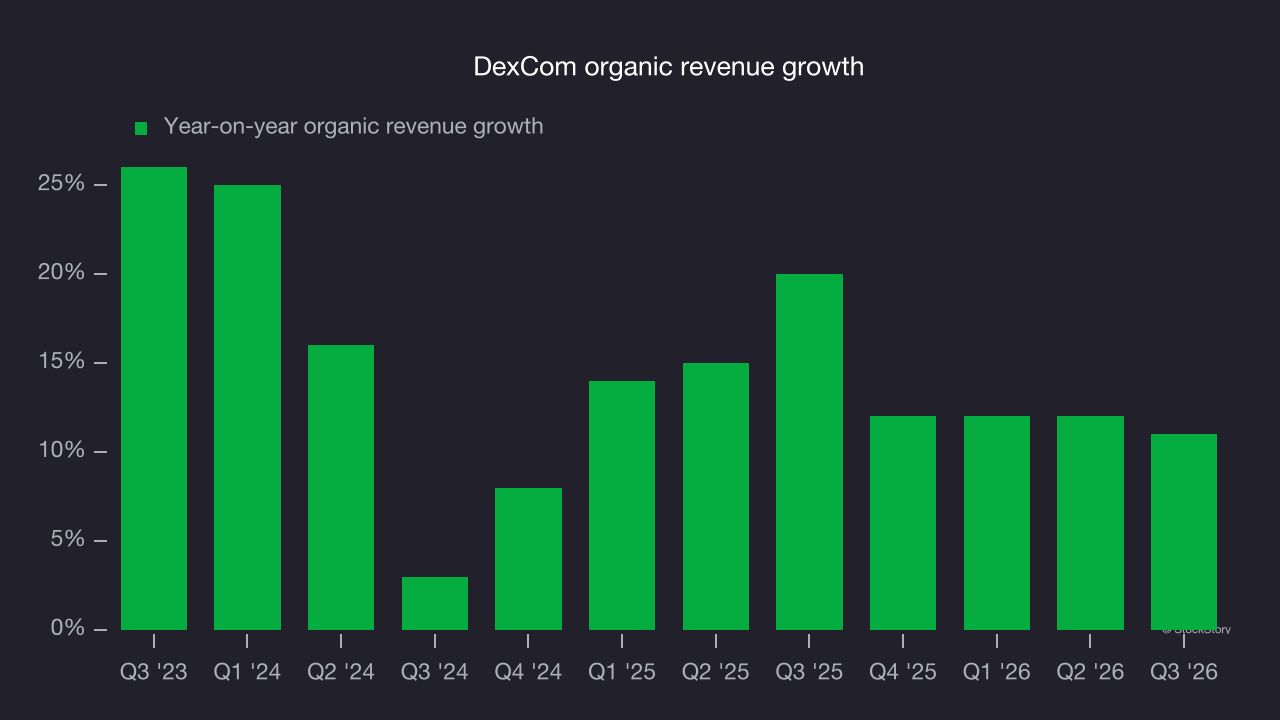
This quarter, DexCom reported year-on-year revenue growth of 11.2%, and its $1.34 billion of revenue exceeded Wall Street’s consensus estimates by 1.2%.
Looking ahead, sell-side analysts expect revenue to grow 10.6% over the next 12 months, according to S&P, a deceleration versus the last two years. Still, this is a solid projection and indicates the market expects success for its products and services.
Adjusted operating margin
DexCom has managed its cost base well over the last five years. It demonstrated solid profitability for a healthcare business, producing an average adjusted operating margin of 19.7%.
Looking at the trend in its profitability, DexCom’s adjusted operating margin rose by 13.6 percentage points over the last five years, as its revenue growth gave it operating leverage. More recently, the company’s trajectory has remained intact, as its margin has also increased by 5.2 percentage points on a two-year basis. These gains signal positive momentum.
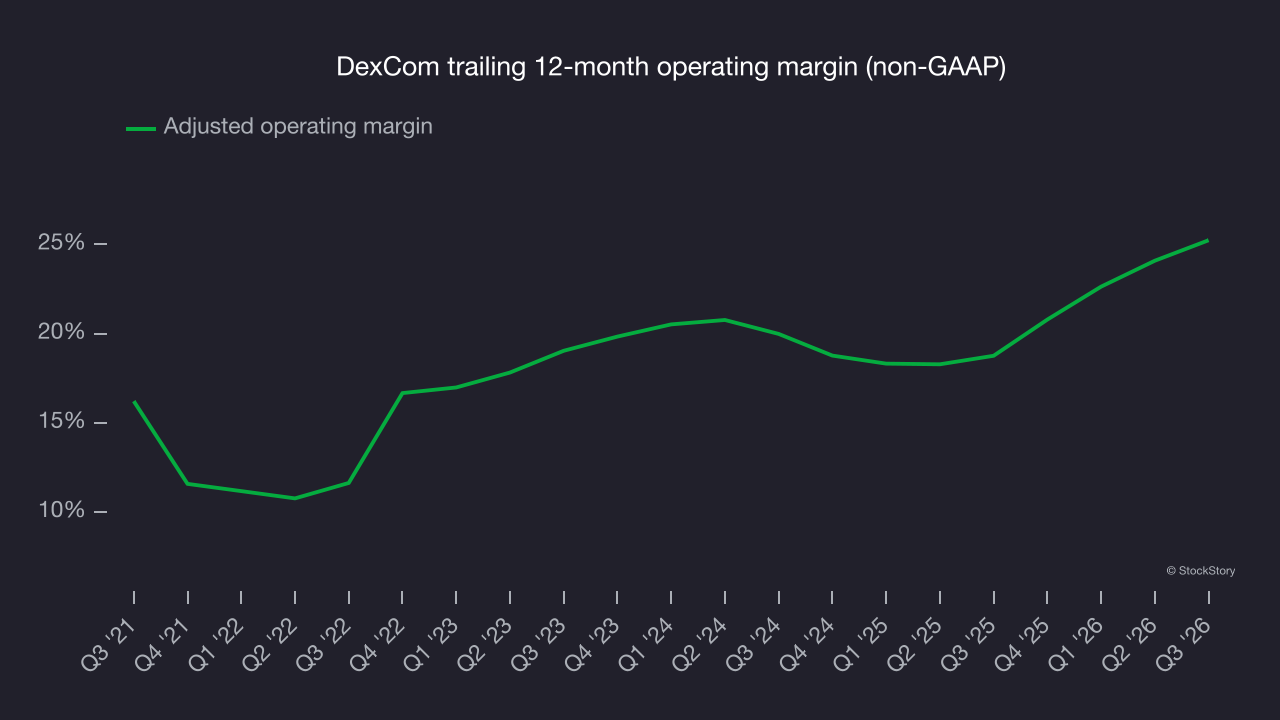
This quarter, DexCom generated an adjusted operating margin of 27.1%, up 4.5 percentage points year on year. This increase was a positive development and shows it was more efficient.
Earnings per share
We track the long-term change in earnings per share (EPS) for the same reason as long-term revenue growth. Compared to revenue, however, EPS highlights whether a company’s growth is profitable.
DexCom’s EPS grew at a 29.9% compounded annual growth rate over the last five years, higher than its 17.1% annualized revenue growth. This tells us the company became more profitable on a per-share basis as it expanded.
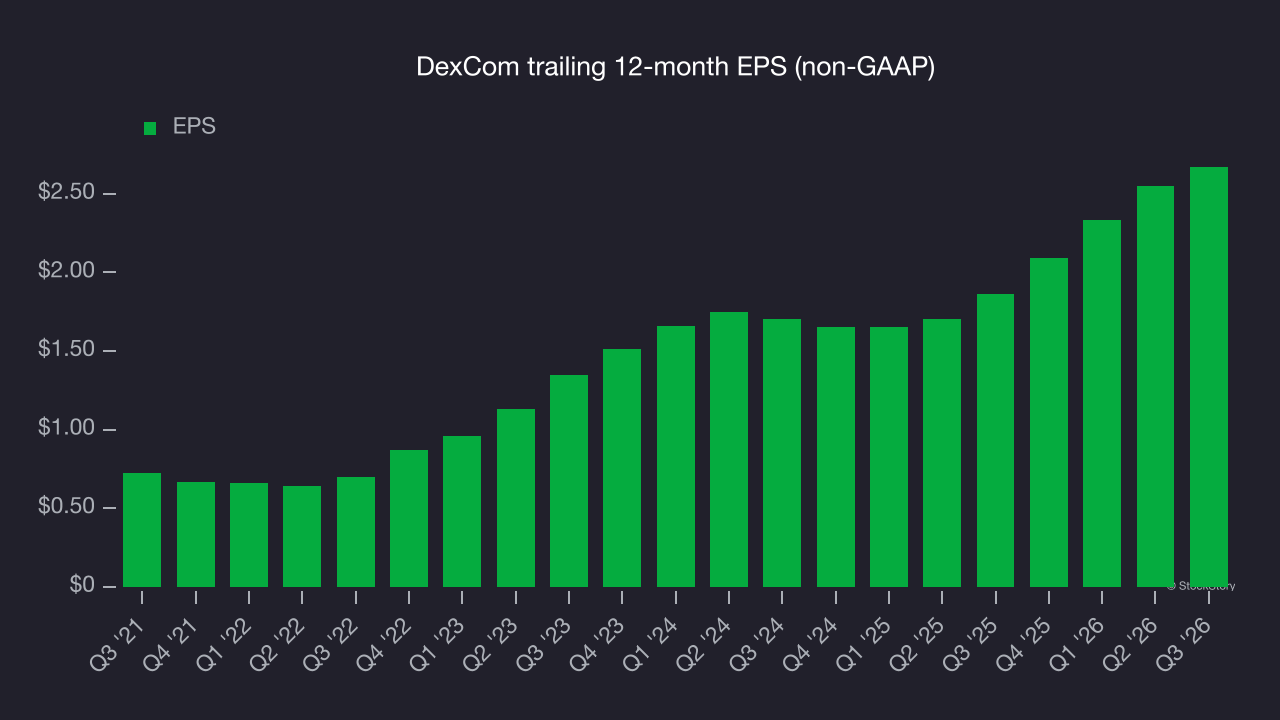
We can take a deeper look into DexCom’s earnings to better understand the drivers of its performance. As we mentioned earlier, DexCom’s adjusted operating margin expanded by 13.6 percentage points over the last five years. On top of that, its share count shrank by 10.9%. These are positive signs for shareholders because improving profitability and share buybacks boost EPS growth relative to revenue growth. 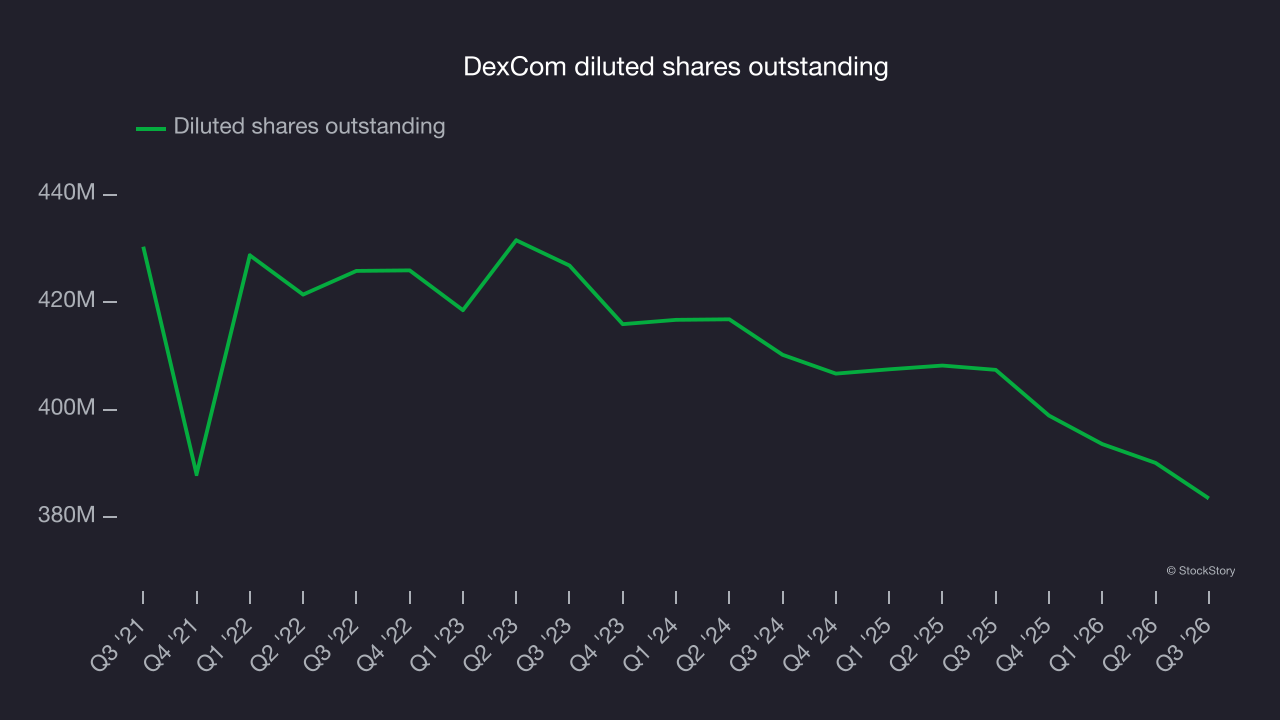
In Q3, DexCom’s adjusted EPS rose to $0.73 from $0.61 in the same quarter last year. This result beat analysts’ consensus estimates by 8.3%. Over the next 12 months, Wall Street expects DexCom’s full-year EPS to grow 10.4% from $2.67 to $2.95, according to S&P.
Key takeaways from DexCom’s Q3 results
DexCom’s Q3 results had some key positives: EPS beat analysts’ consensus estimates, and revenue narrowly topped Wall Street’s consensus. Shares remained flat at $80.59 immediately after the report.
When deciding whether to invest in DexCom, it’s important to consider its valuation, business quality and what happened in the latest quarter. Read the full research report here (it’s free).