
Cloud communications provider Bandwidth (NASDAQ: BAND) met Wall Street’s revenue expectations in Q3 2026, with revenue up 22% year on year to $234 million. Its non-GAAP profit of $0.50 per share was 6.1% above analysts’ consensus estimates.
For more on Bandwidth, read the full research report for free.
Bandwidth (BAND) Q3 2026 highlights:
- Revenue $234 million vs S&P analysts’ consensus estimates of $233 million (22% year-on-year growth, in line)
- Adjusted EPS $0.50 vs S&P analysts’ consensus estimates of $0.47 (6.1% beat)
- Adjusted EBITDA $34.8 million vs analysts’ consensus estimates of $33.55 million (14.9% margin, 3.7% beat)
- Adjusted EPS guidance Management slightly raised its full-year adjusted EPS guidance to $1.76 at the midpoint
- EBITDA guidance $124.5 million at the midpoint for the full year, in line with consensus estimates
- Operating margin 0.8%, up from -1% in the same quarter last year
- Free cash flow margin 14.1%, up from 10.8% in the previous quarter
- Market capitalization $1.56 billion
Revenue growth
Examining a company’s long-term performance can provide clues about its quality. Any business can have short-term success, but a top-tier one grows for years. Over the last five years, Bandwidth grew its revenue at a 12.7% compounded annual growth rate. Though this growth is acceptable on an absolute basis, revenue growth alone is not enough in the software sector, which can display significant earnings volatility. The bar for the sector is particularly high, reflecting the non-essential and hit-driven nature of the products and services offered. Additionally, five-year CAGR starts around Covid, when revenue was depressed then rebounded.
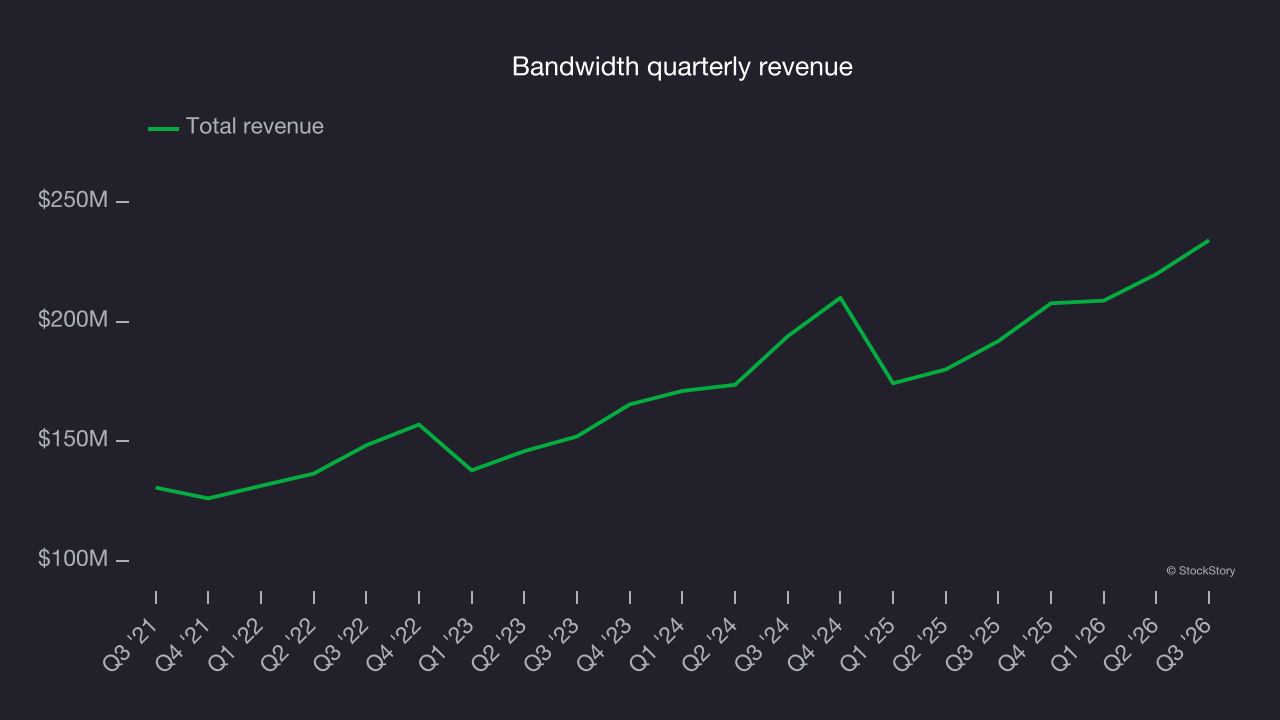
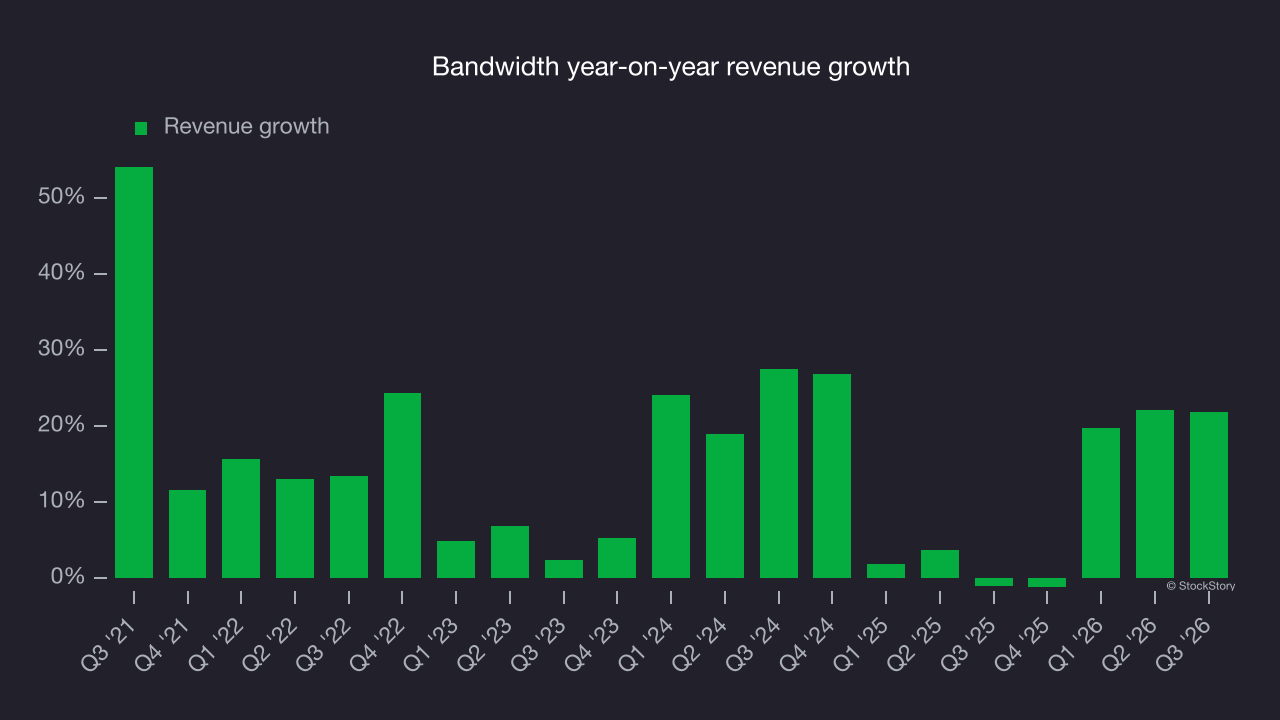
This quarter, Bandwidth’s year-on-year revenue growth of 22% was strong, and its $234 million of revenue was in line with Wall Street’s consensus estimates. Company management is currently guiding for a 337% year-on-year increase in revenue next quarter.
Looking further ahead, sell-side analysts expect revenue to grow 7.7% over the next 12 months, according to S&P, a deceleration versus the last two years. This projection is underwhelming and suggests its products and services will see some demand headwinds.
Customer acquisition efficiency
The customer acquisition cost (CAC) payback period represents the months required to recover the cost of acquiring a new customer. Essentially, it’s the break-even point for sales and marketing investments. A shorter CAC payback period is ideal, as it implies better returns on investment and business scalability.
It’s relatively expensive for Bandwidth to acquire new customers as its CAC payback period stood at 57.8 months this quarter. The company’s slow recovery of its sales and marketing expenses indicates it operates in a highly competitive market and must invest to stand out, even if the return on that investment is low.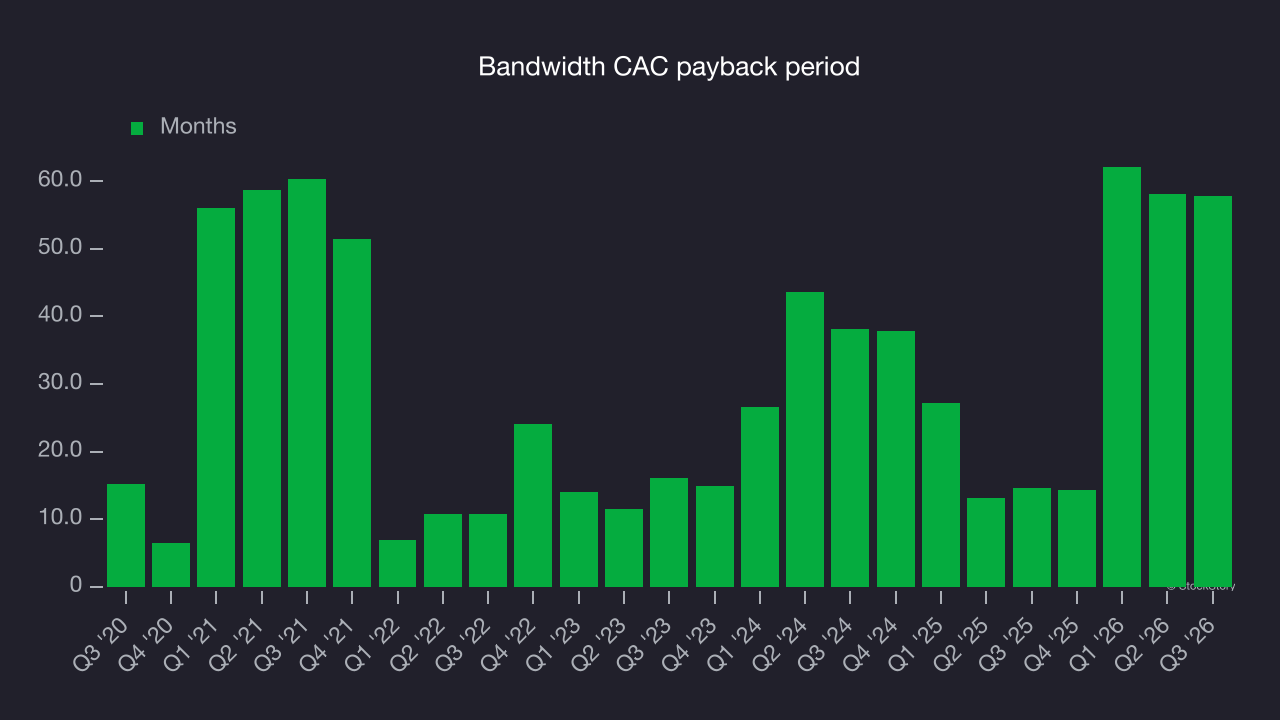
Key takeaways from Bandwidth’s Q3 results
Results were mixed, but investors were likely hoping for more, as shares plunged 13% to $42.03 immediately after the results.
Is Bandwidth a buy at its current price? That decision calls for considering valuation, business quality and the latest earnings. For more on Bandwidth, read the full research report here (it’s free).