As of December 23, 2025, the global technology landscape has transitioned from the speculative frenzy of the "AI Hype" to what analysts are calling the "Execution Era." At the epicenter of this transition sits Palantir Technologies (NYSE: PLTR). Once a mysterious, polarizing software contractor whispered about in the corridors of the Pentagon, Palantir has emerged in late 2025 as a dominant force in the S&P 500 and the architectural backbone for both Western military defense and Global 2000 industrial operations.
The company’s relevance has never been higher. With the recent explosion of "Agentic AI"—autonomous software agents capable of making operational decisions in real-time—Palantir has moved beyond simple data analytics to provide the "operating system" for the modern, AI-integrated enterprise. This deep dive explores how a company once dismissed as a "consulting-heavy shop" became one of the most valuable software entities in the world.
Historical Background
Palantir was founded in 2003 by a cohort of Silicon Valley veterans, most notably Peter Thiel, Alex Karp, and Stephen Cohen. Born in the immediate aftermath of the 9/11 attacks, the company was built on a singular premise: that the intelligence community lacked the tools to connect disparate data points to prevent catastrophes without sacrificing civil liberties.
The company’s early years were characterized by deep-state secrecy and a close relationship with In-Q-Tel, the CIA’s venture capital arm. For nearly a decade, Palantir’s primary customer was the U.S. government, providing the Gotham platform to help agencies like the FBI, NSA, and CDC track everything from terrorist cells to viral outbreaks.
The middle era of the company (the 2010s) saw the birth of Foundry, an attempt to bring the same data-fusion capabilities to the private sector. However, it wasn't until the company’s direct listing in 2020 and the subsequent launch of its Artificial Intelligence Platform (AIP) in 2023 that Palantir truly broke into the mainstream investor consciousness.
Business Model
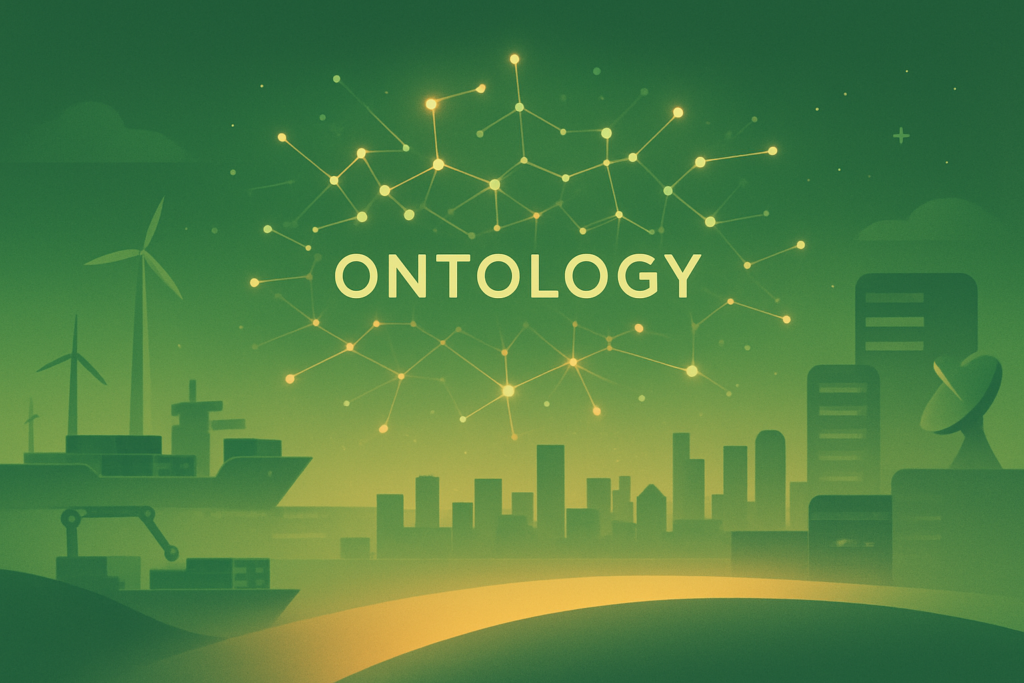
Palantir operates a high-moat, specialized software model that differs significantly from standard SaaS (Software as a Service) peers. Instead of selling simple applications, Palantir sells a digital "Ontology"—a map of an organization's entire data universe that allows non-technical users to interact with complex data.
The company generates revenue through four primary product lines:
- Gotham: Designed primarily for government and intelligence agencies.
- Foundry: The commercial equivalent, used by companies like BP, Airbus, and United Airlines.
- Apollo: A continuous delivery system that allows Palantir’s software to run in any environment, from the cloud to the "edge" (e.g., inside a drone).
- AIP (Artificial Intelligence Platform): The current growth engine, which integrates Large Language Models (LLMs) and autonomous agents into the Foundry and Gotham environments.
Revenue is roughly split 50/50 between Government and Commercial segments, a balance the company achieved in 2025 after years of heavy government concentration.
Stock Performance Overview
In the 2024–2025 period, Palantir has been one of the most prolific performers in the equity markets.
- 1-Year Performance: As of late 2025, the stock is up approximately 165% year-to-date, fueled by its landmark inclusion in the S&P 500 in September 2024.
- 5-Year Performance: Since its 2020 debut around $10 per share, the stock has seen massive volatility, including a painful slump in 2022, but has since reached all-time highs in the fourth quarter of 2025.
- Notable Moves: The inclusion in the S&P 500 served as a massive catalyst, forcing institutional index funds to purchase billions of dollars worth of PLTR shares, providing a floor for the stock's valuation.
Financial Performance
Palantir’s Q3 2025 earnings report, released in November, solidified its status as a "hyper-growth" blue chip.
- Revenue: Reported at $1.181 billion for the quarter, a 63% increase year-over-year.
- Profitability: The company marked its 12th consecutive quarter of GAAP profitability, a milestone that has silenced long-term critics who argued the company’s stock-based compensation would forever prevent real earnings.
- Rule of 40: Palantir boasts a "Rule of 40" score of 114%, an elite metric that combines its high revenue growth with healthy profit margins.
- Margins: Adjusted operating margins have expanded to over 35%, driven by the efficiency of its "Bootcamp" sales model.
Leadership and Management
The company is led by Alex Karp, a CEO who defies the typical Silicon Valley mold. With a PhD in social theory, Karp has become a prominent public intellectual, often speaking on the ethics of AI and the necessity of Western technological dominance. His leadership is marked by a refusal to apologize for Palantir’s work with the military.
Peter Thiel, the Chairman, remains a pivotal strategic figure, ensuring the company adheres to its "Zero to One" philosophy of building unique, non-commoditized monopolies. Other key leaders include CTO Shyam Sankar, who has been instrumental in the pivot toward "Agentic AI" and edge computing.
Products, Services, and Innovations
The most significant innovation of 2025 is Agentic Foundry. While 2023 was the year of the "Chatbot," 2025 has been the year of the "Agent." Palantir’s AIP now allows companies to deploy autonomous agents that can, for example, independently adjust supply chain orders based on a predicted hurricane or re-route power grids during a spike in demand.
Furthermore, Palantir has aggressively pursued "Edge AI," putting its software on hardware like satellites and autonomous combat vehicles. This "software-first" approach to hardware has given them a unique competitive edge in the defense sector.
Competitive Landscape
Palantir’s positioning is unique because it sits "on top" of traditional infrastructure.
- vs. Microsoft (NASDAQ: MSFT) and Amazon (NASDAQ: AMZN): While these giants provide the cloud storage (Azure and AWS), Palantir provides the "brain." Many enterprises use both, using Palantir to make sense of the data stored in the cloud.
- vs. Snowflake (NYSE: SNOW): Snowflake is a data warehouse; Palantir is an operational platform. In 2025, the "co-opetition" between the two has settled into a pattern where Snowflake holds the data and Palantir executes the logic.
- vs. C3.ai (NYSE: AI): While once considered a close peer, C3.ai has struggled to match Palantir’s scale and has largely retreated into niche industrial sectors.
Industry and Market Trends
The overarching trend in late 2025 is the Military AI Modernization. With global geopolitical tensions remaining high, Western governments have accelerated the "Software-Defined Warfare" trend. Palantir is the primary beneficiary of this shift.
In the commercial sector, the trend is Autonomous Operations. Companies are no longer satisfied with dashboards that show them what happened; they want systems that tell them what to do—and then do it. Palantir’s Ontology is the only mature product currently capable of this at an enterprise scale.
Risks and Challenges
Despite the stellar performance, Palantir is not without significant risks:
- Valuation: Trading at a Price-to-Sales (P/S) ratio exceeding 100x and a P/E over 400x, the stock is "priced for perfection." Any slight miss in growth could lead to a massive correction.
- Regulatory Scrutiny: The European Union’s AI Act and various data sovereignty laws pose a threat to Palantir’s expansion in the EU.
- Concentration: While commercial revenue is growing, a large portion of its growth still relies on high-value, multi-year government contracts that can be subject to political whims.
Opportunities and Catalysts
The primary catalyst for 2026 and beyond is the Land-and-Expand strategy powered by bootcamps. By 2025, Palantir has conducted over 1,500 AIP bootcamps. Each of these represents a potential multi-million dollar contract as these companies move from "testing" to "full deployment."
Additionally, the potential for a "National AI Strategy" in the U.S. could lead to a consolidated federal data platform, of which Palantir would be the most logical architect.
Investor Sentiment and Analyst Coverage
Investor sentiment remains divided but leans increasingly bullish. Retail investors, often called "Palantirians," have a cult-like devotion to the stock, which has historically provided high liquidity and a strong retail bid.
On the institutional side, the skepticism of 2021–2022 has largely evaporated. Major firms like BlackRock and State Street have significantly increased their holdings following the S&P 500 inclusion. Wall Street analysts, once critical of the "opaque" business model, are now competing to raise price targets as the company provides clearer guidance on AIP monetization.
Regulatory, Policy, and Geopolitical Factors
Palantir’s "Western-only" stance is a double-edged sword. By refusing to do business with adversaries like China and Russia, they have secured the highest levels of trust with the U.S. and its allies (the "Five Eyes").
However, this limits their Total Addressable Market (TAM). In 2025, the company has leaned heavily into "Sovereign AI"—helping countries like the UK and Germany build their own AI capabilities that don't rely on Chinese hardware or Silicon Valley "black boxes" that don't comply with local laws.
Conclusion
Palantir Technologies enters 2026 as a titan of the AI era. It has successfully navigated the transition from a niche military contractor to a diversified global software powerhouse. Its Q3 2025 results prove that its "Agentic AI" vision is not just theoretical but is driving billions in revenue.
However, for investors, the central question remains valuation. While the company is undeniably a "winner" in the AI race, its stock price reflects a high level of optimism. Investors should watch for the continued expansion of the U.S. commercial segment and any potential regulatory headwinds in the European market. Palantir is no longer a speculative bet; it is a core component of the modern technological infrastructure, but its journey forward will require continued flawless execution to justify its premium status.
This content is intended for informational purposes only and is not financial advice.