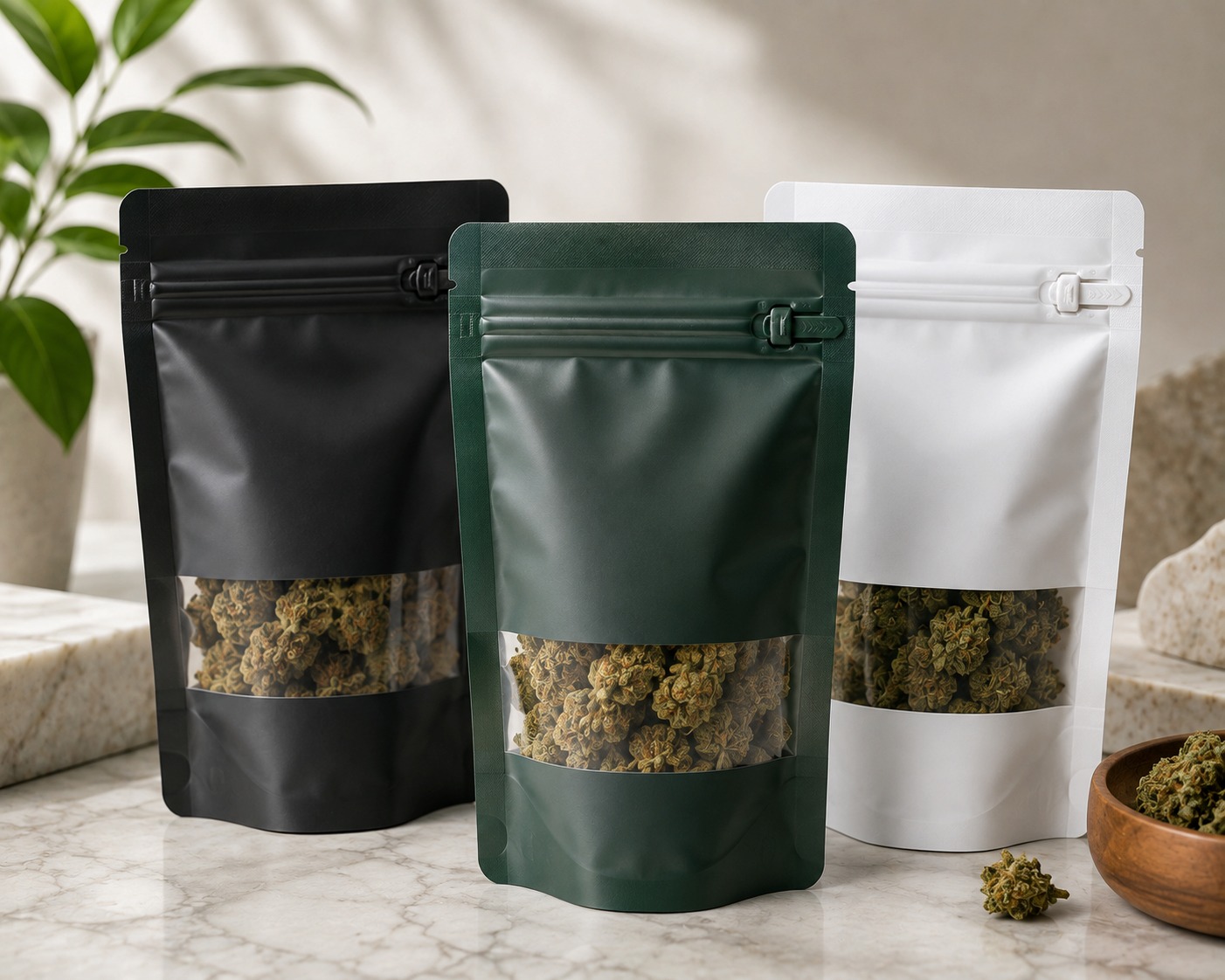
Packaging choices are seldom made with a logo or color palette in mind, but rather with the product. Even before any piece of art is endorsed, a brand must answer a more challenging query: what does this product actually have to endure to survive the shelf, the shipping container and the hands of the customer? The question is even more important when it comes to safety regulations, i.e., where Child Lock Mylar Bags come in. The initial production of the material, closure and construction is the most cost-efficient, safeguards the product and maintains a brand in line with the requirements of a specific category, such as pharmaceuticals, supplements and cannabis.
Understand the Product Before You Touch the Design
The actual working pouch is determined by weight, texture, sensitivity to moisture, and susceptibility to oxygen and light. A thick viscous liquid acts quite differently on the way than a light brittle flower material and a film system keeping one dry may not help the other in the slightest. That is why seasoned packaging groups begin by conducting a product audit - determining shelf-life, sensitivity to humidity and fragility - before the first mockup is sketched. This step is one of the most frequent reasons why brands have to be reprinted with packaging within a year of release.
Match the Material Structure to the Job
Child Resistant Mylar Bags get their reputation or miss it in their performance as Barrier. The number of layers, thickness and lamination of the film used in the film determine the effectiveness of the film in blocking oxygen, moisture and UV light, which directly influence the shelf life. A single layer film that is thin may be sufficient when the turnover of a product is short, but most products that require a longer dating period will require a multi-layered barrier film with a foil or metallized backing.
Design for How the Bag Will Actually Sit on a Shelf
A pouch that may appear fantastic during a render may fail miserably when it is among twenty rivals. The width of the base gussets, footprint and overall stability dictate whether a bag would be upright and frontal facing and readable at eye level. Dispensaries and retailers especially prefer packaging that does not tip or slump as it directly influences the way a product photographs and displays.
Pick a Closure That Matches How the Product Is Used
Closures aren't interchangeable, even within the same product category. Snacks, pet snacks or flower that the customer dips into repeatedly are best with resealable zippers, whereas a heat seal is usually popular with single-use or tamper-evident formats. In the case of regulated products, it is common practice to use a heat seal with a certified push-and-turn or slide-lock system to comply with the Custom Child Resistant Mylar Bags compliance requirements and not have to compromise the ease of use to the adult customer.
Plan for Shipping, Not Just the Shelf
An engineered pouch that is designed to display only in the retail store can collapse the minute it gets into a distribution line. Pile pressure, vibration, temperature fluctuations and repetitive handling all press and strain seals and seams in a manner not disclosed by shelf testing. International or nationwide shipping brands may also require stronger seals and may require a slightly heavier gauge film than the packaging of a purely local product would need, just because the packaging must endure a longer, more coarse journey before it ever gets to a customer.
Test Before You Commit to a Full Production Run
Sampling is not a ritual; it is the poorest insurance that a brand can purchase. Conducting a real fill and seal test with the actual product, followed by recreating the conditions of transport, is likely to expose issues that cannot be seen on paper: a zipper that does not fit, a seal that does not perform under heat, a gusset that collapses under pressure. It is much cheaper to identify these problems with a small batch of trials than with ten thousand units in print.
Why the Manufacturer You Choose Matters as Much as the Specs
Even a well-designed pouch will disintegrate, literally sometimes, unless the manufacturer of the pouch has the correct equipment, knowledge of film or quality checks. It may be a good idea to ask some sharp questions before you sign off on a big order:
- Do they make internally, or source major operations?
- Are they able to describe a film and material trade-offs?
- Does the first print match the second print? The thousandth?
- Do they sample before making a decision on bulk production?
- Will their manufacturing ability increase with the demand without compromising quality?
The ability to collaborate with a manufacturer complete with film selection, printing, sealing and quality control under one roof is likely to make it much easier to maintain the same results with the first sample and the huge reorder. Another example is Kwick Packaging, which, depending on what the actual product needs, offers custom mylar bags with a variety of material structures, closures, sizes and finishes.
Who's Building Custom Packaging Solutions Worth Watching in the US
A few American packaging firms have established a reputation for quick turnaround coupled with real customization. Here is a brief overview of how some of them are going about it - and how brands sourcing dispensary and retail packaging in the current market are increasingly benchmarking among suppliers, just as brands such as Dragon Chewer have been looking to trusted manufacturers to provide packaging of their own requirements.
Kwick Packaging
Kwick Packaging specializes in flexible packaging such as Child Lock Mylar Bags constructed with barrier film choices, child-resistant closures certified, and in-house printing and sealing. The reasons why that focus, in practice, is important were summed up by two customers:
"Chris helped me find these incredible sealed bags that not only look great but also keep my valuables safe. They are essential." Sandy
"Our customers often comment on how well-designed and functional these custom 8 oz mylar bags are. It's a win-win situation for us and them. These 8 oz bags are a reflection of our brand's personality. They've given our business a unique edge. Will ship again & again." Nicholas Hope
The trend in these reviews, in terms of durability, design consistency and getting a closer working relationship, is something to consider when deciding to source the next run of packaging in addition to price.
Brand My Dispo
Brand My Dispo has developed a niche in which dispensary-style packaging is the focus, providing pre-designed and semi-customized mylar choices that are designed to be fast, without needing to start with a blank page. It works well with smaller operators who require compliant packaging quickly, but it may not be as customizable as a full-custom run.
Plus Printers
Plus Printers will market as a larger printing-packaging store, offering boxes and flexible pouches (among others) on the same roof. This consolidation is convenient when several different kinds of packaging require printing, but it is also observed by buyers that highly specialized work of mylar is not necessarily their strongest.
Common Mistakes Brands Make With Child-Resistant Packaging
Some of these errors keep recurring: selecting a closure on a cosmetic appearance basis instead of a certification test, forgoing a week of lead time by omitting trial fills, grossly underestimating the impact a barrier film upgrade would have had on shelf life and approaching the manufacturer relationship as a strictly transactional one, instead of a consultative one. All these errors can be eliminated by simply repeating the sampling process and having a face-to-face discussion with the production team before making volume commitments.
The Bigger Picture
Child Resistant Mylar Bags is no longer a niche packaging market, but it is now a burgeoning, well-regulated and investment driven market. The market for child-resistant packaging is expected to reach USD 24-28 billion by 2024-25 and is forecasted to reach USD 33-50 billion by the early 2030s.
Though still the largest driver of demand, pharmaceuticals, the trend of cannabis legalization in more than a dozen U.S. states has spurred the growth of specialist packaging requirements to billions of dollars a year. Roughly USD 1.2 billion was spent on the mylar bags segment in 2024, particularly on resealable ziplock bags for food storage and cannabis packaging in flexible packaging.
In the end, Child Resistant Mylar Bags need to be protective, functional, aesthetically pleasing, and have a reliable manufacturing partner, on every order, every time.
FAQs
1. Why does a mylar bag make it child-resistant as opposed to resealable?
A child-resistant bag has a certified closing device, usually meeting one of the following standards, such as the U.S. Poison Prevention Packaging Act, with a certain motion (a push-and-turn or slide-and-pinch) which young children can usually not duplicate, but adults can reasonably easily perform.
2. What additional cost does child-resistant packaging cost over regular mylar bags?
There are cost differences depending on the order quantity, film thickness, and closure type, though certified child resistant closures typically impose a small per unit premium over standard zippers. The difference in added compliance and reduced liability is worth it to many brands, particularly in regulated categories.
3. Are the custom child-resistant mylar bags fully printable and finishable?
Yes. The certification of child-resistance is based on the closure mechanism and not the printable surface area; thus, brands can still print in full color, on matte or gloss surfaces and size their own and comply with the requirements.