A comprehensive guide for small business owners ready to build a powerful online presence.

What Makes a Business Website Truly Work?
A business website is not just a digital brochure. It is your hardest-working employee, available 24/7, answering questions, building trust, and turning strangers into paying customers. But not every website does this well.
The difference between a website that works and one that sits quietly collecting dust comes down to three things: how it looks, how it performs, and how well it guides visitors toward taking action. Choosing the right website design plans plays a crucial role in getting all three right from the start.
This guide answers every major question business owners ask before, during, and after building a website, covering design, structure, growth, and results, including how to select the best website design plans for long-term success.
What Should Every Business Website Include?
Before discussing design or color, start with the essentials. Every effective business website needs these core elements:
A Clear Value Proposition Above the Fold
The moment a visitor lands on your homepage, they should instantly understand what you do, who you serve, and why they should choose you. This message, your value proposition, must appear at the top of the page without requiring any scrolling.
Easy-to-Find Contact Information
Phone number, email address, and location (if applicable) should appear in the header and on a dedicated Contact page. Visitors who cannot find your contact details in seconds will leave.
Trust Signals
Reviews, testimonials, certifications, years in business, and client logos all communicate credibility. Place these prominently, especially on your homepage and service pages.
A Strong Call to Action (CTA)
Every page should tell the visitor what to do next. "Request a Free Quote," "Book a Consultation," or "Call Us Today" are examples of clear, action-oriented CTAs that reduce hesitation and guide behavior.
Mobile-Friendly Design
More than 60% of web traffic now comes from mobile devices. A website that looks broken or is hard to navigate on a phone is costing you customers daily.
How Many Pages Should a Small Business Website Have?
There is no single magic number, but most small business websites perform best with these core pages:
- Home: Overview, value proposition, key services, CTAs
- About: Your story, mission, team, and credentials
- Services or Products: One page per major service or offering
- Testimonials or Case Studies: Social proof from real clients
- Contact: Multiple ways to reach you, embedded map if relevant
- Blog (optional but powerful): Builds authority and drives organic search traffic
For most local and service-based businesses, 5 to 8 pages is a strong starting point. Adding a blog over time can significantly expand your visibility in search results.
What Color Scheme Is Best for a Business Website?
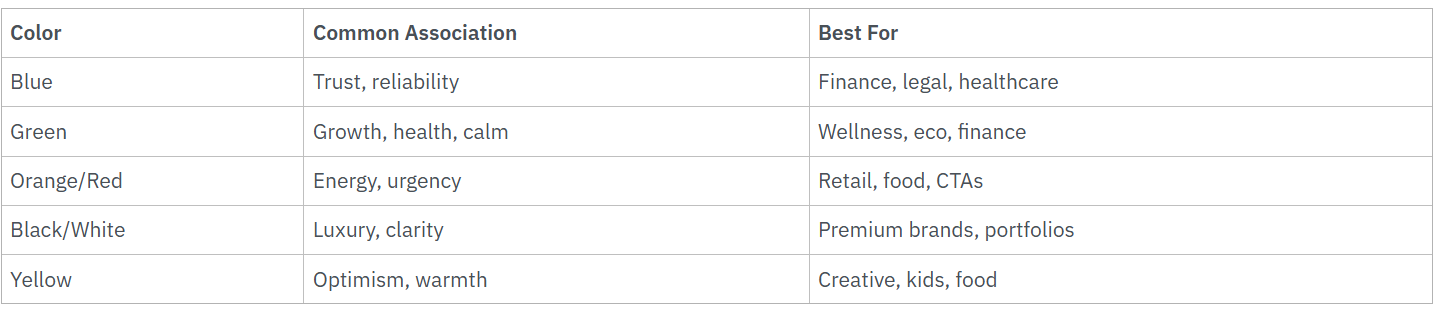
Color is one of the most underestimated aspects of web design. The right palette communicates professionalism, sets expectations, and even influences buying decisions.
General Color Psychology for Business Websites
Practical Rules to Follow
Limit your palette. Two to three colors (a primary, an accent, and a neutral) is enough. More colors create visual chaos.
Ensure contrast. Text must be easy to read on any background. Poor contrast is both an accessibility issue and a trust-killer.
Stay consistent with your brand. If you already have a logo, pull your colors from it. Consistency across your website, social media, and print materials builds recognition.
How to Get a Website Made for Your Business
The process of getting a website built can feel overwhelming. Here is a clear breakdown of how it works when you partner with a professional web design team.
Step 1: Discovery and Goal Setting
Before any design begins, a good web team will ask about your business goals, target customers, competitors, and what success looks like for you. This shapes every decision that follows.
Step 2: What Information Do You Need to Give a Web Designer?
To avoid delays and get the best results, prepare the following before your first meeting:
- Your business name, logo, and brand colors (if available)
- A list of your services or products with descriptions
- Photos of your business, team, or work (professional photos are ideal)
- Examples of websites you like, and specifically what you like about them
- Your target audience description
- Any existing social media profiles or marketing materials
- Your preferred domain name (website address), if you have one
The more detail you provide upfront, the faster and smoother the design process goes.
Step 3: Design, Feedback and Revisions
Your designer will present mockups or wireframes showing the layout and visual direction. This is your opportunity to give feedback before any code is written.
Step 4: Development and Testing
Once the design is approved, the site is built and tested across devices (desktop, tablet, phone) and browsers to ensure everything functions correctly.
Step 5: Launch and Handover
After final review, the site goes live. A professional web team will walk you through how to use and update it.
Building Digital Success with San Antonio Based Company Odyssey Design and Interactive Web Design Process
If you are looking for a team that takes this process seriously, Odyssey Design and Interactive, a San Antonio based web design company, brings a structured, results-focused approach to every project.
Their web design process is built around one goal: creating websites that do not just look great but actively help businesses grow.
What Sets Their Process Apart
Strategy before design. Odyssey begins every project with a deep understanding of the client's business, audience, and competitive landscape. Design decisions are made with purpose, not aesthetic preference alone.
Clean, conversion-focused design. Every page layout is structured to guide visitors toward a clear next step, whether that is calling, booking, or buying.
Built for real business owners. Their websites are designed to be manageable, so business owners can update content, add blog posts, and make basic changes without needing a developer every time.
Local expertise, broad vision. Being rooted in San Antonio means Odyssey understands local markets, community trust factors, and regional business culture, while delivering work that competes at any level.
For businesses ready to stop settling for a mediocre online presence, Odyssey Design and Interactive offers the experience and process to build something that genuinely works.
Can You Update Your Website Yourself After It Is Built?
Yes, and you should insist on it. A website you cannot update is a website that goes stale.
Most professional websites today are built on content management systems (CMS) like WordPress, Webflow, or Squarespace. These platforms allow you to:
- Edit text and update pricing without touching code
- Add new blog posts or portfolio pieces
- Upload new photos or videos
- Adjust contact details and business hours
Before your site launches, ask your web designer for a brief training session on how to use the backend. Also confirm who handles software updates, security patches, and backups, which are often covered under a maintenance plan.
How Can a Website Help Grow Your Business?
A well-built website is one of the most cost-effective growth tools available to a small business. Here is how it works in practice:
It Works While You Sleep
Unlike a sales rep or a storefront, your website is open every hour of every day. Visitors can learn about your services, read reviews, and contact you at 2am on a Sunday.
It Builds Credibility Before You Say a Word
Studies consistently show that consumers check a business's website before making a purchase decision. A polished, professional website signals that you are established, trustworthy, and serious about your work.
It Drives Organic Traffic Through Search
When your website includes well-written content with relevant keywords and follows search engine best practices, it can attract visitors who are actively searching for what you offer, without paying for ads.
It Captures and Converts Leads
Contact forms, quote request buttons, email signup boxes, and click-to-call links all turn passive visitors into active prospects. A good website is not just informational; it is a lead generation machine.
Does Having a Website Help Get More Customers?
The direct answer is yes, but only if the website is built with the customer in mind.
A website that is slow to load, hard to navigate, or unclear about what you offer will drive potential customers away. On the other hand, a fast, clear, and trustworthy website can consistently bring in new business without ongoing advertising spend.
Key factors that determine whether your website helps win customers:
- Page load speed: Visitors abandon sites that take more than 3 seconds to load
- Clear messaging: Visitors should know within 5 seconds what you do and who you help
- Social proof: Reviews and testimonials dramatically increase conversion rates
- Mobile experience: A site that looks broken on a phone loses the majority of modern visitors
How Do You Know If Your Website Is Working Well?
Once your website is live, track performance using free tools like Google Analytics and Google Search Console. Key metrics to monitor:
- Traffic: How many visitors are coming to your site each month?
- Bounce rate: What percentage leave immediately without taking any action?
- Conversion rate: How many visitors fill out a form, call, or make a purchase?
- Search rankings: Are you appearing in results when people search for your services?
- Page speed: Run a free test at PageSpeed Insights to check load time
Review these numbers monthly. If traffic is high but conversions are low, your design or messaging may need adjustment. If traffic is low, your content or SEO strategy needs attention.
Final Thoughts
Getting a business website that looks great, attracts customers, and actually works is not about picking a pretty template. It requires clear strategy, intentional design, the right content, and a team that understands your goals.
Whether you are starting from scratch or rebuilding something that is not performing, the principles in this guide give you a clear roadmap, and working with the right partner like Odyssey Design can make the entire process faster, smoother, and far more effective.
Your website is often the first impression your business makes. Make it count.