On January 27, 2026, the industrial landscape of the United States stands at a crossroads of technological evolution and geopolitical shifts. At the center of this transformation is Nucor Corporation (NYSE: NUE), the nation's largest steel producer and a pioneer of the mini-mill revolution. Once a struggling conglomerate, Nucor has reinvented itself into a diversified industrial powerhouse that defines the "Made in America" ethos. As global supply chains continue to realign and domestic infrastructure receives renewed fiscal attention, Nucor’s role as the backbone of U.S. manufacturing has never been more relevant. This deep dive examines the company's journey, its recent financial triumphs, and why it remains a bellwether for the broader American economy.
Historical Background
Nucor’s origin story is one of the most unlikely transformations in corporate history. The company traces its lineage back to Ransom E. Olds, the founder of Oldsmobile, who established the REO Motor Car Company in 1905. Following a series of reorganizations and a brush with bankruptcy, the entity emerged in 1955 as the Nuclear Corporation of America, a disparate conglomerate involved in everything from nuclear instrumentation to rare earth minerals.
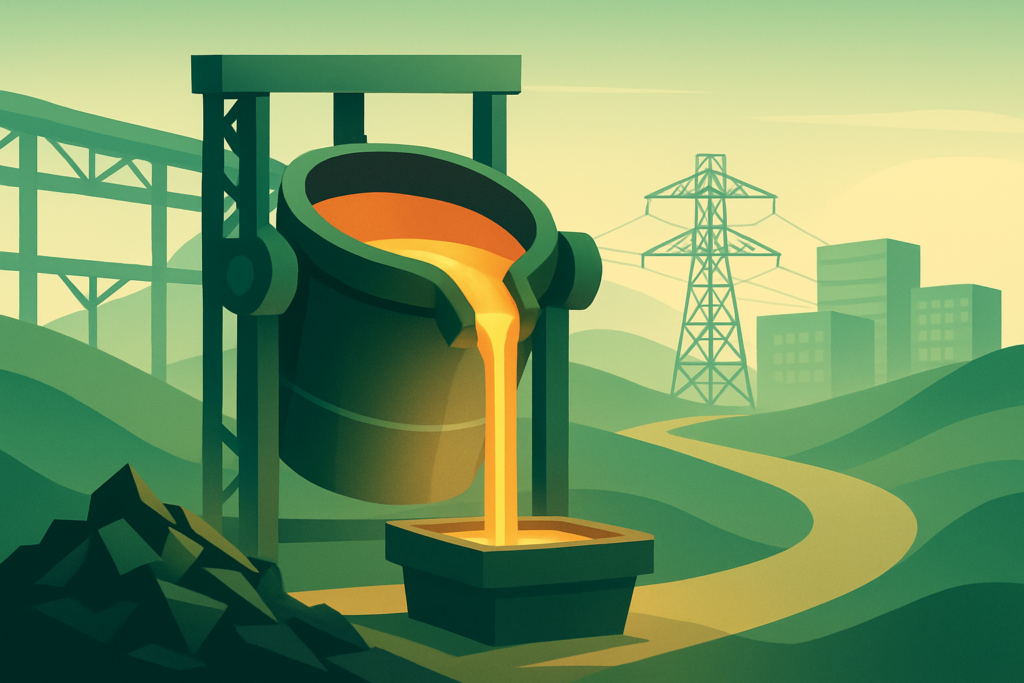
The true pivot occurred in 1965 when Ken Iverson, a visionary leader within the company’s Vulcraft division, was named President. Faced with insolvency, Iverson made the radical decision to divest nearly all non-core assets and bet the company's future on steel. In 1969, Nucor opened its first Electric Arc Furnace (EAF) mini-mill in Darlington, South Carolina. Unlike traditional integrated mills that relied on coal-fired blast furnaces, Iverson’s mini-mills melted recycled scrap metal, a faster and significantly cheaper process. This technological gamble laid the foundation for the modern Nucor, which officially adopted its current name in 1972 and has since grown into a Fortune 500 titan through a relentless focus on low-cost production and a decentralized management philosophy.
Business Model
Nucor operates a vertically integrated, highly flexible business model anchored by three primary segments:
- Steel Mills: This is the core engine, producing sheet, plate, bar, and structural steel. Nucor operates over 25 scrap-based EAF mills across the U.S.
- Steel Products: A high-margin downstream segment that manufactures finished goods such as steel joists and girders (via the Vulcraft brand), metal buildings, fasteners, and specialized products like overhead doors (following the 2022 acquisition of C.H.I. Overhead Doors).
- Raw Materials: This segment ensures a steady supply of inputs, including ferrous and non-ferrous scrap through The David J. Joseph Company and Direct Reduced Iron (DRI) from facilities in Louisiana and Trinidad.
Nucor’s competitive advantage stems from its decentralized structure, where mill managers have significant autonomy over their operations, and a pay-for-performance incentive system that ties employee compensation directly to production quality and efficiency.
Stock Performance Overview
Nucor has long been a favorite of long-term "dividend growth" investors. As of late January 2026, the stock has demonstrated exceptional resilience and growth:
- 1-Year Performance: Over the past 12 months, NUE has delivered a total return of approximately 51.25%, fueled by strong infrastructure demand and a consolidation trend within the domestic steel industry.
- 5-Year Performance: The stock has achieved a price Compound Annual Growth Rate (CAGR) of 26.49%, reflecting the benefits of the post-pandemic industrial boom and strategic acquisitions.
- 10-Year Performance: On a decade-long horizon, NUE has maintained a CAGR of 17.79%, significantly outperforming the broader industrial sector.
Nucor is a celebrated "Dividend King," having increased its base dividend for over 50 consecutive years—a rarity in the cyclical materials sector.
Financial Performance
In its most recent earnings report released on January 26, 2026, Nucor posted results that highlighted its operational efficiency despite a volatile macro environment.
- Q4 2025 Results: Net sales reached $7.69 billion, with net earnings of $378 million ($1.64 per diluted share). While slightly below some consensus estimates, the company maintained a healthy EBITDA of $918 million.
- Margins and Revenue: For the full year 2025, revenue stood at $31.88 billion. Operating margins remained robust at approximately 8-10%, well above the historical average for integrated steelmakers.
- Balance Sheet: Nucor remains a fortress of stability with $2.70 billion in cash and short-term investments and a total-debt-to-EBITDA ratio safely below 2.0x. This financial flexibility has allowed the company to continue its aggressive share repurchase program and capital expenditure plans.
Leadership and Management
The leadership at Nucor is characterized by stability and internal promotion. Leon J. Topalian, who has been with the company since 1996, serves as Chair and CEO. Topalian has overseen a period of massive capital reinvestment, focusing on "higher-value" steel products and decarbonization.
In a recent leadership transition effective January 1, 2026, Stephen D. Laxton was promoted to President and Chief Operating Officer. Laxton, previously the CFO, is tasked with streamlining operations as Nucor integrates its newly opened facilities in North Carolina and Arizona. The management team is widely respected for maintaining the "Nucor Culture"—a lean corporate office (fewer than 100 people) that supports a workforce of over 32,000 "teammates."
Products, Services, and Innovations
Innovation at Nucor is currently focused on two pillars: sustainability and value-added expansion.
- Econiq
 : Nucor’s "green steel" brand, Econiq, is the world’s first net-zero carbon steel produced at scale. By early 2026, it has become a preferred choice for automotive and tech companies (like data center builders) looking to reduce their Scope 3 emissions.
 - Fusion Energy Partnership: In a bold move into R&D, Nucor invested $35 million in Helion Energy to develop a 500 MW fusion power plant. This partnership aims to provide zero-carbon baseload electricity to Nucor’s mills by 2030, potentially decoupling steel production costs from volatile energy markets.
- Downstream Growth: Nucor has aggressively expanded its specialized steel products, which now account for roughly 33% of total revenue, up from 24% four years ago. This shift reduces the company's exposure to commodity steel price swings.
Competitive Landscape
The U.S. steel market is dominated by a few major players, with Nucor holding the top spot:
- Nucor Corp (NUE): ~18.1% market share. Its EAF model provides a structural cost advantage and lower carbon footprint compared to traditional blast furnaces.
- Steel Dynamics (NASDAQ: STLD): ~10.3% market share. A close rival that also uses EAF technology and maintains high-profit margins.
- Nippon Steel / US Steel: Following the landmark acquisition in 2025, the combined entity (operating as U.S. Steel (NYSE: X)) holds a ~9.1% share, leveraging Japanese R&D to compete in the high-end automotive segment.
- Cleveland-Cliffs (NYSE: CLF): The primary integrated producer, focusing on the automotive sector and controlling its own iron ore supply.
Nucor’s competitive edge lies in its product diversity and geographic footprint, which minimizes logistics costs by placing mills near customers and scrap sources.
Industry and Market Trends
As we enter 2026, the metals sector is benefiting from several tailwinds:
- Industrial Demand Rebound: Analysts project a steel demand increase of 1.8% to 3.4% in 2026, driven by a surge in data center construction and power grid modernization.
- Onshoring: The trend of moving manufacturing back to North America continues to accelerate, increasing the domestic consumption of structural and bar steel.
- The "One Big Beautiful Bill" Act (OBBBA): A significant policy shift in late 2025 has redirected industrial stimulus toward traditional infrastructure and domestic manufacturing, providing a multi-year floor for steel volumes.
Risks and Challenges
Despite its strengths, Nucor faces several headwinds:
- Raw Material Volatility: While Nucor recycles scrap, the price of high-quality scrap and pig iron is subject to global supply shocks.
- Geopolitical Friction: Recent trade tensions with Canada—historically a key trading partner—have disrupted some supply chains, leading to higher costs for certain inputs.
- Cyclicality: The steel industry remains inherently cyclical. A broader economic recession could dampen demand in the non-residential construction sector, Nucor's largest end market.
- Regulatory Scrutiny: Increased environmental regulations on "legacy" carbon emissions could raise compliance costs, though Nucor's EAF model makes it less vulnerable than its integrated competitors.
Opportunities and Catalysts
- Infrastructure Investment and Jobs Act (IIJA): The multi-year rollout of federal infrastructure spending remains a massive catalyst. Nucor’s "Made in America" status makes it a primary beneficiary of "Buy America" requirements.
- M&A Potential: With a pristine balance sheet, Nucor is well-positioned to acquire smaller, specialized fabricators or tech-forward materials companies.
- Energy Transition: The massive expansion of wind, solar, and nuclear power requires significant steel intensity. Nucor’s focus on heavy plate and structural steel directly serves this market.
Investor Sentiment and Analyst Coverage
Wall Street maintains a generally positive outlook on Nucor. The consensus rating is a "Moderate Buy," with price targets ranging from $180 to $200.
- Institutional Ownership: Approximately 76.5% of Nucor’s shares are held by institutional investors, including major firms like Vanguard and BlackRock.
- Analyst Views: JPMorgan and Citi have recently highlighted Nucor’s "earnings power" heading into Q1 2026, citing expected increases in realized prices and shipping volumes. Some hedge funds have shifted capital into NUE as a "cyclical recovery" play following the stabilization of interest rates.
Regulatory, Policy, and Geopolitical Factors
The regulatory environment in early 2026 is defined by protectionism and stimulus.
- Section 232 Tariffs: The U.S. has maintained—and in some cases intensified—tariffs on foreign steel, with a 50% tariff regime on several non-allied nations. This protects domestic pricing but creates a complex geopolitical landscape.
- Trade with Canada: The recent drop in steel imports from Canada (down over 65% year-over-year) has tightened the domestic market, allowing Nucor to capture more volume, though it risks retaliatory measures.
- Environmental Policy: The Global Steel Climate Council (GSCC) standards are increasingly being adopted, and Nucor’s leadership in low-carbon steel positions it favorably as the U.S. moves toward stricter industrial emission caps.
Conclusion
Nucor Corporation (NUE) remains a titan of American industry, blending a storied history with a forward-looking strategy. Its dominance in EAF technology and its strategic shift toward high-value downstream products have shielded it from the worst of the commodity cycles that historically plagued the steel sector.
As of January 2026, investors should keep a close eye on the pace of infrastructure spending and the integration of Nucor’s new production capacities. While geopolitical tensions and raw material costs present ongoing risks, Nucor’s "Dividend King" status and fortress balance sheet provide a margin of safety that few industrial peers can match. For those looking to bet on the long-term re-industrialization of North America, Nucor remains a foundational holding.
This content is intended for informational purposes only and is not financial advice.