Today’s Date: January 16, 2026
Introduction
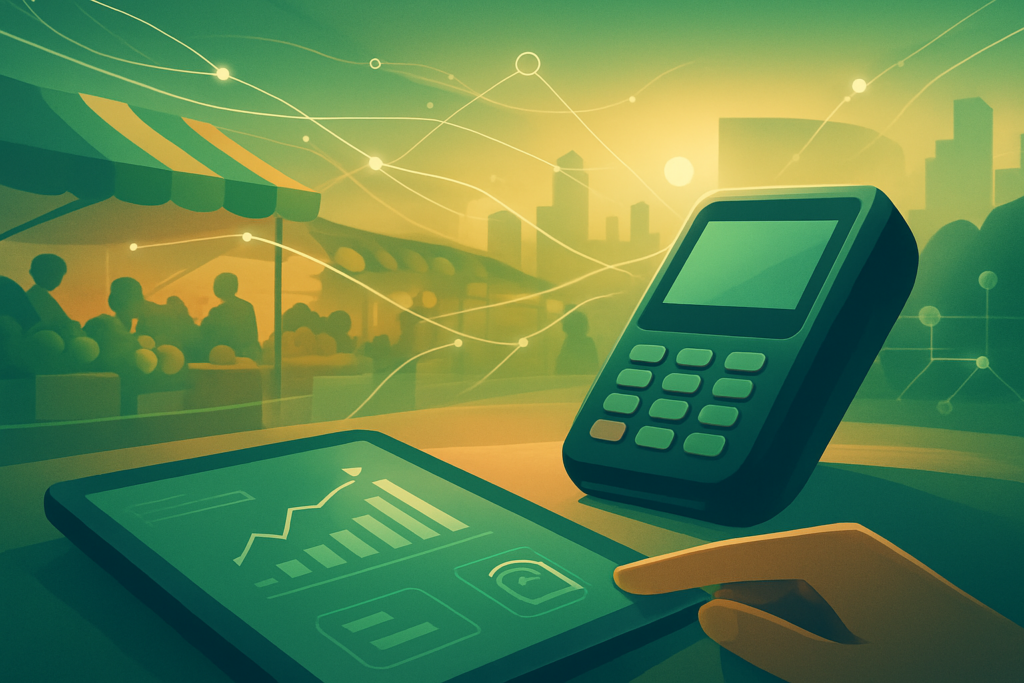
As we enter 2026, PayPal Holdings, Inc. (NASDAQ: PYPL) finds itself at a critical juncture in the history of digital finance. Once the undisputed king of the online "checkout button," the company has spent the last two years under the aggressive leadership of CEO Alex Chriss, attempting to shed its image as a legacy fintech player. The focus has shifted from sheer user growth to a sophisticated, AI-driven "omnichannel" ecosystem. However, this transformation is occurring against a backdrop of intense regulatory volatility, specifically regarding the Consumer Financial Protection Bureau (CFPB) and the burgeoning Buy Now, Pay Later (BNPL) sector. This article explores PayPal’s strategic pivot, its financial health, and the regulatory rollercoaster that has defined its most recent fiscal year.
Historical Background
PayPal’s journey began in 1998 as Confinity, a company focused on Palm Pilot payments, which later merged with Elon Musk’s X.com. The combined entity was acquired by eBay Inc. (NASDAQ: EBAY) in 2002, becoming the primary payment engine for the world’s largest auction site. For over a decade, PayPal flourished under eBay’s wing before spinning off as an independent public company in 2015.
The post-spin-off years saw PayPal aggressively expand through acquisitions, including Venmo (via Braintree), iZettle, and Honey. While the pandemic sparked a "golden age" of digital payments that sent the stock to dizzying heights in 2021, the subsequent years were marked by a "hangover" of slowing growth and a loss of market share to mobile-first competitors. By late 2023, the appointment of Alex Chriss signaled the end of the "legacy" era and the start of a radical restructuring.
Business Model
PayPal operates a two-sided network, connecting over 400 million active consumer accounts with millions of merchants globally. Its revenue is primarily derived from transaction fees—taking a percentage of the Total Payment Volume (TPV) processed through its various rails.
The business is structured into three primary pillars:
- PayPal Branded Checkout: The high-margin "gold standard" button found on e-commerce sites.
- Unbranded Processing (Braintree): A platform that allows large enterprises to process payments behind the scenes. While high-volume, this segment has historically operated at lower margins.
- Venmo and Consumer Services: A peer-to-peer (P2P) powerhouse being monetized through debit cards, business profiles, and the "Pay with Venmo" feature.
In 2025, PayPal added a fourth pillar: Commerce-as-a-Service, leveraging its new "Fastlane" guest checkout and AI-driven advertising tools to monetize the vast data generated by its network.
Stock Performance Overview
Investors in PayPal have experienced a decade of extremes. As of January 16, 2026:
- 1-Year Performance: The stock is down approximately 32%, reflecting ongoing skepticism about the company’s ability to defend its margins against Apple Inc. (NASDAQ: AAPL) and Stripe.
- 5-Year Performance: A staggering -76% decline from the pandemic-era peak of ~$308. This destruction of shareholder value has led to the current "value-play" narrative.
- 10-Year Performance: Up 74%, roughly 5.5% CAGR. While positive, this significantly trails the broader Nasdaq-100, highlighting PayPal’s transition from a high-growth darling to a mature utility.
The stock currently trades at a forward Price-to-Earnings (P/E) ratio of 10x–12x, a level usually reserved for slow-growth financial institutions rather than technology leaders.
Financial Performance
For the full year 2025, PayPal’s financials painted a picture of a company focusing on quality over quantity. Revenue reached an estimated $32.3 billion, a 7.5% increase year-over-year. While this growth is a far cry from the 20%+ rates seen in 2020, it represents a stabilizing trend.
Profitability has become the primary metric for the Chriss administration. Non-GAAP EPS for 2025 landed at an estimated $5.37, beating consensus expectations through aggressive cost-cutting and the divestment of non-core assets. Free Cash Flow (FCF) remains PayPal’s "crown jewel," generating over $6.5 billion in 2025, much of which has been directed toward massive share buybacks to support the flagging stock price.
Leadership and Management
CEO Alex Chriss has overhauled PayPal’s leadership team since taking over in late 2023. Key appointments, such as Suzan Kereere (formerly of Fiserv and Visa), have shifted the corporate culture toward "innovation velocity." Chriss has been vocal about PayPal's "Year of Efficiency," which saw a 9% workforce reduction in 2024 and 2025, and a refocusing of R&D on high-impact projects like "Fastlane." Governance reputation is improving, as the board appears more aligned with a "returns-first" mindset compared to the experimental expansionism of the previous regime.
Products, Services, and Innovations
Two key products are currently driving the PayPal narrative:
- Fastlane by PayPal: This guest-checkout tool allows users to complete purchases in one click without a password or pre-existing account. With an 80% conversion rate—nearly double the industry average—Fastlane has become a vital tool for merchants and a primary defense against "Apple Pay" dominance on mobile.
- PayPal Everywhere: This initiative integrates PayPal debit cards with aggressive cashback rewards (up to 5%) and mobile NFC "tap-to-pay" capabilities. By moving into physical retail, PayPal is attempting to capture the 80% of commerce that still happens offline.
- Transaction Graph: A proprietary AI platform launched in late 2025 that uses transaction data to predict what customers will buy next, allowing merchants to offer personalized discounts directly within the PayPal app.
Competitive Landscape
The "war for the wallet" has never been fiercer.
- Apple Pay: Remains the greatest threat to PayPal’s mobile presence due to its hardware integration.
- Block, Inc. (NYSE: SQ): Through Cash App, Block competes directly for the younger demographic that PayPal targets with Venmo. While Block is seen as more innovative in the crypto and "cool factor" space, PayPal retains a larger global merchant footprint.
- Stripe: The unlisted giant continues to win the developer community, though PayPal’s partnership with Adyen N.V. (AMS: ADYEN) to distribute Fastlane shows a newfound willingness to collaborate with former rivals to stay relevant.
Industry and Market Trends
The payment industry in 2026 is defined by "consolidation and intelligence." As the era of cheap capital ended, the market moved away from niche fintech apps toward "super-apps" that handle everything from P2P and credit to physical retail and advertising. Furthermore, the integration of real-time payments (RTP) and the FedNow service in the U.S. has pressured transaction margins, forcing companies like PayPal to find new revenue streams in advertising and data analytics.
Risks and Challenges
PayPal faces three primary risks:
- Margin Compression: As unbranded processing (Braintree) grows faster than branded checkout, the average take-rate is declining.
- Platform Disintermediation: If more consumers move to browser-based or OS-level wallets (Apple/Google), the "PayPal button" becomes less visible.
- Execution Risk: The pivot to an AI-ad platform is unproven. PayPal must convince merchants that its data is as valuable as that of Meta or Google.
Opportunities and Catalysts
- International Expansion: The rollout of NFC capabilities in the UK and Germany offers a massive untapped offline market.
- Venmo Monetization: If PayPal can successfully transition Venmo from a P2P tool to a full-service banking and shopping app, it could unlock billions in enterprise value.
- M&A Potential: With a depressed valuation and high cash flow, PayPal remains a theoretical acquisition target for a traditional bank or a large tech conglomerate looking to bolster its financial rails.
Investor Sentiment and Analyst Coverage
Wall Street remains in a "wait-and-see" mode. The consensus rating as of January 2026 is a "Hold." Analysts at firms like Goldman Sachs have maintained "Sell" ratings, citing concerns over long-term terminal value, while others, like Susquehanna, see a deep-value opportunity with a $90 price target. Retail sentiment is largely fatigued, with many investors waiting for a "clear breakout" above the $70 resistance level that has held firm for much of 2025.
Regulatory, Policy, and Geopolitical Factors
The most significant regulatory development for PayPal involves the CFPB’s treatment of Buy Now, Pay Later (BNPL) products like "Pay in 4."
In May 2024, the CFPB issued an interpretive rule treating BNPL providers like credit card issuers, requiring them to provide dispute rights and refund protections. However, in a surprising turn in May 2025, the rule was withdrawn following a change in federal administration and legal challenges.
As of January 2026, the regulatory environment for PayPal’s BNPL products has become significantly more favorable. The withdrawal of the "credit card" classification has allowed PayPal to maintain lower compliance costs and continue its aggressive push into the 5% cashback BNPL market. However, the company still faces a patchwork of state-level regulations and potential future federal "junk fee" crackdowns that could impact late-fee revenue.
Conclusion
PayPal in 2026 is a company caught between two identities: the legacy giant and the AI-first innovator. The "Year of Efficiency" has successfully protected the bottom line, but the market has yet to reward the stock with a higher multiple. The success of "Fastlane" and "PayPal Everywhere" in the coming four quarters will determine if PayPal can truly compete with Apple and Google in the physical world. For the patient value investor, the current 10x P/E valuation and strong buyback program offer a safety net; for the growth seeker, the proof remains in the margins. As the regulatory clouds over BNPL temporarily part, PayPal has a golden window to scale—but the clock is ticking.
This content is intended for informational purposes only and is not financial advice.