
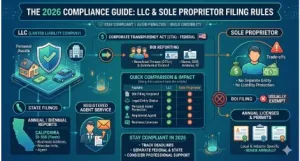
Running a business in 2026 requires more than just making sales—you must stay compliant with evolving federal and state regulations. Whether you operate as an LLC or a Sole Proprietor, understanding filing obligations helps you avoid penalties, maintain legal protection, and build long-term credibility.
This guide breaks down the latest compliance requirements, including new federal mandates like the Corporate Transparency Act (CTA) and ongoing state-level responsibilities.
The Corporate Transparency Act (CTA): New Mandatory Filings You Can’t Ignore
The Corporate Transparency Act (CTA) has introduced one of the most important compliance changes for small businesses in recent years. It requires certain entities to disclose ownership details to prevent financial crimes.
Beneficial Ownership Information (BOI) Reporting Requirements
Businesses classified as “reporting companies” must file Beneficial Ownership Information (BOI) with FinCEN. Staying compliant with the latest federal rules like the Corporate Transparency Act is non-negotiable for modern entities. You can see how these requirements differ from simpler structures in our guide to business structure differences to stay ahead of the law.”
Key requirements include:
- Reporting individuals who own at least 25% of the company
- Disclosing individuals with substantial control over the business
- Providing personal details like:
- Full legal name
- Date of birth
- Residential address
- Government-issued ID
Filing timelines:
- New businesses (2024+): File within 30–90 days of formation
- Existing businesses: Follow updated FinCEN deadlines
Penalties for non-compliance:
- Civil fines up to $500 per day
- Criminal penalties up to $10,000 and/or imprisonment
Why Sole Proprietors Are Often Exempt (But Less Protected)
Sole proprietors are generally exempt from BOI reporting because they are not separate legal entities.
However, this exemption comes with trade-offs:
- No legal separation between owner and business
- No liability protection for personal assets
- Limited credibility with banks and investors
Quick Comparison: CTA Impact
| Feature | LLC | Sole Proprietor |
| BOI Filing Required | Yes | Usually No |
| Legal Entity Status | Separate | Not Separate |
| Personal Asset Protection | Strong | None |
Annual Reports and Mandatory State Filings
In addition to federal requirements, businesses must meet state-level compliance obligations to remain in good standing.
Understanding the California Statement of Information (Form SI-550)
For LLCs registered in California, filing the Statement of Information (SI-550) is mandatory.
Key details:
- Filed with the California Secretary of State
- Includes updated business information such as:
- Business address
- Member/manager details
- Registered agent information
Filing frequency:
- Initial filing within 90 days of LLC formation
- Then every 2 years (biennially)
Filing fee:
- Typically around $20, depending on updates
Deadlines and Penalties for Missing State Filings
Missing deadlines can lead to serious consequences.
Common penalties include:
- Late fees and fines
- Suspension or forfeiture of business status
- Loss of limited liability protection
- Difficulty opening bank accounts or securing funding
Best practices to stay compliant:
- Set calendar reminders for due dates
- Use compliance or registered agent services
- Keep business records updated
Managing Federal vs. State Obligations
Understanding the difference between federal and state requirements is essential for smooth business operations.

Maintaining Your Registered Agent Service
An LLC must maintain a registered agent to receive legal and government documents.
Responsibilities include:
- Accepting service of process (legal notices)
- Receiving compliance reminders and official mail
- Maintaining a physical address in the state of registration
Why it matters:
- Missing legal notices can result in default judgments
- Helps ensure you never miss important filings
Renewing Business Licenses and Permits Annually
Both LLCs and sole proprietors must renew licenses and permits to operate legally.
Typical licenses include:
- Local business licenses
- Industry-specific permits (e.g., health, construction)
- Sales tax permits (if applicable)
Renewal tips:
- Track expiration dates annually
- Check local and state requirements regularly
- Budget for renewal fees
Compliance Checklist for 2026
Here’s a quick overview of key filing responsibilities:
| Requirement | LLC | Sole Proprietor |
| BOI Report (CTA) | Required | Not Required (usually) |
| Annual/State Reports | Required | Limited |
| Registered Agent | Required | Not Required |
| Business Licenses | Required | Required |
| Liability Protection | Yes | No |
Conclusion
Compliance in 2026 is more complex but also more important than ever. The introduction of the Corporate Transparency Act (CTA) means LLC owners must stay vigilant with federal filings like BOI reports while also keeping up with state requirements such as annual reports and registered agent maintenance.
Sole proprietors enjoy fewer filing obligations, but this simplicity comes at the cost of reduced legal protection and credibility.
To stay compliant and avoid penalties:
- Keep track of all deadlines
- Separate federal and state obligations
- Consider professional compliance support
Ultimately, choosing the right business structure and maintaining proper filings will protect your business, finances, and future growth.
Compliance FAQs
Q: What is the new BOI filing for 2026?
The BOI (Beneficial Ownership Information) filing is a federal requirement under the Corporate Transparency Act. It requires LLCs and similar entities to report ownership and control details to FinCEN to increase business transparency.
Q: Do Sole Proprietors have to file annual reports?
No, Sole Proprietors typically don’t file annual state reports because they are not separate legal entities. However, they may still need to renew local licenses and permits each year.
Q: Does BusinessRocket’s $95 package include compliance reminders?
Yes, BusinessRocket’s basic packages often include compliance alerts and reminders to help you track deadlines. However, features can vary, so it’s best to confirm what’s included in your selected plan.