Two things can be true at the same time. The Invesco QQQ Trust (QQQ) looks higher in the interim, but it’s scary awful beyond that.
New highs are great, but when they come with ever-shrinking participation beyond the established winners (Magnificent 7, AI stocks), it is historically a sign that the party is in its late stages. But it’s still a party. As the old Prince song goes, “like it’s 1999.”
The chart of QQQ is bullish near-term in this snapshot view. And it masks the weakness underneath.
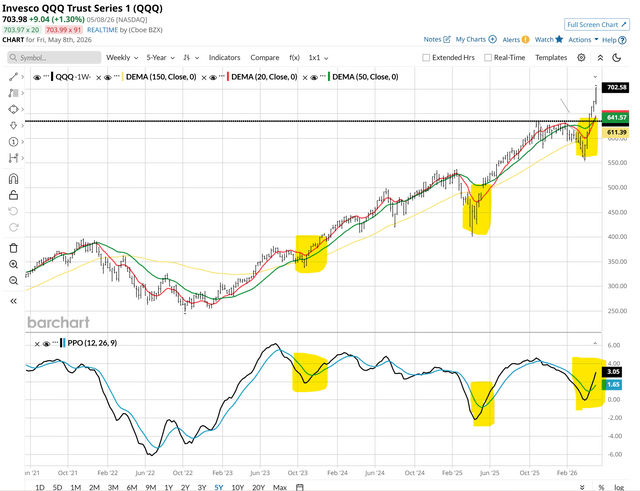
I’ve highlighted in yellow on the lower percentage price oscillator (PPO) section a familiar pattern. Weekly chart, bottoms and then busts out in a hurry. The past two instances, in 2023 and 2025, led to surges. So to look at this and be super-bearish is, I think, only looking at one side. My mantra is “play offense and defense at the same time.” That means respect the rally.
It also means that this chart below gets more relevant by the day. Charting periods this far apart dilutes a lot of the aspects that drive today’s markets. However, if you look at what happened from the inception of QQQ as a traded ETF in early 1999, through the end of 2001, you see that two things were true.
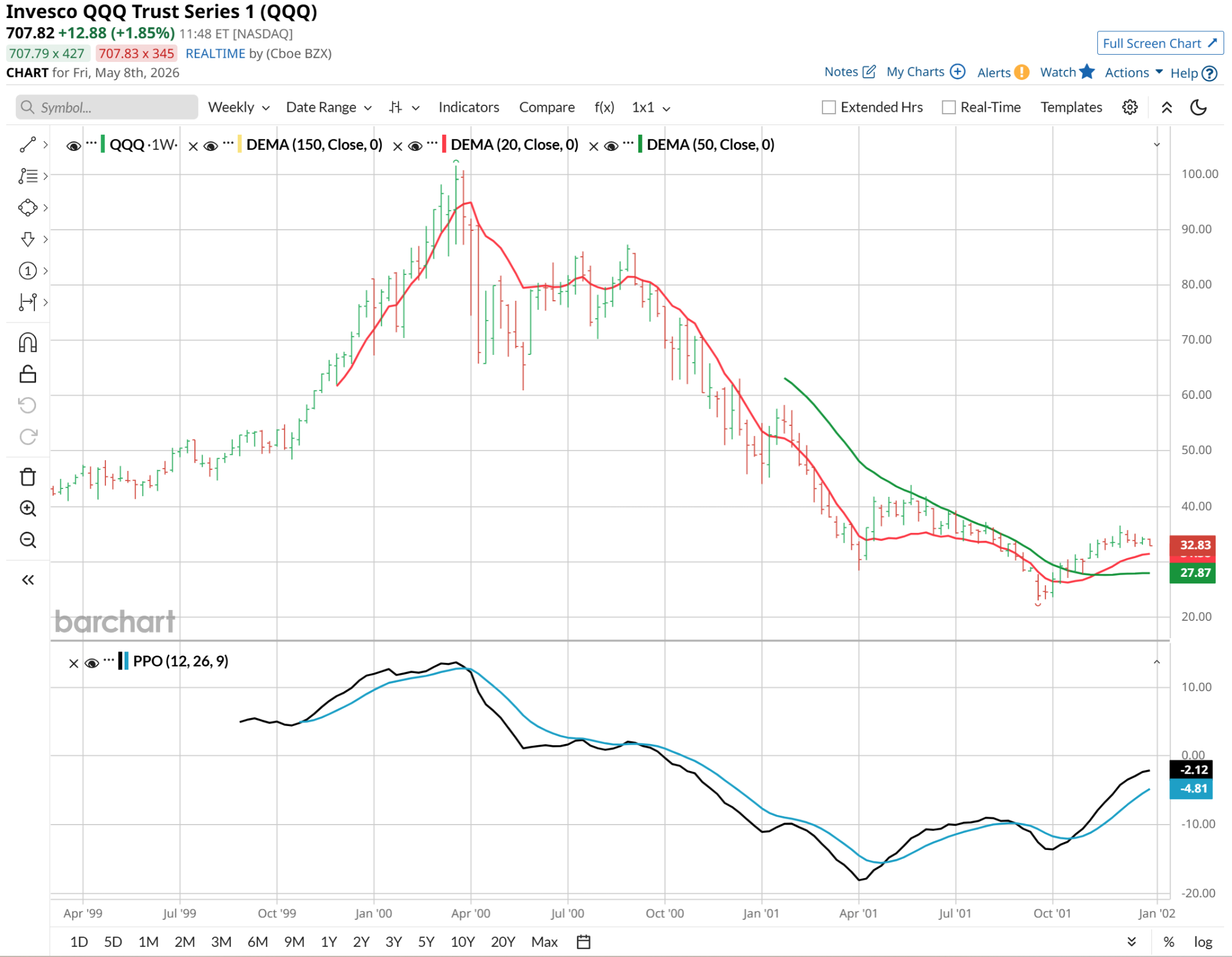
QQQ’s history lesson: First it doubled. Then, it lost 75% of its peak value. All within less than three years.
The dominance of the has reached a point where the ETF is no longer just a proxy for technology; it is the gravity around which the entire financial market orbits. QQQ has surged to all-time highs near the $700 level, driven by an accelerating artificial intelligence cycle and a massive expansion in enterprise capital expenditure. While the momentum suggests the next significant move could still be higher, the structural nature of this rally creates a precarious mountain for longer-term investors.
The case for a continued move upward is built on the sheer scale of the digital infrastructure build-out. Current estimates suggest that total AI infrastructure spending is on a path toward trillions of dollars by the end of the decade. For the mega-cap companies that dominate QQQ, this is translated into a period of exceptional earnings power and structurally improved margins.
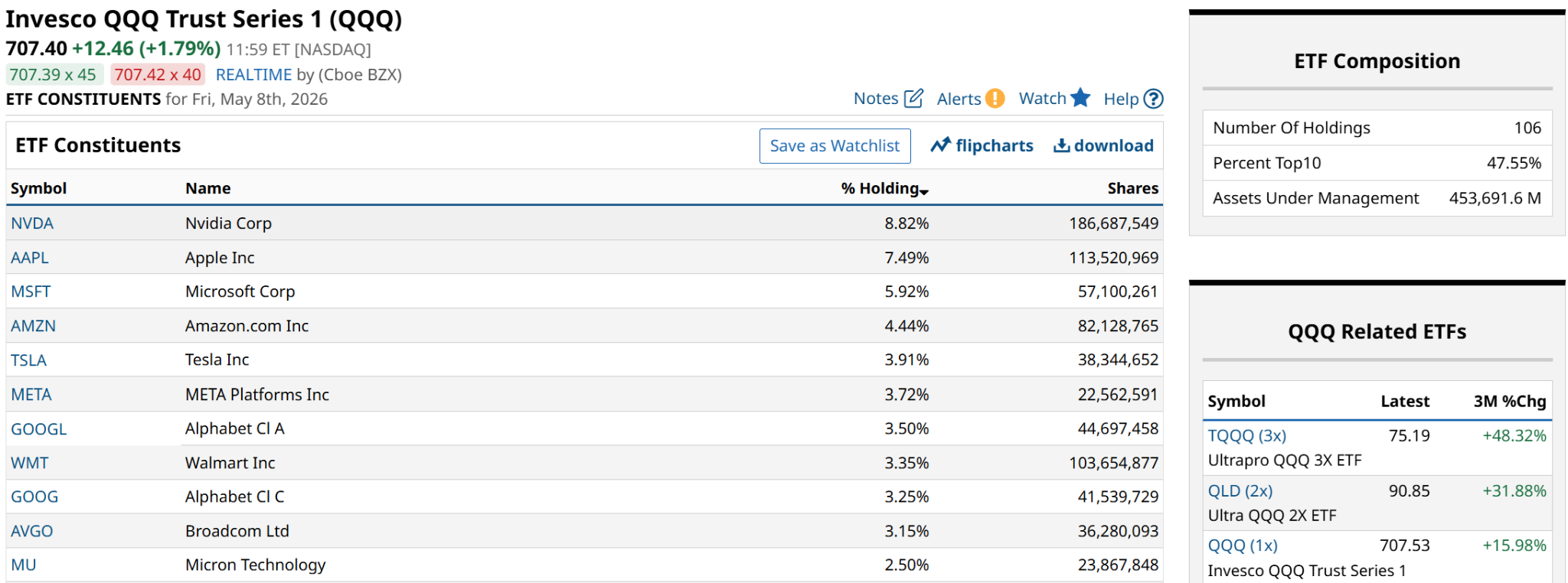
The market is currently rewarding this concentration, with the top 10 holdings in the Nasdaq-100 ($IUXX) now accounting for nearly 47% of the total index weight. In a world of high interest rates and geopolitical uncertainty, investors have treated these balance sheet fortresses as the only safe havens, creating a self-reinforcing loop of capital inflows.
The Backside of the QQQ Mountain
However, the “backside of the mountain” risk grows in direct proportion to the ascent. The higher the QQQ climbs, the more it detaches from historical valuation norms and broad market participation. We are witnessing a level of concentration that mirrors — and in some metrics exceeds — the peaks of previous speculative cycles.
When a handful of names shoulder the entire burden of market gains, the margin for error disappears. A single earnings miss or a shift in regulatory sentiment for just two or three of these giants could trigger a disproportionate liquidation.
The fundamental risk is that the current rally is “pulling forward” years of future growth into today’s price. As capital expenditures surge to build data centers and specialized hardware, free cash flow for many tech giants is actually being squeezed in the short term. If the anticipated revenue from these massive AI investments takes longer to materialize than the market expects, the valuation reset will not be a gentle slope but a vertical drop.
Furthermore, the liquidity that makes QQQ so attractive on the way up becomes a liability on the way down. Because so much passive and institutional capital is tied to this specific ticker, a reversal often leads to a cascade effect where selling begets more selling to meet redemption demands or rebalancing targets.
In this environment, the upside remains enticing, but the structural integrity of the market is becoming increasingly fragile. The eventual descent from the peak will be made much worse by the very factors that are driving it right now. Namely concentration and extreme momentum. This is a great reminder to play offense and defense at the same time.
Rob Isbitts created the ROAR Score, based on his 40+ years of technical analysis experience. ROAR helps DIY investors manage risk and create their own portfolios. For Rob’s written research, check out ETFYourself.com.
On the date of publication, Rob Isbitts did not have (either directly or indirectly) positions in any of the securities mentioned in this article. All information and data in this article is solely for informational purposes. For more information please view the Barchart Disclosure Policy here.
More news from Barchart
- The QQQ ETF Has Summited a Very Large Mountain. Make Sure You’re Ready for When It Climbs Back Down.
- Wall Street Is Bullish on These 2 Asia ETFs. It’s Time to Party Like It’s the 1980s.
- Solar ETFs Are Shockingly Cheap Now. Politics Will Decide If They’ll Burn You to a Crisp.
- This ETF Is Flying High Again. Here's How to Tell If It Will Continue.