When geopolitical shocks impact commodity markets, the instinct is to worry. But for Alcoa (AA), the largest aluminum producer in the United States, the closure of the Strait of Hormuz is creating a near-term opportunity.
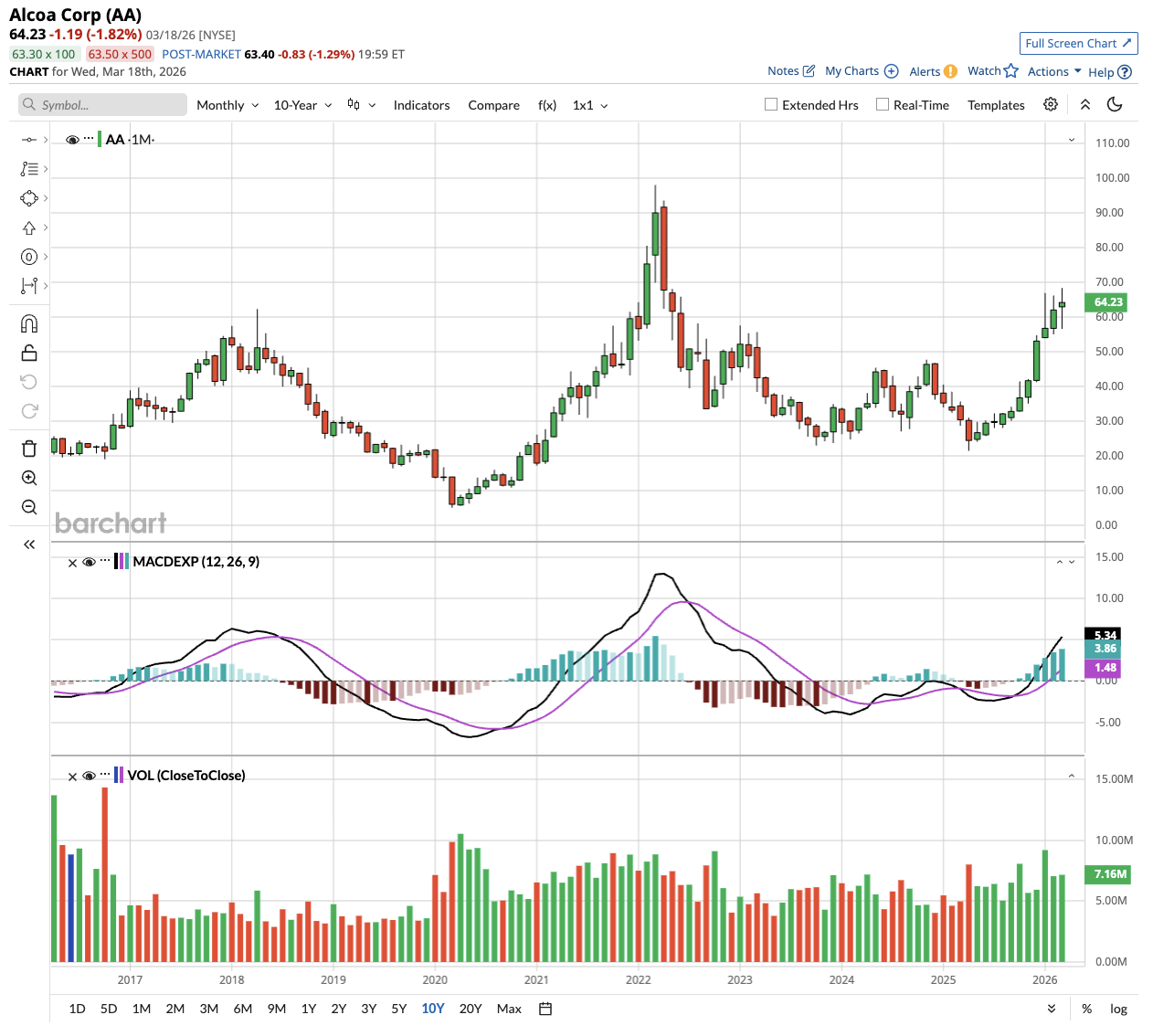
Valued at a market cap of about $17 billion, Alcoa stock is up 14% in 2026 and 89% in the past year. Here's why Alcoa stock deserves a closer look right now.
Why the Hormuz Closure Matters for Alcoa
The Strait of Hormuz is a narrow waterway connecting the Persian Gulf to the rest of the world. A significant portion of global aluminum production happens in Gulf countries, and that supply is now in jeopardy. According to a Bloomberg report, Gulf smelters produce just under 7 million metric tons of aluminum per year. That's roughly 9% of global supply.
Two of the region's biggest producers, Cadalum and Alba, have already made major moves. Cadalum curtailed about 40% of its capacity. Alba declared force majeure on shipments and announced a 19% curtailment.
Shipments have effectively stopped, sending aluminum prices higher. For Alcoa, that's a direct revenue boost. Higher prices and a record Midwest premium flow straight to the bottom line.
Alcoa's Order Book Is Growing
Before the conflict, Alcoa described demand as "very stable," with strong performance in packaging, electrical, construction, and data center build-outs. Since the conflict began, the picture has improved.
Alcoa CFO, Molly Beerman, said at the JPMorgan conference that the company is now receiving more inquiries from customers who relied on Middle East smelters for supply. They're looking for alternative sources for the second quarter and the second half of 2026.
"We are getting more inquiries from customers for the second quarter as well as for the second half of '26 related to Middle East supply uncertainty," Beerman said. That's new, incremental demand landing in Alcoa's lap. The company is proactively repositioning inventory into the U.S. to maximize margins and minimize tariff costs, a deliberate, margin-optimizing move.
The Tariff Tailwind
The 50% Section 232 tariffs on aluminum imports have been in place since last summer. For many companies, tariffs create headaches, but for Alcoa, they're a net positive right now. The Midwest premium has risen enough to more than cover the tariff costs on Canadian aluminum tons.
Alcoa's U.S.-produced aluminum benefits directly from the elevated premium. Beerman confirmed the company has seen no demand destruction from tariffs in its own business or among its customers.
"Market fundamentals for aluminum are really strong," she said at the JPMorgan conference. "Inventories are at a very low level. The metal is needed, the premiums are responding."
Alcoa is not just an aluminum company. It's also a major producer of alumina, the raw material used to make aluminum. The company ships about 4 million metric tons of alumina to Middle East smelters every year. That's roughly one-third of all its alumina shipments, according to Beerman.
With the Strait of Hormuz closed, that material needs a new home. Most of it is moving to China, adding cost pressure on Chinese refiners. That's a competitive advantage for Alcoa's higher-quality, lower-cost operations.
Alcoa sits in the first quartile of the global alumina cost curve, according to industry research firm CRU. That means it's among the cheapest producers in the world.
The bottom line
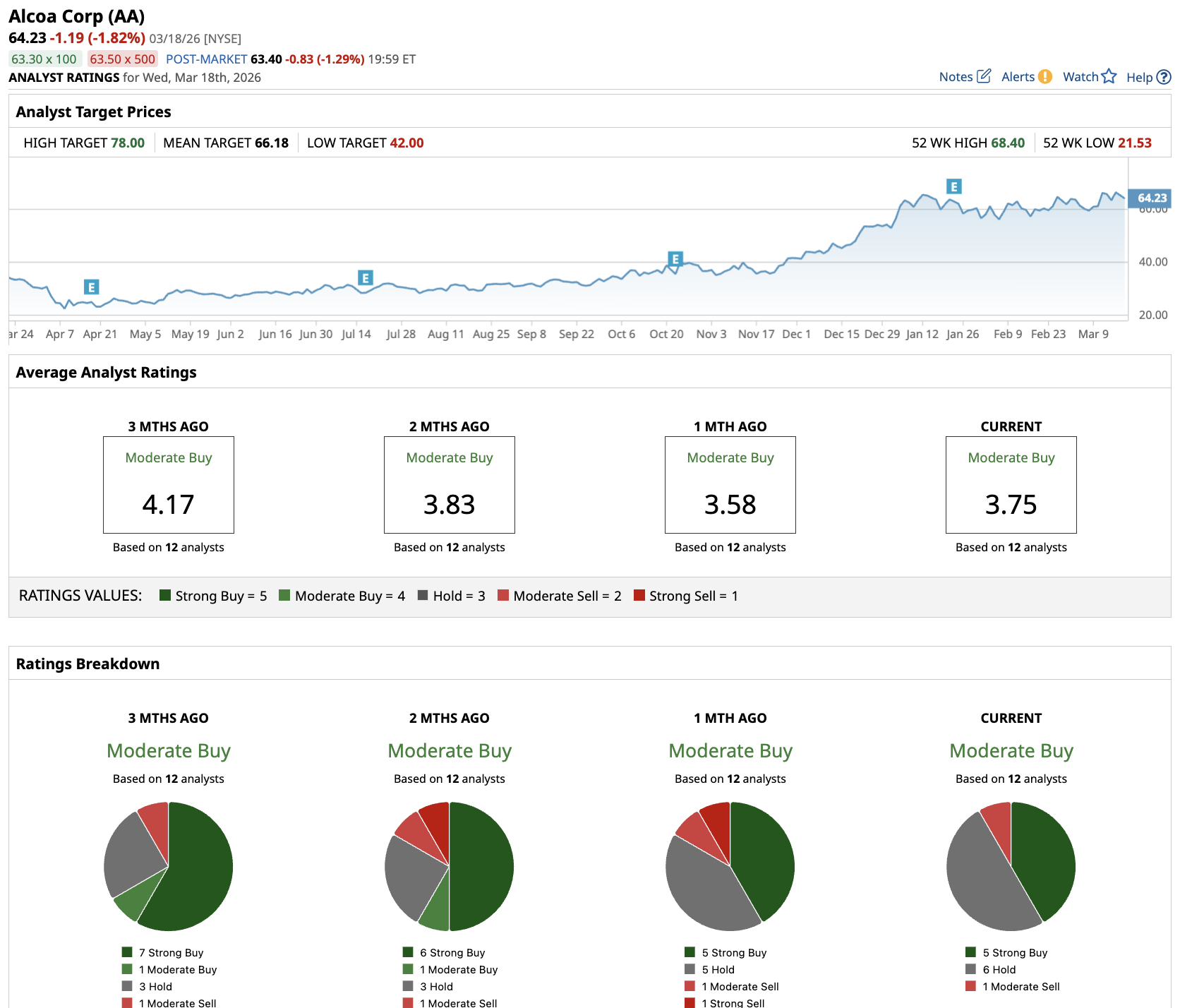
Analysts tracking Alcoa stock forecast free cash flow (FCF) to increase from $350 million in 2026 to $957 million in 2028. If Alcoa stock is priced at 20x forward FCF, it could surge 20% over the next two years. Out of the 12 analysts covering Alcoa stock, five rate it a “Strong Buy,” six recommend “Hold,” and one calls it a “Moderate Sell.”
Alcoa is an active beneficiary of the crisis with a growing order book, record premiums, strong operations, and a cost structure built to compete.
Investors looking for a commodity stock with a direct, near-term tailwind from the Middle East conflict should have Alcoa on their radar.
On the date of publication, Aditya Raghunath did not have (either directly or indirectly) positions in any of the securities mentioned in this article. All information and data in this article is solely for informational purposes. For more information please view the Barchart Disclosure Policy here.
More news from Barchart
- As Celestica Partners with AMD, Should You Buy the Lesser-Known AI Stock Now?
- 2 Top-Rated Consumer Staples Stocks to Buy to Protect Your Portfolio From an Oil Price Shock
- Your Worst Nightmare Might Be Your Best Hope: Cyborg Cockroaches Enter Real-World Deployment
- The S&P 500 Just Broke Below Its 200-Day Moving Average. Why Are Stocks Falling Today?